
Last updated November 23, 2026
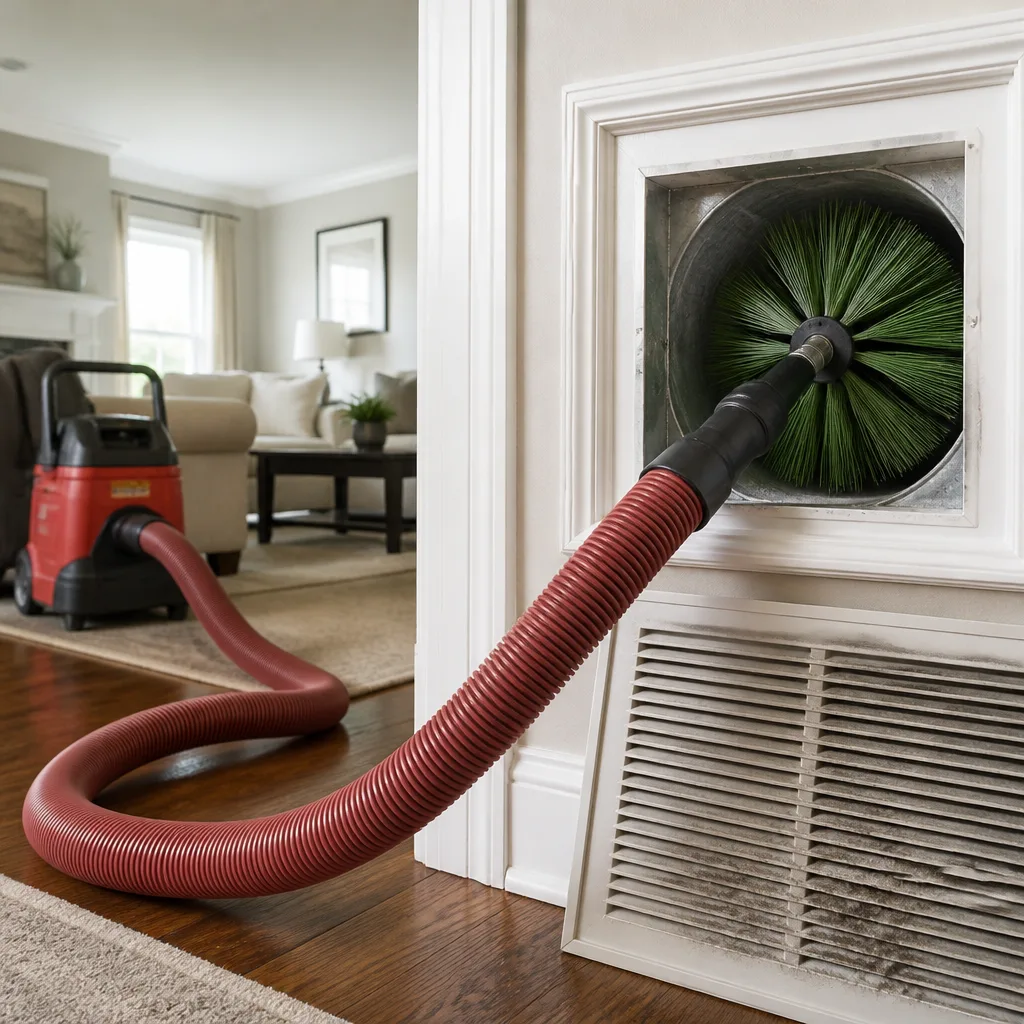 Whole-home duct cleaning
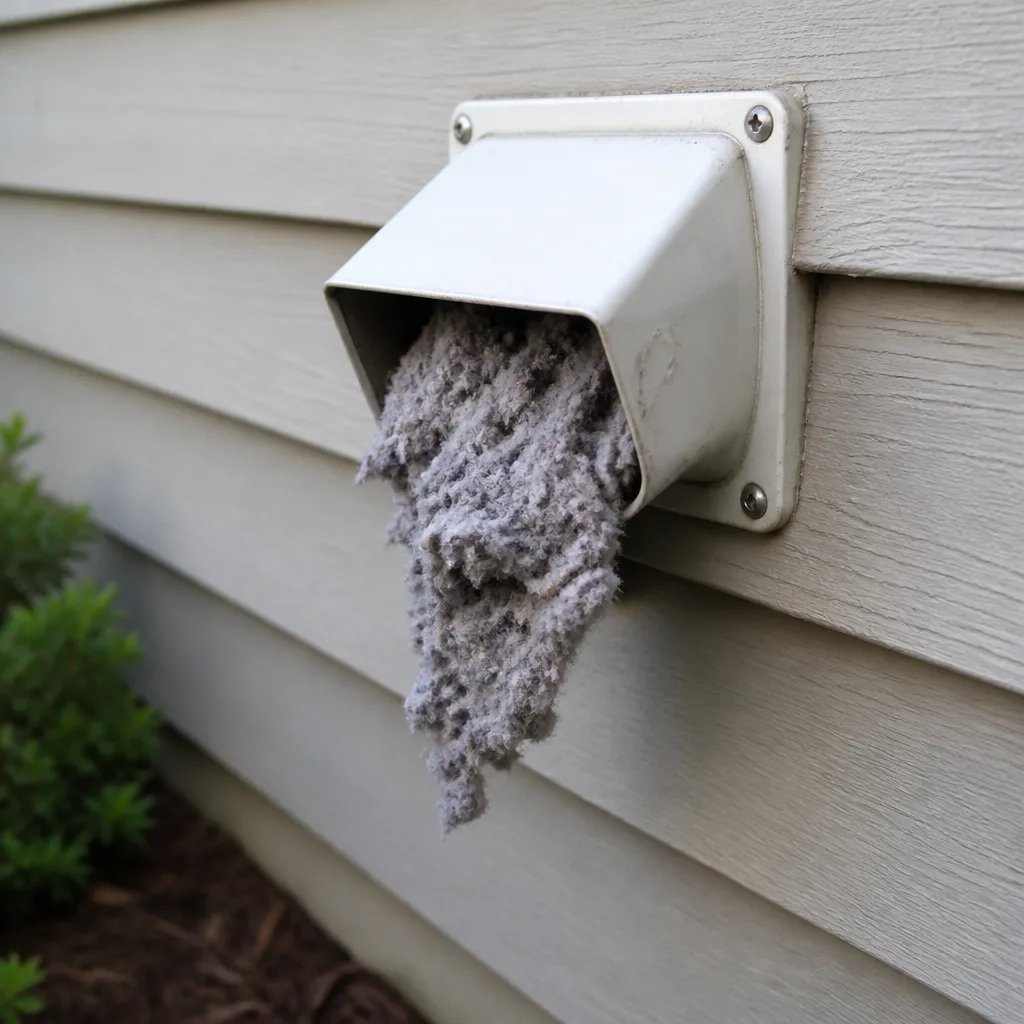 Dryer vent cleaning
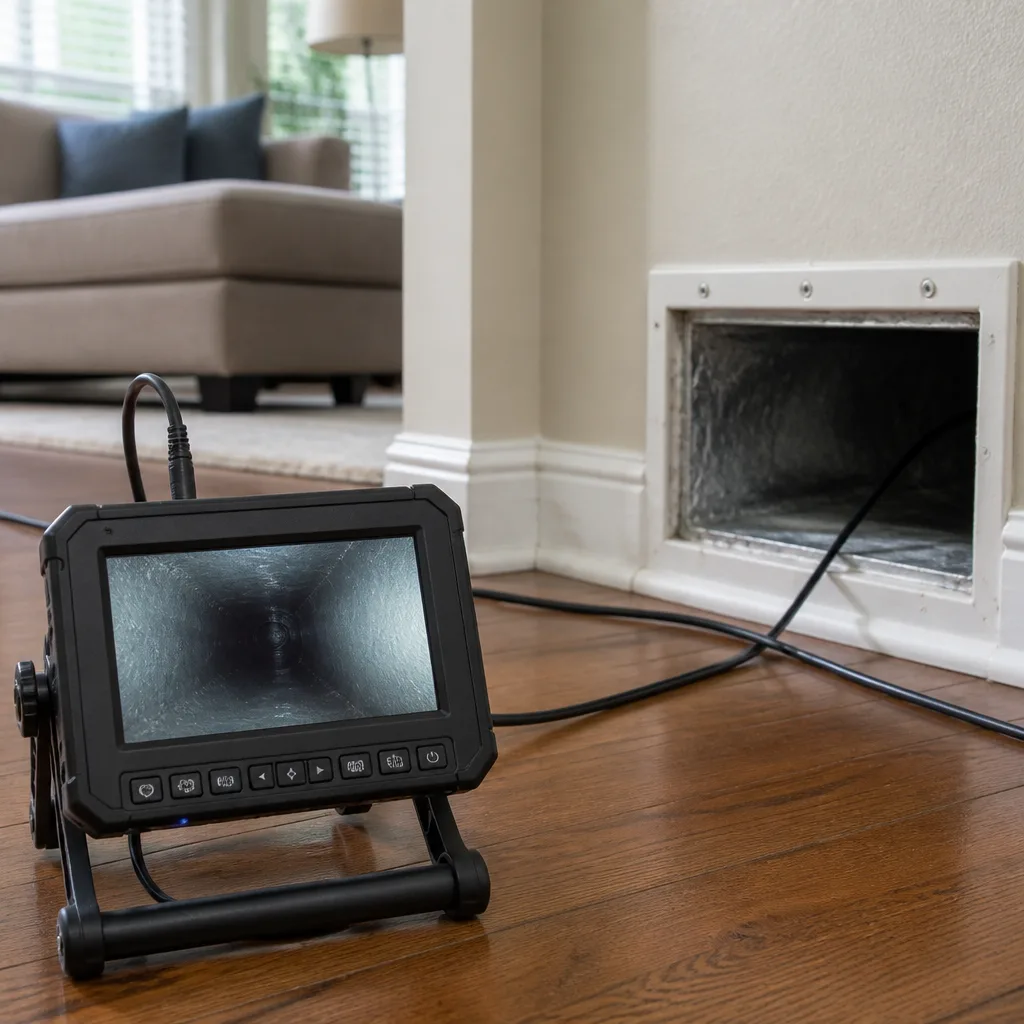 Camera inspection
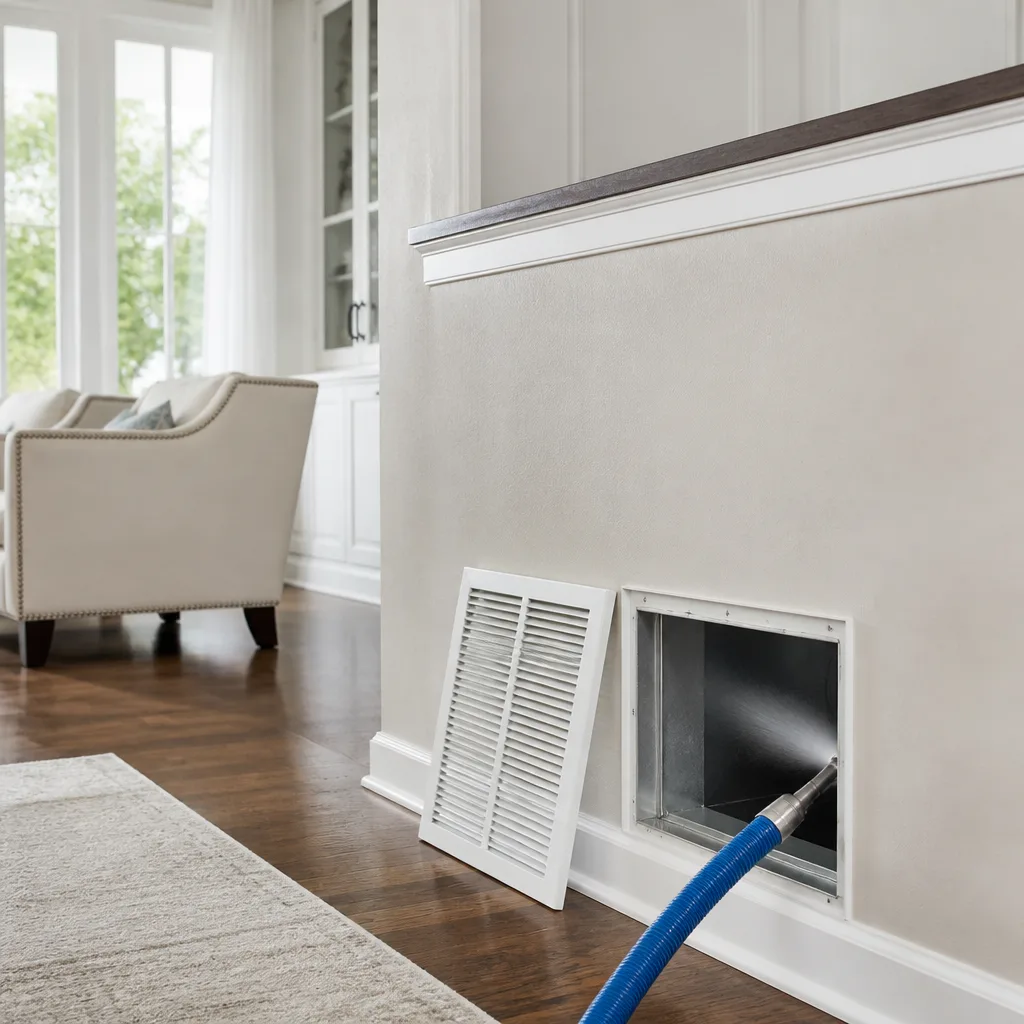 Sanitizing & deodorizing
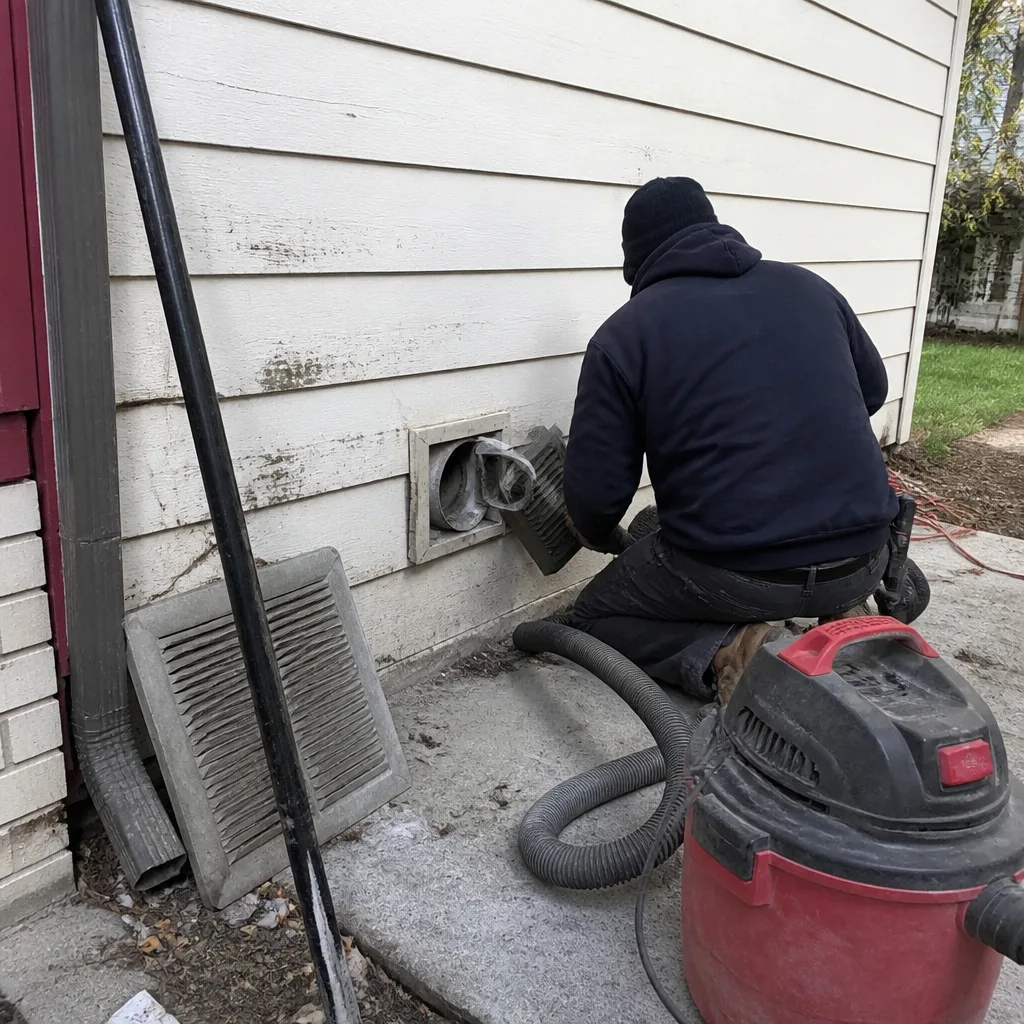
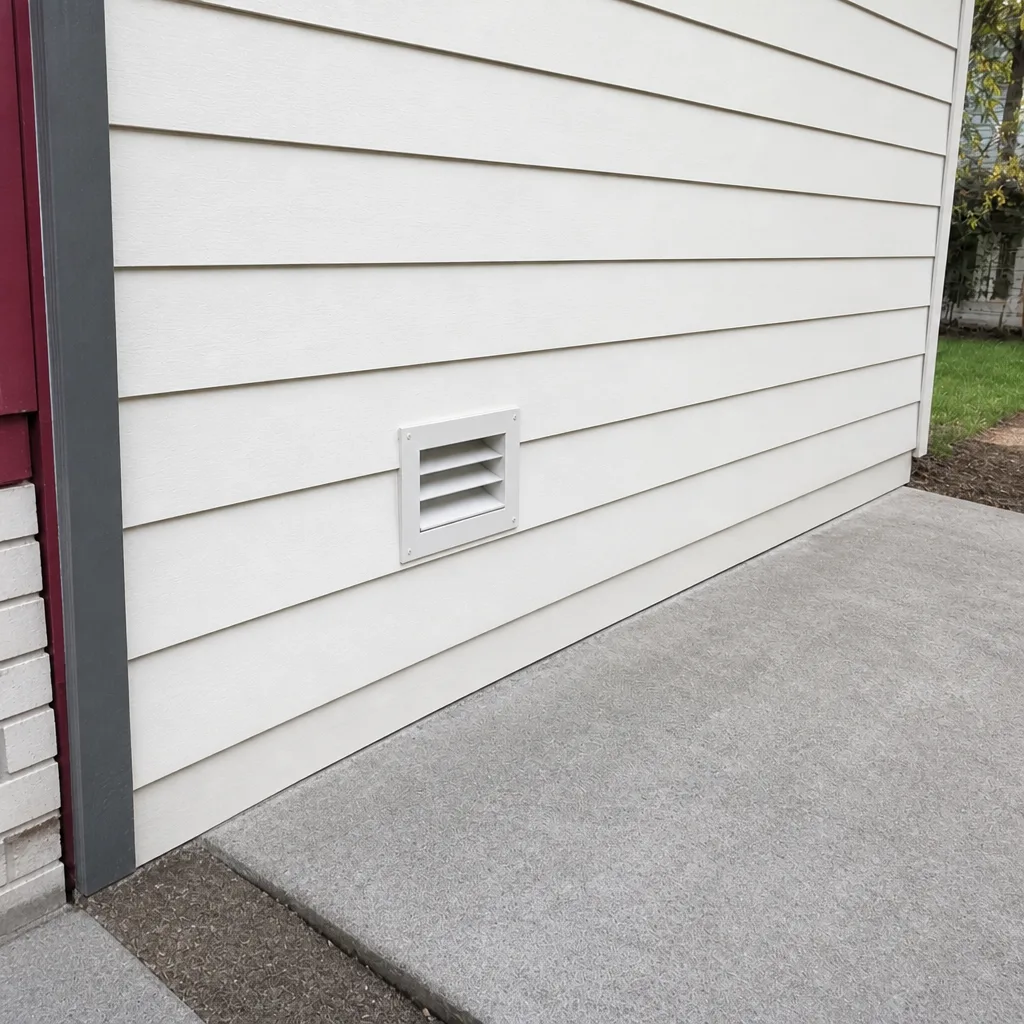
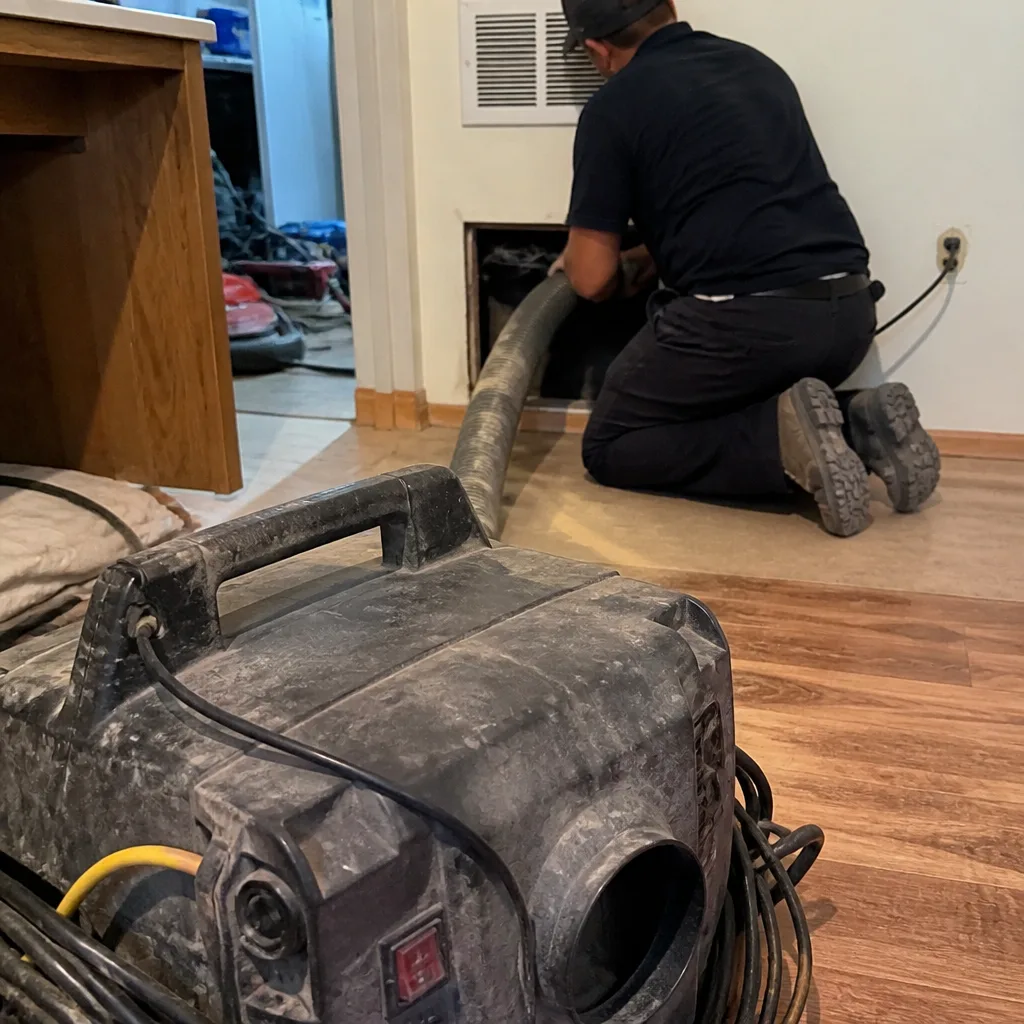
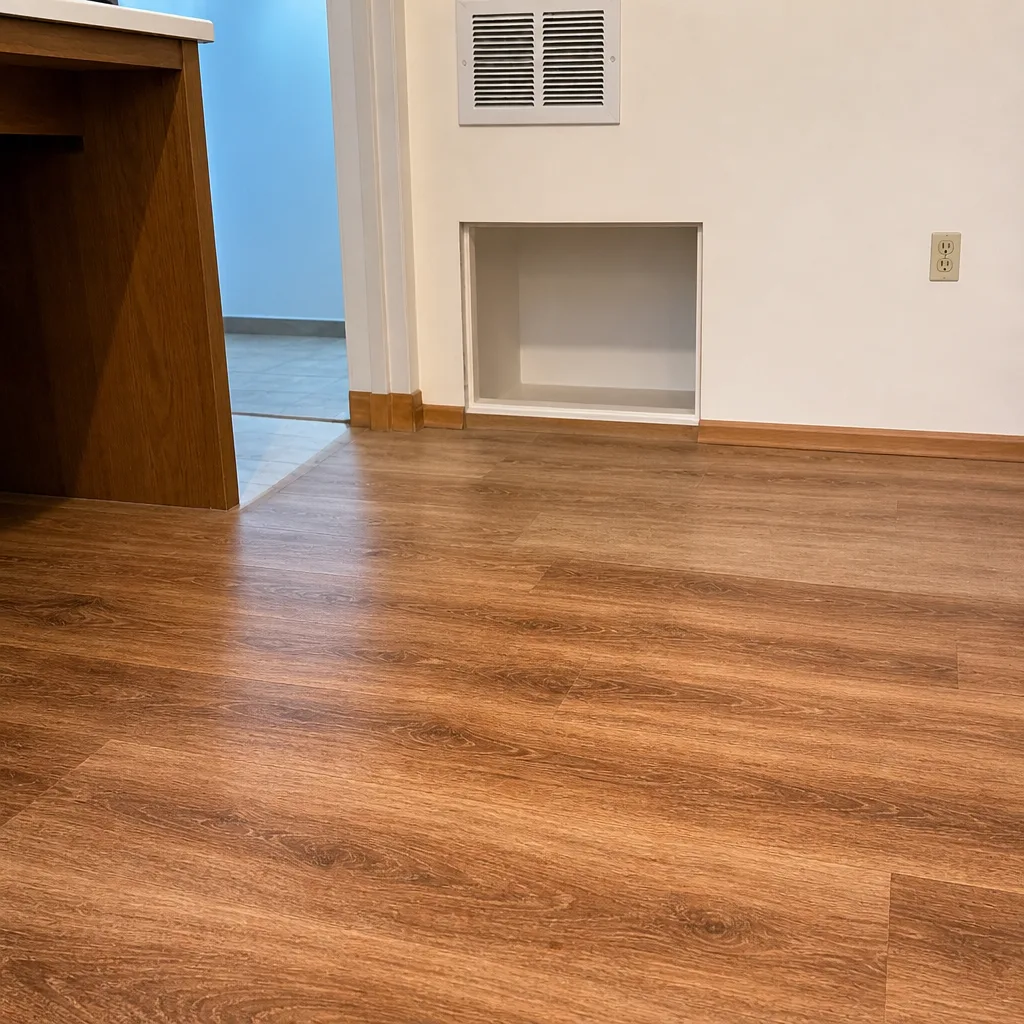
Whole-system duct and dryer vent check with before-and-after photos - you see exactly what came out of your vents
That "$99 whole-house special" is a bait ad - the real number appears once they are in your hallway, or the "clean" is a shop-vac at the register. We photograph the inside of your ducts before and after instead.
How to Hire an Air Duct Cleaning Contractor in Thornton: A Step-by-Step Guide
Most homeowners assume a bad duct cleaning job is one that leaves dust behind. In our experience, the more common failure is one that was never really done at all, and only a written scope and a before-and-after record catch the difference. The industry has a fraud problem serious enough that the Federal Trade Commission has published a consumer warning aimed specifically at air duct cleaning scams. That warning exists because barriers to entry are low and the work happens inside your walls, where you can’t easily see it. This guide walks you through a specific, sequential vetting process for hiring in Thornton: how to read a scope, verify a business, and ask the questions that separate real technicians from upsell operations.
Quick Answer
To hire an air duct cleaning contractor in Thornton, verify the company’s Colorado business registration and insurance first, then ask for a written scope that names the equipment, the number of vents and returns being cleaned, and the price for the whole system before anyone arrives. Avoid any quote that pushes sanitizer or add-ons before a technician has inspected your system, and insist on before-and-after photos of your own ducts. That sequence is the whole guide in three sentences – the rest of this page explains how to do each step well.
Styles & brands we work with
- Whole-home duct cleaning
- Dryer vent cleaning
- Camera inspection
- Sanitizing & deodorizing
Table of Contents
- Why Air Duct Cleaning Has a Fraud Problem
- How to Verify a Contractor in Under Five Minutes
- What NADCA Membership Actually Means
- What a Legitimate Scope of Work Should Include
- Five Questions to Ask Before You Book
- Red Flags in Quotes and Pricing
- What’s Different About Ducts in Thornton Homes
- What a Real Cleaning Day Looks Like
Why Air Duct Cleaning Has a Fraud Problem
The problem isn’t that most duct cleaning companies are dishonest. It’s that the customer has no reliable way to tell which ones are honest before the van shows up. Ductwork is hidden, the equipment is unfamiliar to most people, and the results are measured in odors and allergy symptoms rather than something you can see from the driveway. That asymmetry is exactly the environment scams thrive in, and it’s why the FTC took the unusual step of issuing a specific consumer alert for this trade. Very few home service categories have earned that kind of attention.
The scheme usually follows a pattern. An unusually low price gets someone on the phone. The technician arrives, opens one vent, and produces a story about mold, rodent droppings, or a “blocked main line” that requires an immediate upcharge. The homeowner, standing in their own hallway with a stranger who has just told them their air is dangerous, agrees. The invoice ends up many times the advertised price, and the work behind it is often superficial.
There’s a second, quieter version that causes real damage: the job that is done with consumer-grade shop vacuums, which can stir settled debris into the airstream and leave the system dirtier than it started. Professional duct cleaning isn’t a vacuuming task. It uses negative pressure containment and rotary brush systems built for the job, like the Rotobrush and Nikro equipment specified by certified HVAC and IAQ contractors. When you hire, you’re really vetting equipment and process, not just price.
How to Verify a Contractor in Under Five Minutes
This is the step homeowners skip most often, and it’s the fastest one. Colorado requires businesses operating in the state to hold a current registration with the Secretary of State, and the record is public. You can check it on your phone while you’re still on the phone with the contractor.
- Search the business name. Go to the Colorado Secretary of State business search and look up the exact name on the quote. Note whether the registration shows as active and whether the name matches the one on the estimate.
- Check the address. A Thornton or Denver-metro business address consistent with a working company is a good sign. A P.O. box with no physical address for a company claiming to do local work deserves a follow-up question.
- Ask for a certificate of insurance. Request it by email before booking. The certificate should name the business and show general liability coverage. If the company can’t email one, that tells you something.
- Confirm it covers duct cleaning specifically. Some policies exclude work that disturbs building materials. Ask the contractor to confirm their coverage includes duct and HVAC cleaning, and get the answer in writing.
- Match the name on the certificate to the name on the quote. A mismatch between the insurer’s named insured and the company billing you is a real warning sign.
None of this takes more than a few minutes, and it filters out a large share of the sketchy operators before they ever reach your door. If a company becomes evasive when you ask for a certificate, that conversation has already answered your question.
What NADCA Membership Actually Means
The National Air Duct Cleaners Association, usually called NADCA, is the trade body that sets standards for this work. Membership isn’t a rubber stamp, and the word “certified” on a website can mean almost anything if it isn’t tied to a recognized body. Here’s what to actually look for.
NADCA membership requires a company to carry general liability insurance at a set minimum, to have at least one technician who has passed the association’s Air Systems Cleaning Specialist exam, and to follow the ACR, the industry standard for assessment, cleaning and restoration of HVAC systems. The ACR standard is the document that defines what “clean” means for a duct system: it specifies methods rather than outcomes, and it requires source removal, meaning the debris is physically taken out rather than sealed in place.
- A named certification. “NADCA certified” or “ASCS certified” with a technician name is verifiable. “Certified” alone, with no organization behind it, is marketing.
- Insurance verification. NADCA membership requires proof of insurance, so a member company should be able to produce it without friction.
- Adherence to a written standard. Ask which standard they clean to. A company that names the ACR standard knows what it’s talking about.
- Equipment specifics. NADCA members are trained on the equipment families that meet the standard – rotary brushes, negative air machines, HEPA filtration. A company that can’t name its equipment is a company that may not own the right kind.
Membership isn’t the only way to find a competent contractor, and plenty of solid operators aren’t members. But it’s a proxy for standards, insurance, and training that you can check quickly, and it’s one of the few third-party signals in this trade that means something.
What a Legitimate Scope of Work Should Include
Before anyone lifts a tool in your house, you should have a written document that tells you exactly what will be done, with what, and for how much. This is the single most effective defense against bait-and-switch pricing, because it establishes what you agreed to before the technician’s truck is in your driveway.
A proper scope for a Thornton home normally covers the whole system, not a per-vent price. That matters because a house with ten vents and a long trunk line is a different job from a small condo, and per-vent pricing hides that difference until it’s time to bill. A whole-system flat price, agreed before work starts, keeps the number stable.
Here’s what the scope should spell out:
- All supply and return registers included in the count, with the number written down.
- The main trunk lines and branch runs, not just the easy-to-reach vents.
- The air handler and blower compartment, if the scope includes HVAC cleaning.
- Equipment by name and type. Rotary brush system, negative air machine, HEPA vacuum, containment method.
- Whether sanitizing is included or separate, and under what conditions it would be recommended.
- Any repair or sealing work identified during inspection, priced separately and approved by you in advance.
- Before-and-after photo documentation of your own ducts.
- A flat price for the whole system, stated in writing.
If a company can’t produce a scope like this before the visit, ask why. A legitimate contractor will have no trouble putting one together. This is also the point where the difference between clean ducts and sealed duct systems shows up: Thornton Air Duct Cleaning offers duct repair and sealing alongside cleaning, because leaks in the trunk line waste energy no matter how clean the ducts are.
Five Questions to Ask Before You Book
These five questions will separate a professional operation from a call center with a vacuum. Ask them on the phone, before you schedule, and note how the answers are given. Vagueness on any of them is information.
- What equipment do you use, by name? You’re listening for professional-grade systems – Rotobrush, Nikro, Abatement Technologies negative air machines – not “a big vacuum.” A real contractor owns the right tools and will tell you what they are.
- How do you handle mold findings? Legitimate answers involve inspection first, containment with negative air pressure during removal, and a written recommendation before any treatment. A company that quotes sanitizing over the phone, before seeing the system, is selling a product, not assessing a building.
- What’s included in the price? The answer should match the scope document. Per-vent pricing, “starting at” language, or a price that varies by “how dirty it is” is a setup for an upcharge.
- Who will actually be in my house? Ask whether the technicians are employees or subcontractors, and whether they’re trained on the equipment being used. A subcontractor with a shop vac is not the same as a trained crew with a rotary brush and containment.
- Can I see before-and-after photos? Ask specifically for photos of your own ducts, taken during the job. A company that documents the work has nothing to hide. One that resists does.
Of these, the mold question is the one that trips up the most operators. Mold inside ductwork is a genuine problem, but treatment only makes sense after assessment, and proper removal involves containment using equipment like Abatement Technologies systems so contaminants don’t get pushed into living space. A contractor who can explain that process is a contractor who’s done it.
Red Flags in Quotes and Pricing
Pricing is where the industry’s worst behavior shows up, and it’s usually visible before anyone comes out. There’s no fixed price for duct cleaning across a metro area, because system size and condition vary enormously. But there are patterns in quotes that consistently predict trouble.
- Whole-house pricing that’s dramatically below everyone else. Duct cleaning requires equipment that costs real money to buy and maintain. A price far below the local norm usually means the work will be superficial, or the real invoice will arrive on site.
- Vague scope. “We clean all your ducts” is not a scope. If the quote doesn’t name the number of vents and returns, it’s not a quote.
- No pre-inspection step. A legitimate contractor wants to look at the system before finalizing a price. Skipping inspection entirely means the price was a guess dressed up as a quote.
- Pressure to add sanitizer before seeing the system. Sanitizing is a legitimate service when there’s a reason for it – microbial growth, odor, water damage. It’s an add-on sale when it’s offered before anyone has looked.
- A “free inspection” that turns into a mold emergency. Any visit that ends with dramatic findings and a demand for immediate treatment deserves a second opinion, always.
- No written estimate. If the price only exists in a phone conversation, you have nothing to hold anyone to.
On the pricing question, honest contractors will tell you there’s a range and that the final number depends on system size and condition. They’ll also tell you the written estimate sets the final price. That’s the right answer. We use one flat price per system, agreed before work starts, and we document it. It’s the only structure that protects a homeowner from the bait-and-switch this industry is known for.
What’s Different About Ducts in Thornton Homes
Thornton sits on the northern edge of the Denver metro, and the conditions here put specific demands on HVAC systems. The city’s housing stock is a mix of older post-war homes and newer construction north of 120th, and each comes with its own duct patterns. Older homes often have original sheet metal trunk lines with lots of seams, which leak. Newer builds tend to have flex duct runs, which are easy to crush or disconnect during renovations or careless attic work.
The bigger factor is the air itself. The Front Range spends a good share of the year under dry, windy conditions that carry dust and pollen, and winter heating runs for months, moving air through the same ductwork continuously. That means debris accumulates faster than in a milder climate. Spring and summer renovation dust, common in rapidly growing northern Thornton, also ends up in return ducts. If you’ve had work done on the house, the ductwork has likely picked up drywall dust and sawdust that a standard filter won’t catch.
Altitude matters for equipment performance too. At Thornton’s elevation, air is thinner, which changes how vacuum systems and air handlers perform. A contractor who works the Front Range regularly knows to account for that. These aren’t dramatic differences – they’re the kind of thing a local operator handles naturally and a call center doesn’t consider at all.
What a Real Cleaning Day Looks Like
Knowing what a legitimate cleaning visit involves is the best way to recognize when something’s off. The better your expectations going in, the harder it is to upcharge you once the equipment is on the floor.
- Arrival and inspection. The technician walks the system, identifies the registers, the return grilles, and the air handler, and confirms the scope with you before starting.
- Containment setup. Negative air pressure is established so disturbed debris is drawn out of the living space, not into it. Look for the containment equipment; if it’s not there, ask.
- Source removal. Rotary brushes and high-powered vacuum work each run. This is where professional equipment matters most – consumer-grade tools can’t generate the pressure and agitation to lift debris from the walls of the duct.
- Air handler and blower cleaning, if included. The blower compartment collects dust, and leaving it dirty undercuts the work.
- Photo documentation. Before-and-after photos are taken of your ducts, not stock images from a brochure.
- Sealing and repair recommendations, if the inspection turned up leaks or disconnected runs. These are priced separately and approved by you.
The whole visit for a typical Thornton home runs a couple of hours, depending on system size. If your ducts need repair, that’s a separate step, and the same company can usually handle it. If you have pets or recent renovations, the technician may recommend an air quality treatment on top of cleaning. That’s a legitimate conversation, as long as it happens after the inspection. air duct cleaning is the core service, but sealing and sanitizing are the pieces that make the results last.
Don’t overlook the vent system that exhausts your dryer either, especially if your machine runs longer than it should. dryer vent cleaning is a separate service with its own safety case, and it’s worth asking whether your contractor handles it.
Common Mistakes to Avoid
- Booking on price alone. The cheapest quote in Thornton is very often the most expensive job in the end, because the real invoice shows up once the technician is inside. Ask for a whole-system flat price and a written scope before you commit.
- Not asking what equipment will be used. A shop vac and a professional rotary brush system are not interchangeable. Consumer-grade equipment can make ducts dirtier by stirring debris into the air, so this is a safety question, not a style one.
- Skipping the business check. A quick look at Colorado’s business registry and a request for an insurance certificate takes minutes and filters out a significant share of problems. Homeowners skip this more than any other step.
- Accepting sanitizer before an inspection. Sanitizing has real value when there’s microbial growth or odor, but recommending it before anyone has seen the system is a sales tactic, not a health assessment.
- No before-and-after photos. Without photos of your own ducts, you have no way to confirm the work was done. Ask for them at booking, not after.
- Assuming a big-name franchise means a better job. The brand on the van tells you nothing about the technician inside, the equipment in the truck, or whether containment is being used. The questions work regardless of the logo.
- Forgetting the dryer vent. Duct cleaning and dryer vent cleaning are separate jobs, and a lint-clogged dryer vent is a real fire hazard. Many homeowners have one serviced and forget the other for years.
See the difference
 Before
 After
 Before
 After
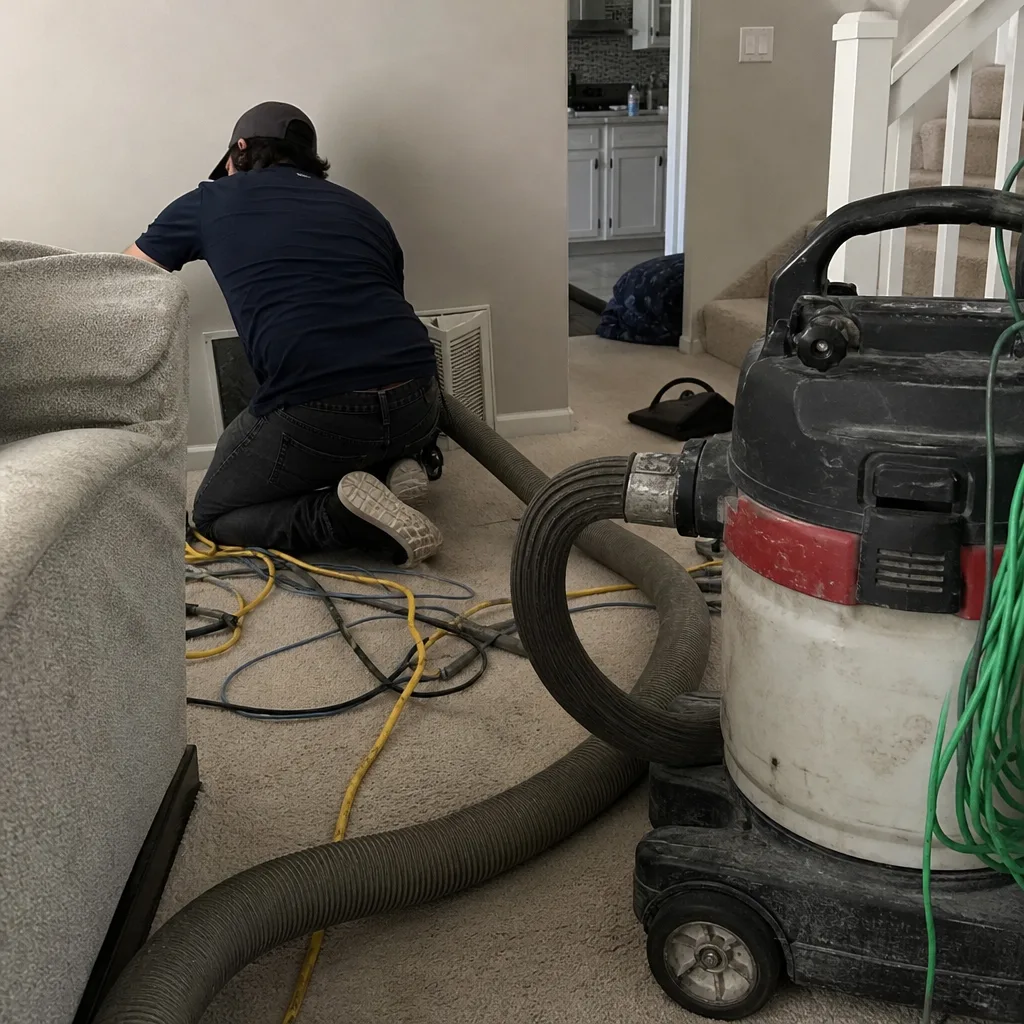 Before
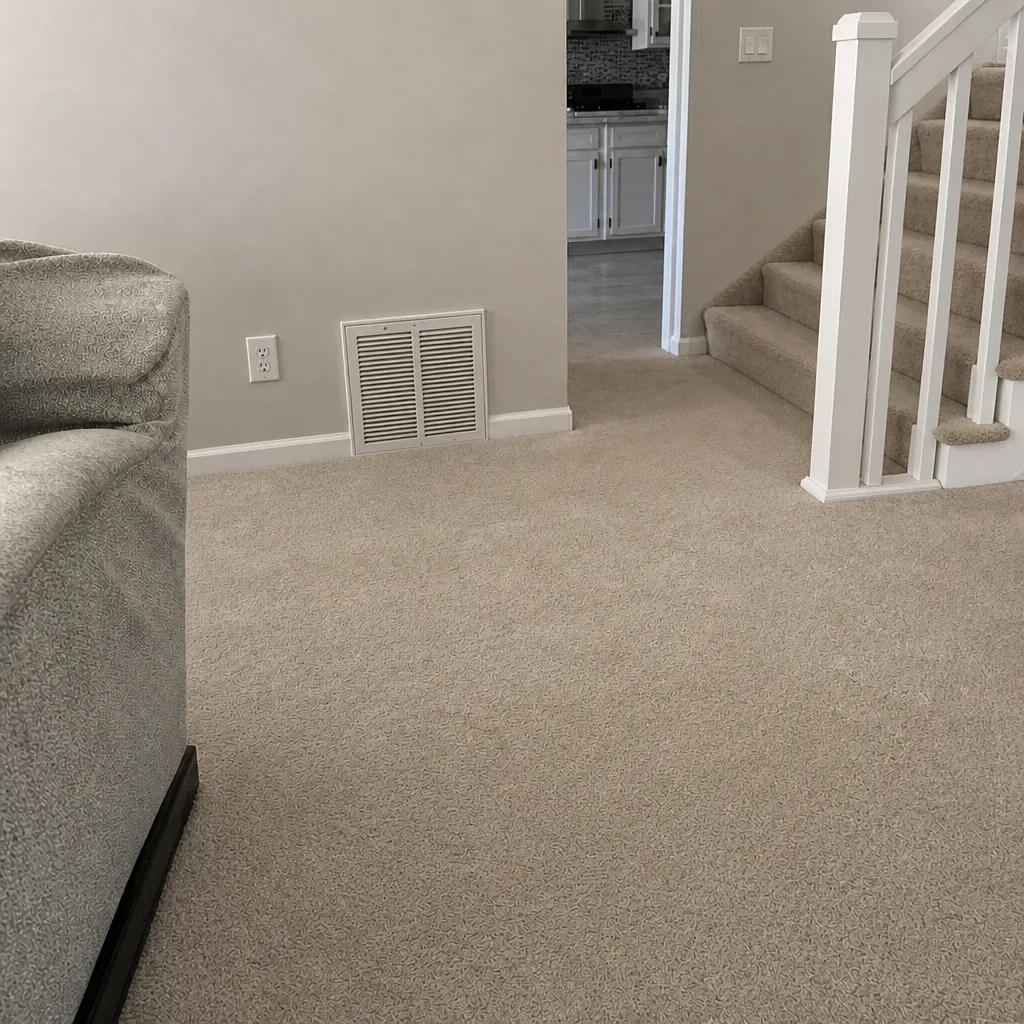 After
When to Call a Professional
Some duct cleaning decisions are judgment calls, but several scenarios call for a professional look rather than a wait-and-see approach. If a recent home inspection flagged contaminated or damaged ductwork, schedule an assessment before closing. If you’ve just finished a renovation and drywall dust was in the air for weeks, that dust is in the returns. Persistent musty odors, worsened allergy symptoms when the system runs, or energy bills that have climbed for no clear reason are all reasons to have the system inspected – and the last one often points to leaking ducts that need sealing, not just cleaning. Visible mold around registers or on accessible ductwork is an immediate reason to stop guessing and call, because handling it correctly requires containment and trained hands.
Thornton Air Duct Cleaning offers free estimates in Thornton. Call (866) 947-8149 with any of these concerns and we’ll walk through the scope before anyone is dispatched. Our technicians have up to 14 years of experience, and the local pro we connect you with is licensed and insured as their state requires.
Frequently Asked Questions
Verify their Colorado Secretary of State business registration and ask for a certificate of insurance before booking. Then require a written scope that names the equipment, the number of vents and returns, and a whole-system price. A company that can produce all three without hesitation is a company worth taking seriously.
NADCA membership means the company carries general liability insurance at the association’s minimum, has at least one technician who passed the Air Systems Cleaning Specialist exam, and follows the ACR industry standard for cleaning. “Certified” with no organization named behind it proves nothing until you ask. Always ask for the certifying body.
Very low quotes are almost always a lead price, not a final one. They get a technician to your door at a number the homeowner will accept, and the real invoice arrives after an on-site “finding” that requires an upcharge. Professional equipment has real costs, and a price far below the local range usually reflects a scope that won’t be delivered. Call (866) 947-8149 for an exact quote – estimates are free.
Costs depend on the size of the system and the condition of the ducts, and the honest answer is that a written estimate has to come after a look at the actual ductwork. What you should insist on is a whole-system flat price agreed before work starts, not a per-vent number that grows as the technician counts. Call (866) 947-8149 and we’ll explain what a scope for your home will include – estimates are free.
Ask for before-and-after photos of your own ducts, taken during the job. Photos are the standard documentation in this trade, and a contractor using professional equipment will have no problem producing them. If a company resists documenting the work, that’s a reason to choose someone else. Call (866) 947-8149 to book a job you’ll get photos from.
Most homes benefit from an inspection every few years, and cleaning is worth scheduling when there’s a reason: recent renovation, pets, visible debris, musty odors, or a home inspection finding. Older Thornton homes with original sheet metal ductwork often have leak-prone seams worth checking at the same time. Call (866) 947-8149 if you’re not sure whether your home needs cleaning or a repair inspection.
The Bottom Line
Hiring a duct cleaning contractor in Thornton comes down to verification and documentation. Check the business registration and insurance, confirm what equipment is being used by name, and require a written scope with a whole-system price before anyone arrives. Treat any quote that’s dramatically low, any sanitizer recommendation made before an inspection, and any refusal to produce before-and-after photos as the warnings they are. The professionals in this trade are easy to distinguish from the frauds once you know what to ask – and the questions in this guide take about ten minutes to run through. That’s the whole vetting process, and it’s what protects your air, your home, and your wallet.
Ready to get a clear scope and a flat price for your duct system? Call Thornton Air Duct Cleaning at (866) 947-8149 for a free estimate. We answer 24/7. Fast dispatch from 7am to 7pm, Sunday through Friday. Our technicians have up to 14 years of experience, we work with professional-grade Rotobrush and Nikro equipment, and we offer one flat price per system agreed before work starts, with before-and-after photos of your own ducts. If your ducts need repair or sealing, a [/air-duct-cleaning-thornton/] visit can include it, and our technicians carry Honeywell and Aprilaire products when a whole-home air quality solution makes sense.
Written by the team at Thornton Air Duct Cleaning.