
Last updated November 23, 2026
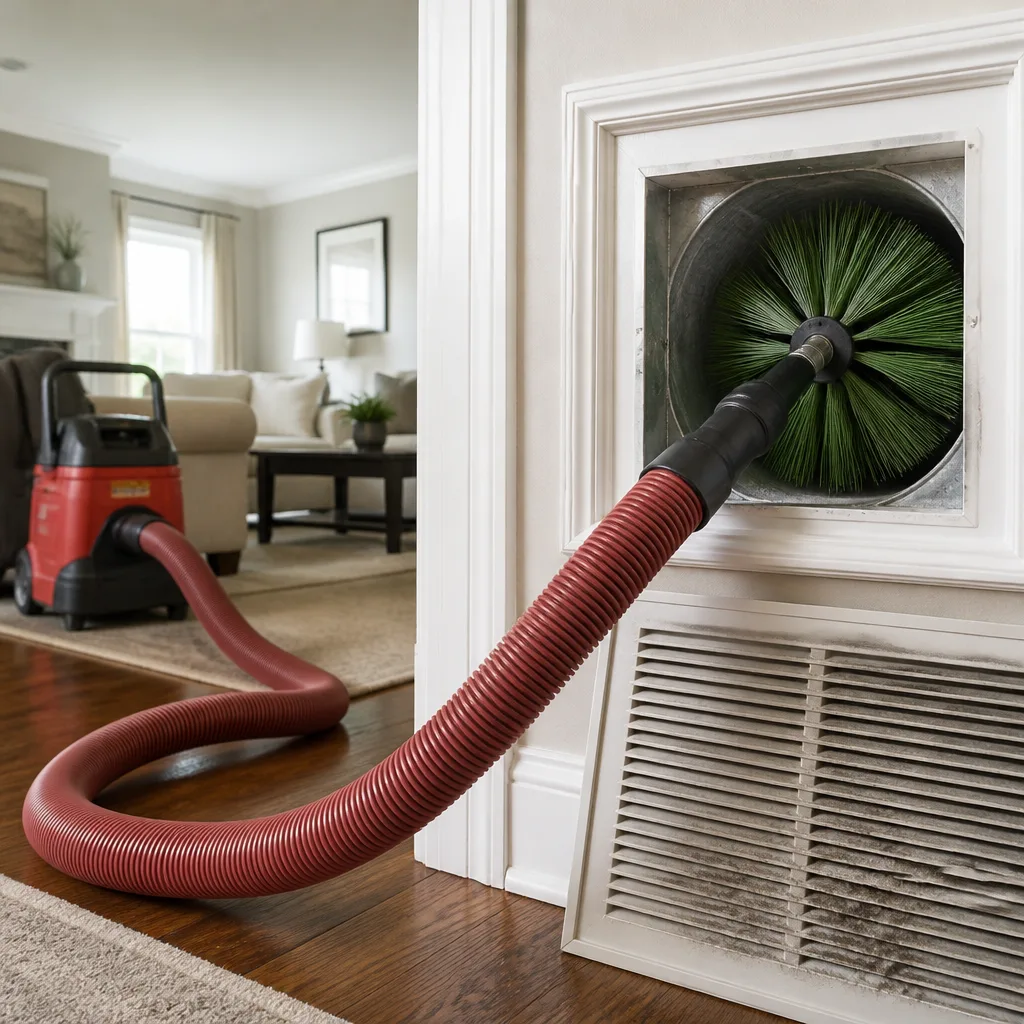 Whole-home duct cleaning
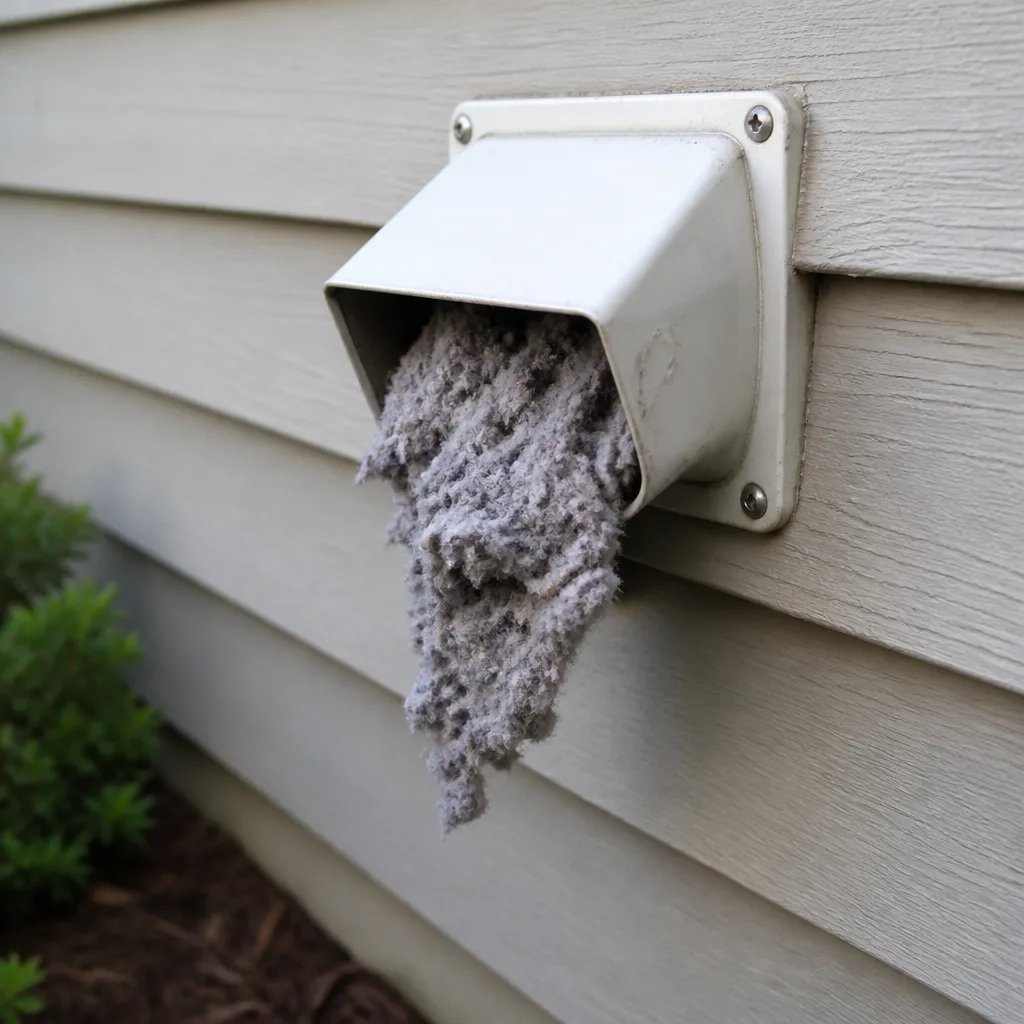 Dryer vent cleaning
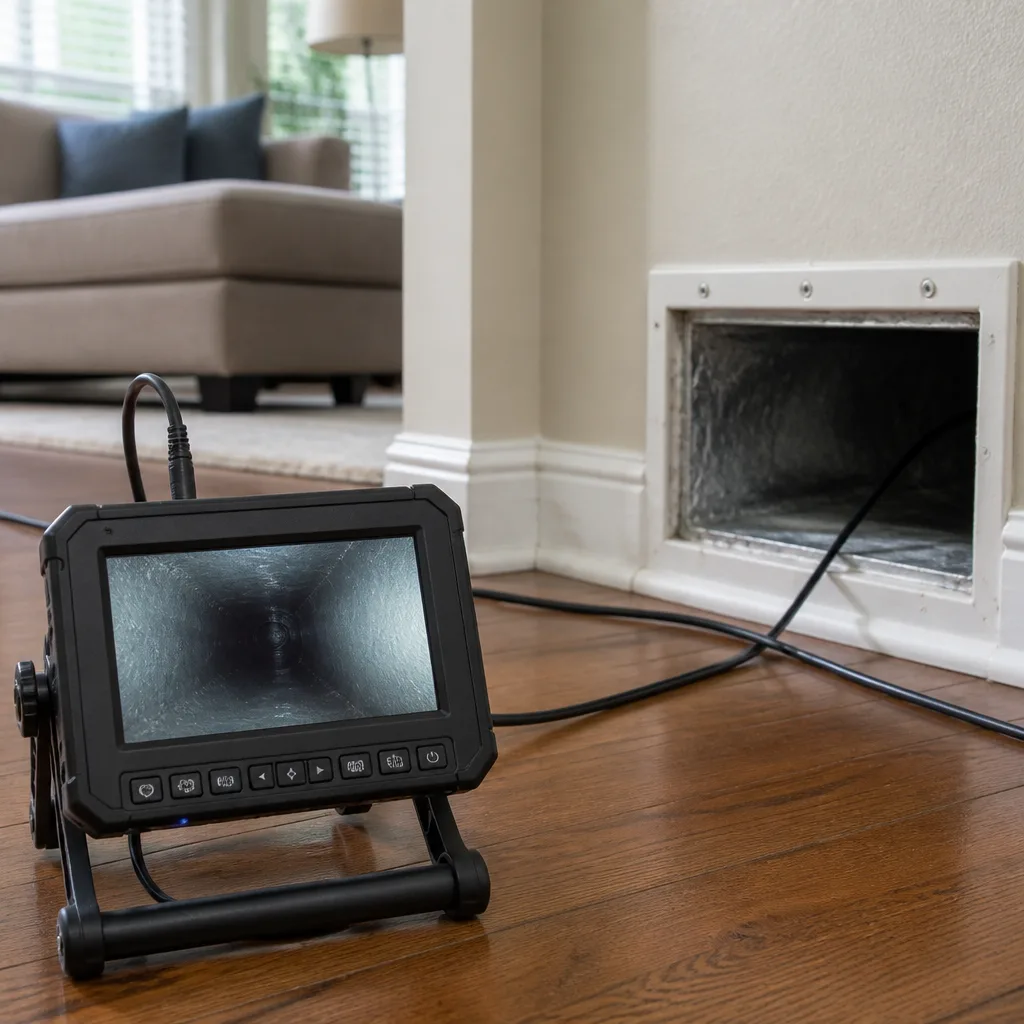 Camera inspection
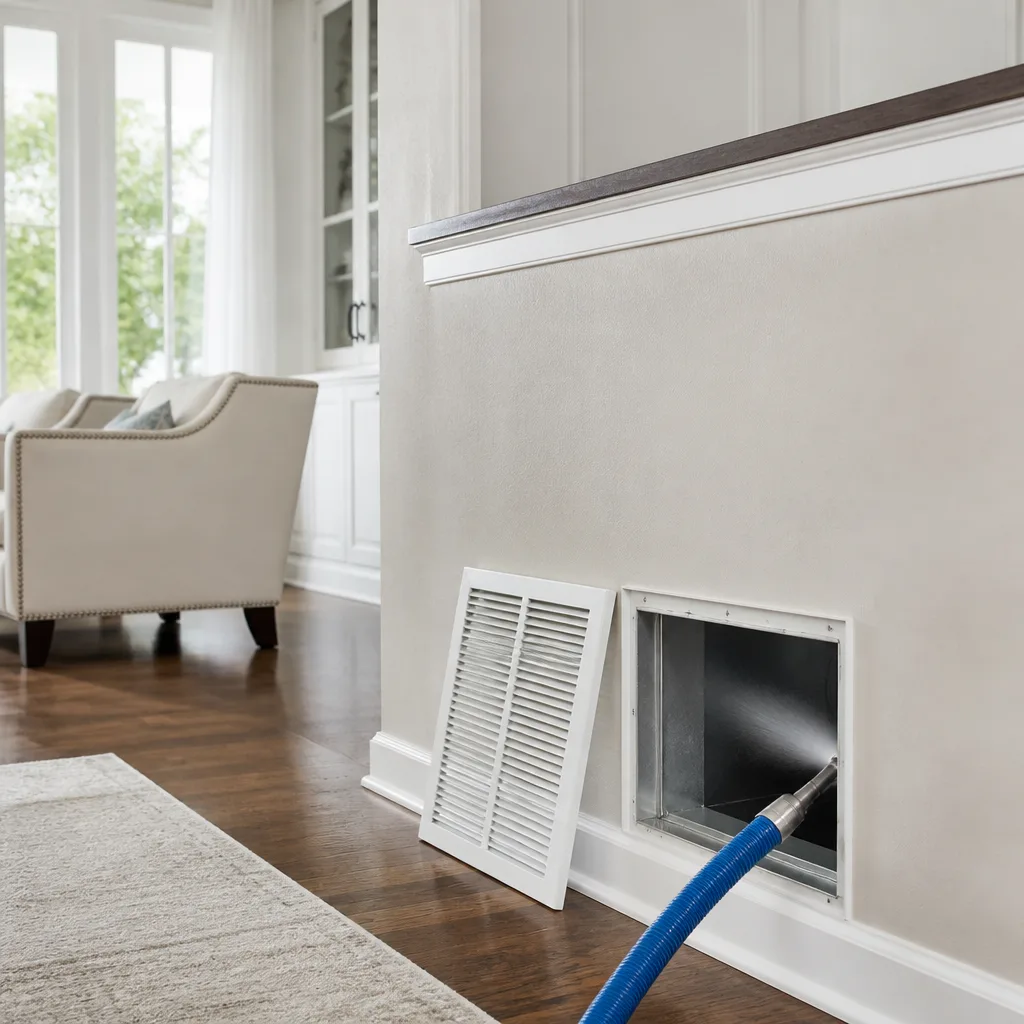 Sanitizing & deodorizing
Whole-system duct and dryer vent check with before-and-after photos - you see exactly what came out of your vents
That "$99 whole-house special" is a bait ad - the real number appears once they are in your hallway, or the "clean" is a shop-vac at the register. We photograph the inside of your ducts before and after instead.
Air Duct Cleaning Cost Breakdown: The Thornton Homeowner’s Reference for 2026
Most homeowners assume a duct cleaning quote is a duct cleaning quote. Then the tech arrives and explains that the basic price covered “surface cleaning,” and the real work costs three times more. Here’s the part people miss: the spread between a $99 offer and an $800 invoice usually isn’t greed. It’s scope. Professional-grade equipment like a Rotobrush or Nikro system costs serious money, and the labor to clean a whole Thornton home properly takes most of a day. This guide breaks down where every dollar actually goes in a real service call – inspection, cleaning, register pulls, air handler service, and add-ons – so you can read a quote in Thornton and know what you’re buying.
Quick Answer
Air duct cleaning in Thornton typically runs $400 to $800 for a full-system job on an average single-family home, with smaller systems starting near $300 and larger multi-return homes or jobs with heavy contamination running higher. Whole-system flat pricing – one price agreed before work starts, covering every vent and return – is far more transparent than per-vent pricing, which can quietly exclude key components. Most of what looks like “cheap” in this market reflects reduced scope or consumer-grade equipment, not a better deal.
Styles & brands we work with
- Whole-home duct cleaning
- Dryer vent cleaning
- Camera inspection
- Sanitizing & deodorizing
Table of Contents
- Cost Per Vent vs. Whole-System Pricing: Which Is Actually Transparent?
- What Legitimately Drives Price Variation in Thornton
- Itemized Breakdown of a Real Full-Service Job
- When an Add-On Is Worth It and When It’s an Upsell
- How to Get a Comparable Quote from Multiple Contractors
- Why a Thornton System Accumulates What It Does
- Common Mistakes to Avoid
- When to Call a Professional
Cost Per Vent vs. Whole-System Pricing: Which Is Actually Transparent?
Whole-system pricing is more transparent than per-vent pricing for one reason: it can’t quietly exclude the parts of your system that are hardest to clean. A per-vent quote sounds simple – “$25 per vent, thirteen vents, $325” – but it invites two of the most common scope tricks in this trade. First, “vent” gets defined however the contractor likes, and returns, the air handler, or the main trunk are frequently excluded. Second, the number of vents can be estimated low over the phone and revised upward once the tech has eyes on the system.
A whole-system quote prices the entire system you have, not the parts of it that happen to be convenient. That means every supply register, every return, the trunk lines, the branch runs, the boots, and the air handler all sit inside the agreed number. One flat price per system, agreed before work starts. That’s the model.
Why flat-rate quotes sometimes hide scope limits, too
Here’s the nuance competitors skip: a flat rate is only as honest as the scope behind it. A flat $199 quote is still a flat quote – but if it covers only “main lines and accessible runs” and never touches the plenum or the coil, it’s a flat quote for a fraction of the job. The question to ask isn’t “flat rate or per vent.” It’s “flat rate for which components, in writing.”
What to demand in the scope description
- A list of every component covered: supply registers, returns, trunks, branches, boots, plenum, air handler.
- The type of equipment being used (a professional air duct cleaning machine with a HEPA vacuum, not a shop-vac setup).
- Whether register covers are removed and cleaned, or just vacuumed in place.
- Whether before-and-after photos are included.
- Whether the final invoice equals the quote, or can expand on-site.
What Legitimately Drives Price Variation in Thornton
Two Thornton homes of identical square footage can land $200 apart on a duct cleaning quote, and the reasons are usually visible once you know where to look. Legitimate price variation comes from five categories, and none of them are “how the tech feels that morning.”
1. Square footage and system layout
A 1,400-square-foot ranch with a single return and short, straight trunk runs takes significantly less time than a 3,200-square-foot two-story with two returns, three zones, and a long branch run to the far bedroom. More duct surface, more footage, more time.
2. Number of returns and zones
Returns are the workhorses of a system – they pull the dust that then settles in the trunk – and they’re often the first thing excluded from a cheap quote. A home with two or three returns costs more to clean because those returns require actual work.
3. Accessibility
Ducts buried behind finished basement ceilings, systems with flex runs that snake through a cramped crawlspace, or a furnace shoehorned into a mechanical closet all take longer. The equipment has to physically reach the line to clean it. Inaccessible runs sometimes can’t be cleaned at all, and an honest quote says so up front.
4. System age and contamination level
A twenty-year-old system that’s never been cleaned carries more material than a five-year-old one. Recent renovation dust, drywall dust, and pet hair all add time. Heavy contamination may require additional passes, more aggressive agitation tools, and more containment setup.
5. Add-on services
Sanitizing, coil cleaning, sealing, and IAQ treatments all add to the base price. We cover what’s worth paying for in the add-ons section below.
Itemized Breakdown of a Real Full-Service Job
Here’s what a legitimate full-service duct cleaning actually consists of, itemized, with typical Thornton range estimates. Prices vary by the factors above, and the written estimate sets the final number – these are honest whole-system ranges, not teaser figures.
Step 1: Initial inspection and airflow assessment
Before a machine goes into a duct, a proper tech walks the system. Trunk lines, branch runs, registers, returns, the air handler, and the coil. This is where contamination level and accessibility get established, and where scope exceptions are identified. On a legitimate job, this inspection is part of the visit, not an extra line item.
Step 2: Mechanical cleaning of the duct system
This is the core of the job and the bulk of the price. Professional systems like a Rotobrush or Nikro push an agitating brush or whip through every run while a high-powered HEPA vacuum pulls loosened material back into containment. That’s the difference between removing what’s on the walls of the duct and simply disturbing the top layer.
Step 3: Register and return-cover pulls
Every supply register cover and return grille comes off, gets cleaned separately, and goes back on. Vents that are only vacuumed in place leave a film on the grille itself that keeps reintroducing dust into the airstream.
Step 4: Air handler service
The blower, the housing, and the reachable areas of the air handler cabinet get cleaned. Without this step, cleaned ducts just pull dust straight back out of a dirty blower.
Step 5: Containment and negative air (on contaminated jobs)
On jobs with visible contamination, mold, or heavy renovation dust, professional containment matters. Abatement Technologies equipment and proper negative-air protocols keep contamination from spreading through the house while it’s being removed. That setup is labor and equipment, and it belongs in the price on jobs that need it.
Typical range table (whole-system estimates, Thornton)
- Smaller single-story home, one return, straightforward access: roughly $300 – $450
- Average Thornton single-family home, standard scope: roughly $400 – $800
- Larger multi-return home, difficult access, heavier contamination: frequently above $800
- Add-on: system sanitizing (Guardsman-grade products): typically included in the range above on full-service jobs; ask where it sits on yours
- Add-on: coil cleaning: quoted separately, based on coil accessibility
- Add-on: duct repair and sealing: quoted per job, based on the number and accessibility of failing joints
When an Add-On Is Worth It and When It’s an Upsell
The test for any add-on is evidence. If a tech can show you visible mold in a return, a coil matted with dust, or a duct joint that’s leaking into a crawlspace, the add-on is responding to something real. If they can’t show you anything and lead with the pitch, the add-on is a sales tactic. Here’s how to sort the common ones.
Worth it when the evidence is there
- System sanitizing on a home with musty odors, a history of moisture issues, or visible contamination. Sanitizing doesn’t substitute for mechanical cleaning – it comes after – but it does address what mechanical cleaning can’t.
- Duct repair and sealing when joints are visibly failing, when a room is chronically cooler or hotter than the rest of the house, or when an energy bill is climbing with no obvious cause. Clean ducts are step one; sealed ducts are the finish line.
- Coil cleaning when the coil is visibly fouled. A dirty evaporator coil strains the compressor and cuts efficiency.
- Whole-home IAQ products from Honeywell or Aprilaire, when a homeowner has a specific, ongoing air quality issue the cleaning alone won’t solve – filtration, humidity control, or fresh-air ventilation.
Upsell when there’s no evidence
- Mold remediation pitched with no visible mold, no musty odor, and no moisture source identified. Mold needs water. No water, no mold.
- UV light installation presented as a blanket air purifier. UV lights work on surfaces they can reach. They don’t sterilize a moving airstream. If the pitch promises germ-free air, be skeptical.
- “Sealing” offered before anyone has checked whether the ducts are actually leaking.
- Anything quoted before the inspection. If it’s quoted before anyone has looked, it’s a script, not a recommendation.
How to Get a Comparable Quote from Multiple Contractors
Comparing duct cleaning quotes is nearly impossible when each one prices a different scope. The fix is simple: hand every contractor the same scope checklist and ask them to price it. Then you’re comparing apples to apples. Here’s the sequence.
- Measure your home first. Write down your square footage and count your supply registers and returns. This gives you a baseline to compare every quote against.
- Prepare one scope document. List every component you expect covered: supply registers, returns, trunk lines, branch runs, boots, plenum, air handler, and register cover removal.
- Specify equipment type. Ask each contractor what professional machine they use (Rotobrush, Nikro, or equivalent). If the answer is “a really strong vacuum,” that’s not a comparable quote.
- Request before-and-after photos of your own ducts in the quote. Photos of a random system don’t count.
- Ask for the all-in number. Not “starting at.” Not “plus add-ons.” One number for the scope you just defined.
- Ask what would make the price go up on-site. If the answer is vague, ask again until it’s specific.
- Get the HVAC system cleaned, too. A duct cleaning that skips the air handler just recontaminates the clean ductwork. HVAC cleaning is a distinct service, and asking whether it’s included in a quote tells you a lot about scope.
Doing the same three quotes against the same scope is the only honest comparison. Contractors who push back on a written scope are telling you something useful.
Why a Thornton System Accumulates What It Does
Thornton sits on the eastern edge of the Front Range, and the local climate puts specific demands on a duct system. The dry air, the wind-blown dust that comes off the open plains west of the city, and the long heating season all leave their mark. Our technicians have up to 14 years of experience working these systems in the north Denver metro, and the pattern is consistent season to season.
Two factors show up over and over in Thornton homes. The first is heating-season runtime. A furnace in Thornton runs heavily from late fall well into spring, which means the blower pushes air through the ducts far more hours than a system in a milder climate. More runtime, more dust deposited on duct walls. The second is the spring dust and pollen season. Homes with windows open in late spring pull fine particulate into the return, and the filter catches most but not all of it. What gets past the filter lands in the trunk and the branches. Add in the renovation activity that’s been steady across neighborhoods in the city, and you get a system that accumulates material faster than the “every 3 to 5 years” guideline most people hear.
What that means for cost
Heavier contamination takes longer to clean – more passes, more containment, more agitation tool time – and that’s one of the primary reasons a Thornton quote lands at the higher end of the range. Homeowners comparing a Thornton quote to a quote from a milder climate sometimes assume they’re being overcharged. They’re usually not. The system has more in it.
Other local context
- Homes built in the 1990s and early 2000s across the metro often have flex-duct runs in the attic that collect material in the low spots. Access is usually fine, but the sagging runs take more time to clean thoroughly.
- Basement finishes added after original construction sometimes enclose ducts behind drywall. That’s usually the point where a contractor needs to explain what can and can’t be reached.
- Many Thornton homes also have a gas dryer vent that runs a longer distance than older homes – worth knowing for dryer vent cleaning.
How Do You Know the Work Was Actually Done?
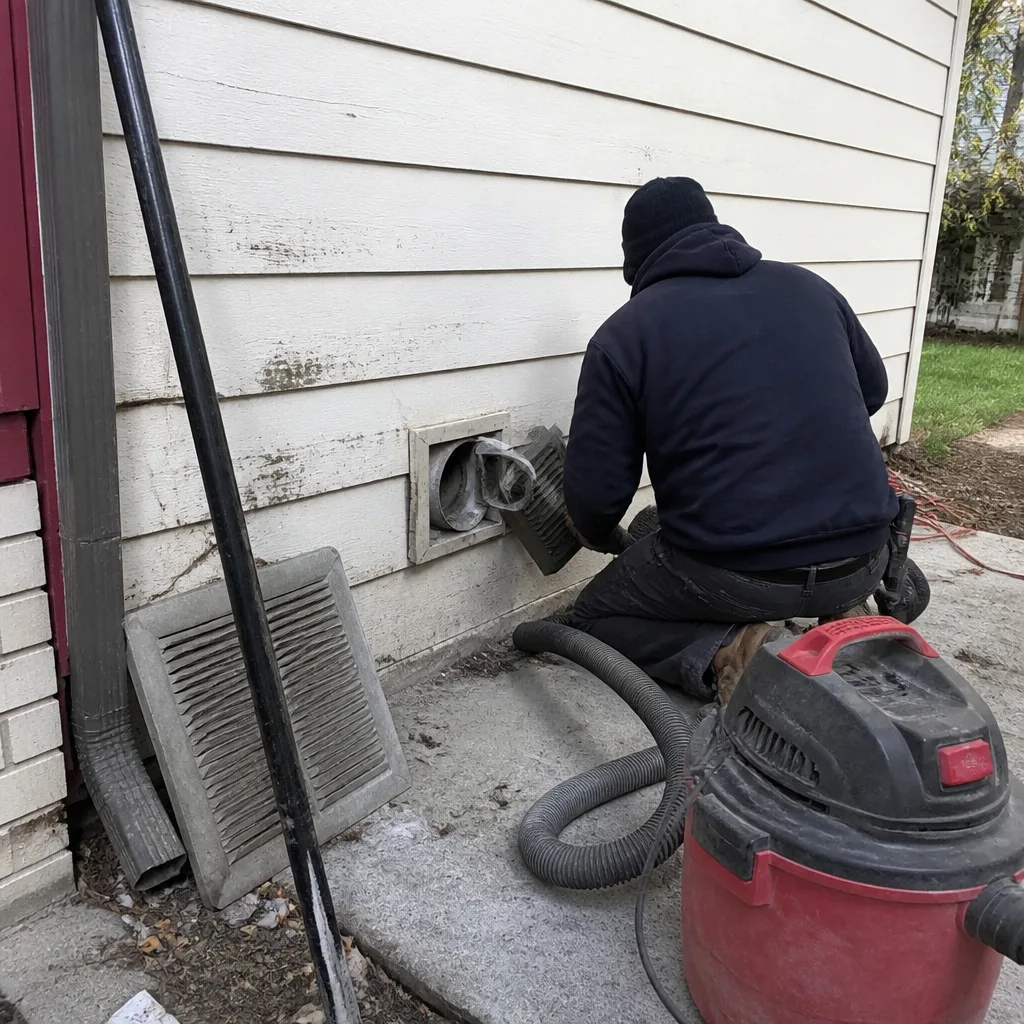
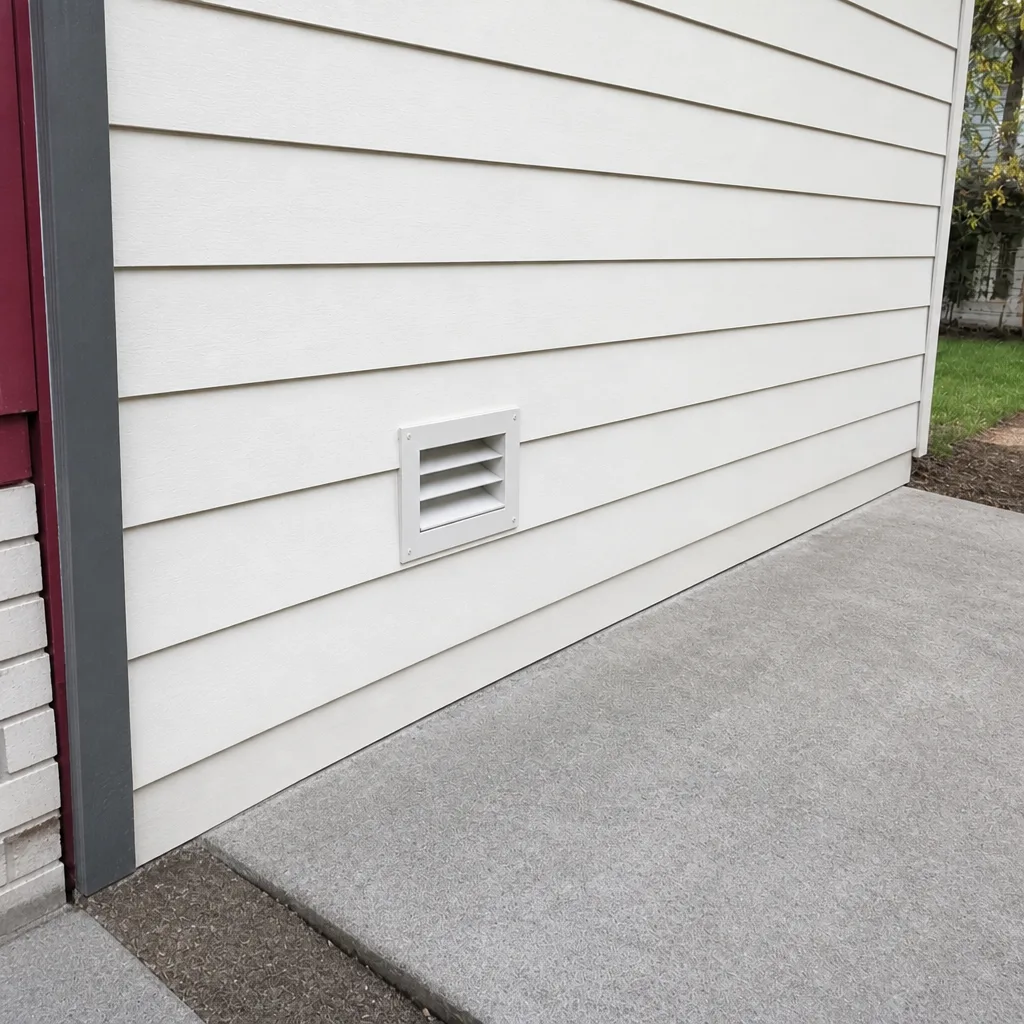
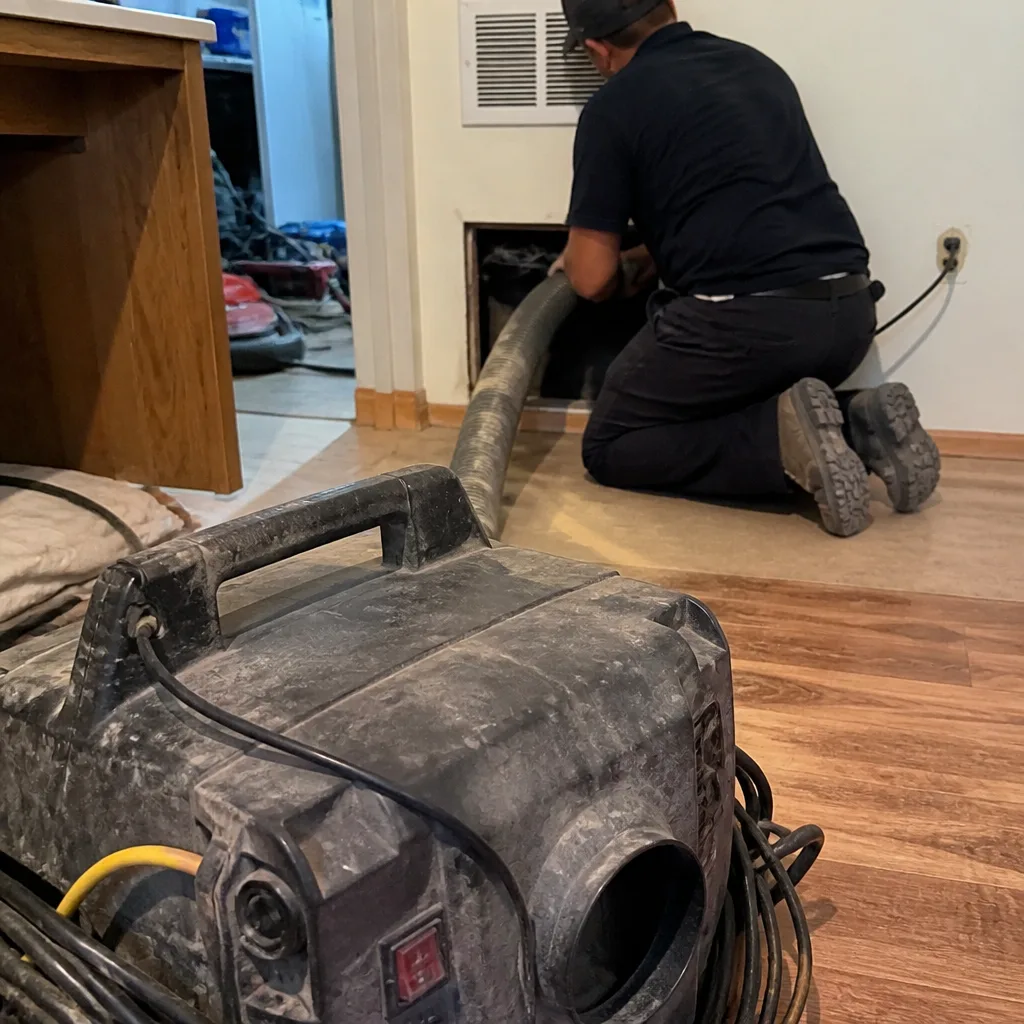
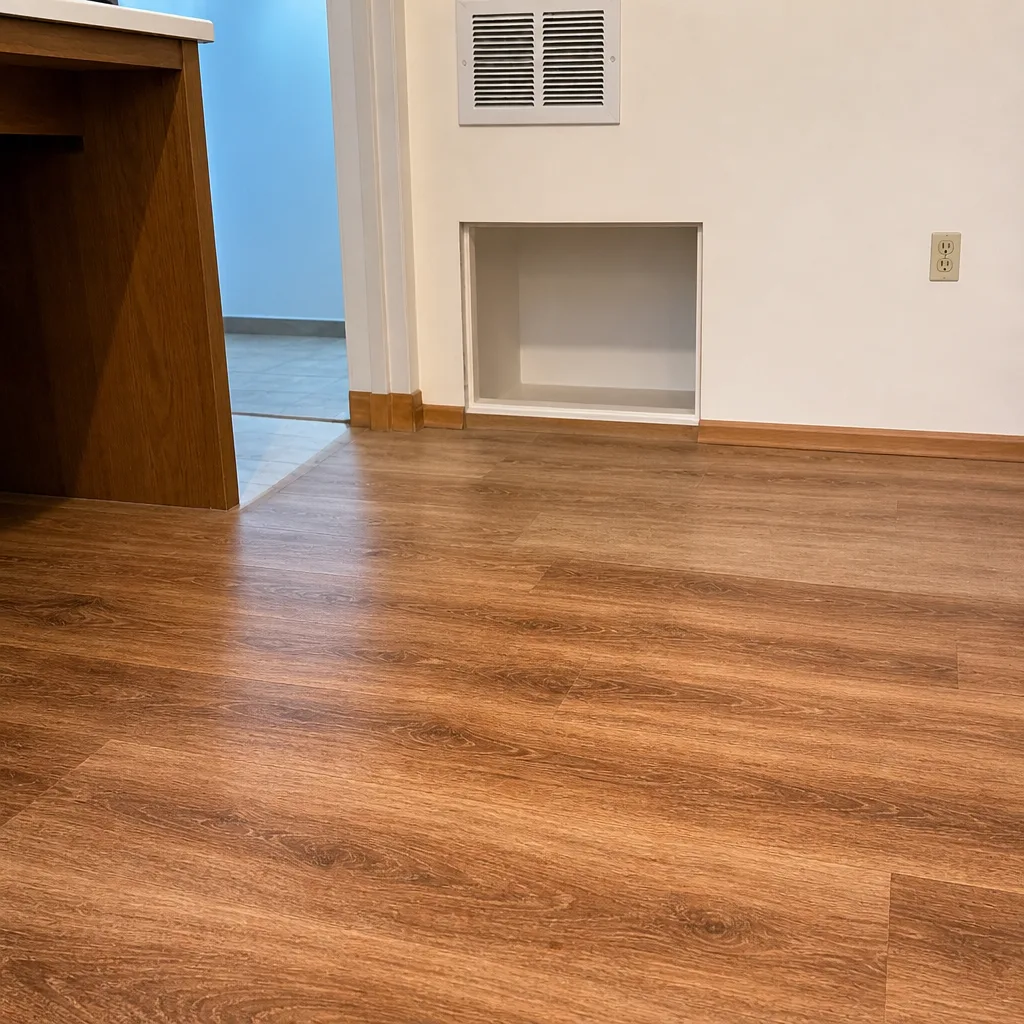
You know the work was actually done when you have before-and-after photos of your own ducts, a scope-completion checklist signed off by the technician, and a final invoice that matches the agreed price. Anything short of those three is a trust exercise. In a category with this much bait-and-switch history, trust exercises don’t help you.
The three checks that confirm the job
- Photos of your ducts, not stock photos. Before and after. From inside the duct. Every technician with a professional-grade scope or inspection camera can capture these.
- A written scope sign-off. Ask the technician to initial each item on the scope as it’s completed. If a component was excluded, it says so.
- An invoice that equals the quote. If the agreed price was one flat price per system, no per-vent refiguring, no surprise add-ons, no “plus disposal,” the invoice should show exactly that number.
We start every job with the scope and end it with photos of the homeowner’s own ducts. That’s the standard we’d want if we were the one paying.
Common Mistakes to Avoid
- Booking the cheapest quote without reading the scope. A $99 whole-house quote can’t cover a whole house at professional labor rates – it covers what fits in the price, which usually isn’t much. Ask what’s excluded before you compare.
- Accepting a per-vent quote that doesn’t define “vent.” If the contractor won’t define whether returns and trunks are included at that per-vent rate, you’re pricing an unknown. Get it in writing.
- Skipping the air handler. Cleaning the ducts while leaving a dust-packed blower is throwing money at half a job. Make sure the air handler is in the scope.
- Letting add-ons get quoted before inspection. Any add-on pitched over the phone, before anyone has looked at the system, is a script – not a recommendation. Evidence first.
- Treating sanitizing as a substitute for cleaning. Sanitizing after mechanical cleaning is useful on contaminated systems. Sanitizing instead of cleaning does almost nothing – the material still sits on the duct walls.
- Assuming Thornton system accumulation matches the national guidelines. The heating-season runtime and spring dust here push accumulation faster than “every 3 to 5 years” for many homes. If it’s been longer than that and the house has visible dust, pet hair, or renovation history, it’s worth pricing a job.
- Letting Saturday requests slip into the plan. We’re closed Saturdays. If a project matters, book it Sunday through Friday and keep the plan simple.
When to Call a Professional
Duct cleaning isn’t a job to improvise. A shop-vac duct cleaning that sounds thrifty usually just agitates contamination, pushes it further down the line, and leaves the coil loaded. That’s not a cost savings, it’s a deferred cost. Call a professional when the visible register grilles are dark with accumulated dust just days after cleaning them, when a remodel has left drywall dust in the returns, when the whole house smells musty on the return side, when a home inspection has flagged the ducts, or when an energy bill is climbing and the system hasn’t been touched in years.
Thornton Air Duct Cleaning offers free estimates in Thornton – call (866) 947-8149. We answer 24/7. Fast dispatch from 7am to 7pm, Sunday through Friday. The local pro we connect you with is licensed and insured as their state requires, and every job is one flat price per system agreed before work starts.
See the difference
 Before
 After
 Before
 After
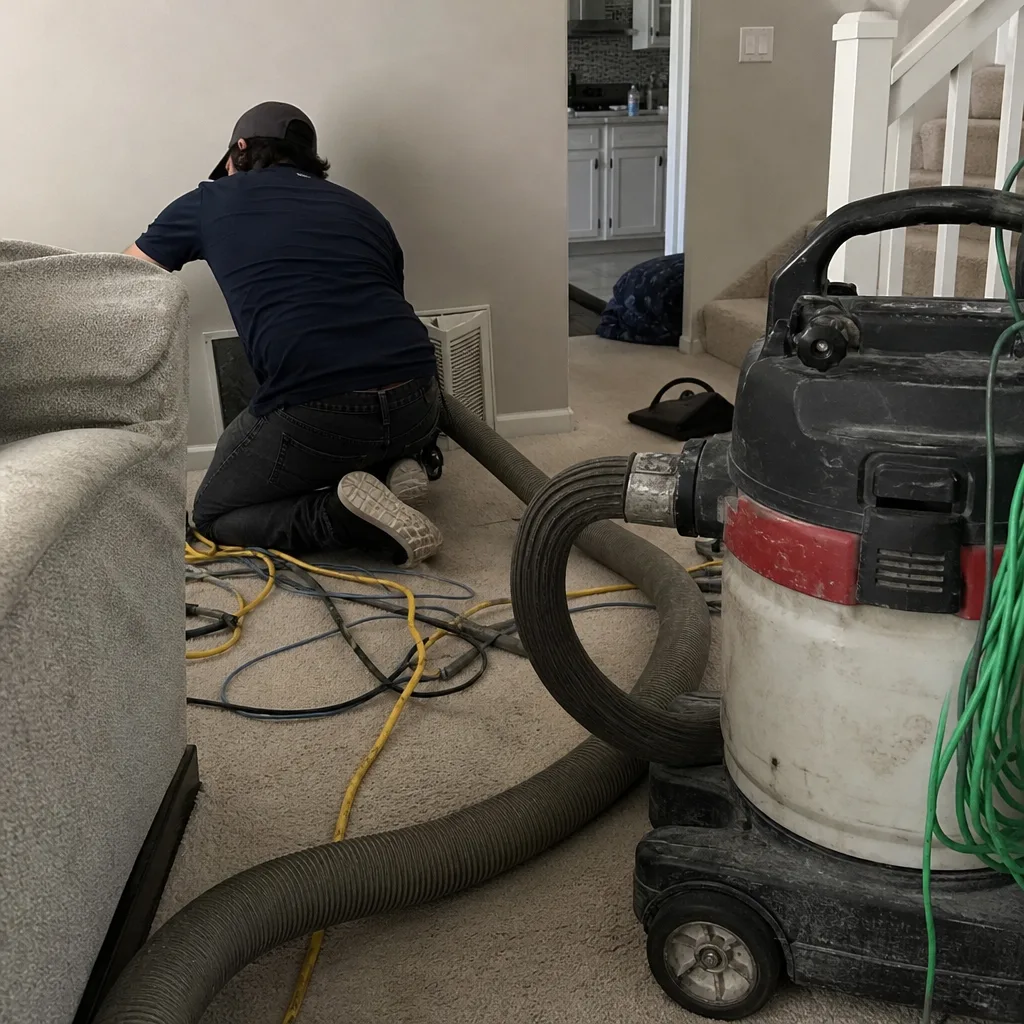 Before
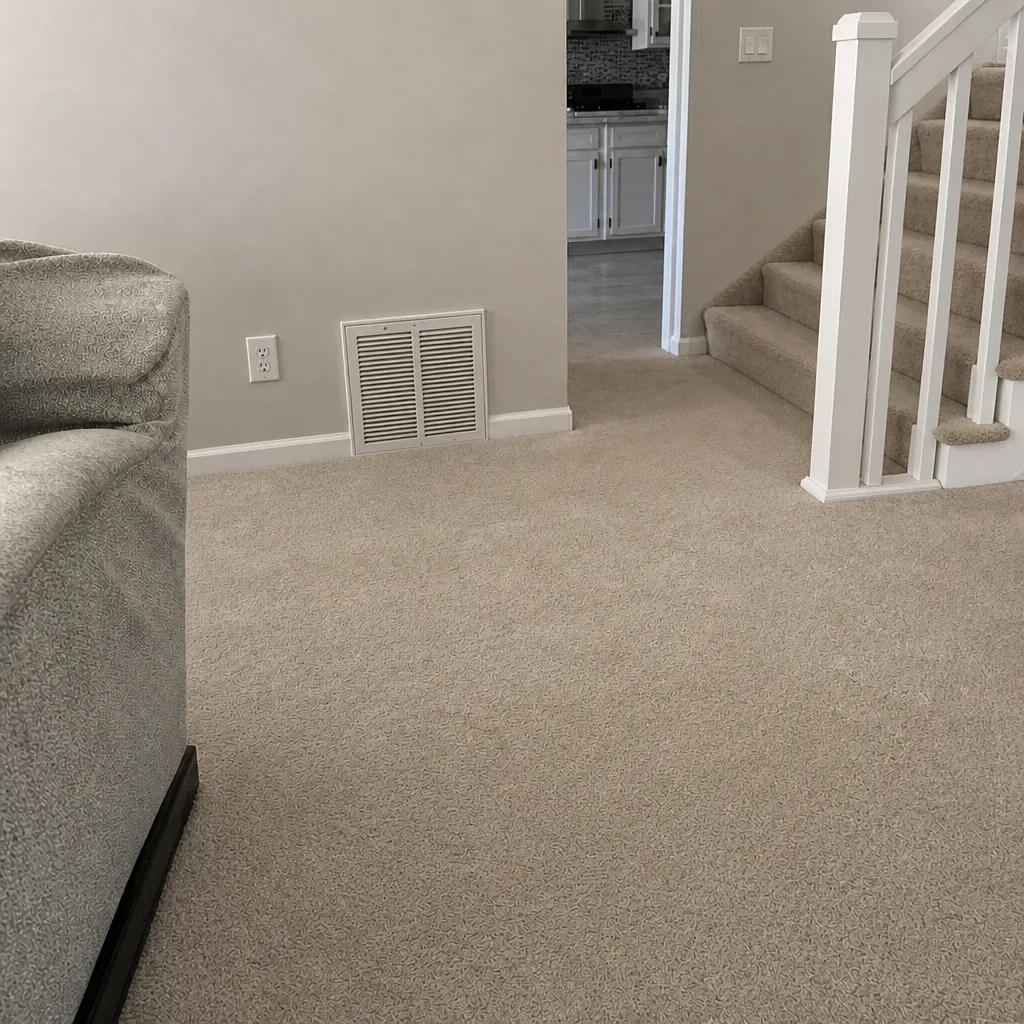 After
Frequently Asked Questions
Full-system air duct cleaning in Thornton typically runs $400 to $800 for an average single-family home, with smaller systems near $300 and heavier jobs above $800. The written estimate sets the final price, and any quote that starts well below $300 deserves a hard look at its scope. Call (866) 947-8149 for an exact quote – estimates are free.
Because they’re pricing less work. A very low quote usually excludes returns, the plenum, the air handler, or register cover removal, or uses consumer-grade equipment that can’t pull a full duct line. Professional-grade tools like the Rotobrush or Nikro systems cost real money, and that equipment is what makes a thorough clean possible. If a quote sounds too good, ask exactly what it covers and what’s excluded in writing. Call (866) 947-8149 if you want a scope to compare against – estimates are free.
Ask for before-and-after photos of your own ducts, a written scope-completion sign-off, and a final invoice that matches the agreed price. Those three confirm the job was done to the scope you were quoted. If a contractor resists any of them, that’s your answer. Call (866) 947-8149 to request a full-scope quote with photo documentation – estimates are free.
The common “every 3 to 5 years” guideline is a floor, not a ceiling, and many Thornton homes accumulate faster than that because of the long heating-season runtime and spring dust. If you have pets, have renovated recently, or see dust returning to the registers within days of cleaning them, it needs doing sooner. Call (866) 947-8149 if you’re not sure – estimates are free.
It can reduce the amount of accumulated dust and particulate in the airstream, which is a real reduction in what gets recirculated. It doesn’t eliminate allergens, and any company that promises that is overstating. Pairing cleaning with proper filtration, or with Honeywell or Aprilaire IAQ products where a specific need exists, is a more honest approach. Call (866) 947-8149 to talk through your situation – estimates are free.
Yes. We work with both homeowners and property managers in Thornton, and we scope per unit based on the actual system. For multi-unit properties, ask about per-system scoping so each unit gets a documented job. Call (866) 947-8149 to set up a walk-through – estimates are free.
Sometimes. A system that’s been cleaned recently with no obvious contamination, no dust complaints, and no renovation history may not need it. We’ll say so. A legitimate specialist would rather tell you a job can wait than bill for one that shouldn’t. Call (866) 947-8149 and we’ll help you figure out where your system sits – estimates are free.
The ducts are one part of the whole system. Coil condition, filtration, and how the home handles humidity all matter, which is why a full-service approach includes air quality and sanitizing alongside cleaning. Abatement Technologies containment and Guardsman-grade sanitizing products are the tools we use when a job calls for them. Learn more about the broader scope of Thornton Air Duct Cleaning and what a whole-system visit covers. Call (866) 947-8149 for a free estimate.
The Bottom Line
Air duct cleaning in Thornton typically runs $400 to $800 for a full-system job, and the number moves on scope, equipment, and how much material the system actually holds – not on how good a deal a contractor is willing to cut. A $99 quote isn’t cheap. It’s a smaller job wearing a “full house” label. Whole-system flat pricing, a written scope you can compare against other quotes, professional equipment, and before-and-after photos of your own ducts are the four things that separate a legitimate job from a bait-and-switch. Book it Sunday through Friday, ask for the scope in writing, and hold the invoice to the quote.
Contact
If you’re ready for a real number on your system, call Thornton Air Duct Cleaning at (866) 947-8149 for a free estimate. We answer 24/7. Fast dispatch from 7am to 7pm, Sunday through Friday. One flat price per system agreed before work starts, before-and-after photos of your own ducts, and a satisfaction guarantee behind every job.
Written by the team at Thornton Air Duct Cleaning.