
Last updated November 23, 2026
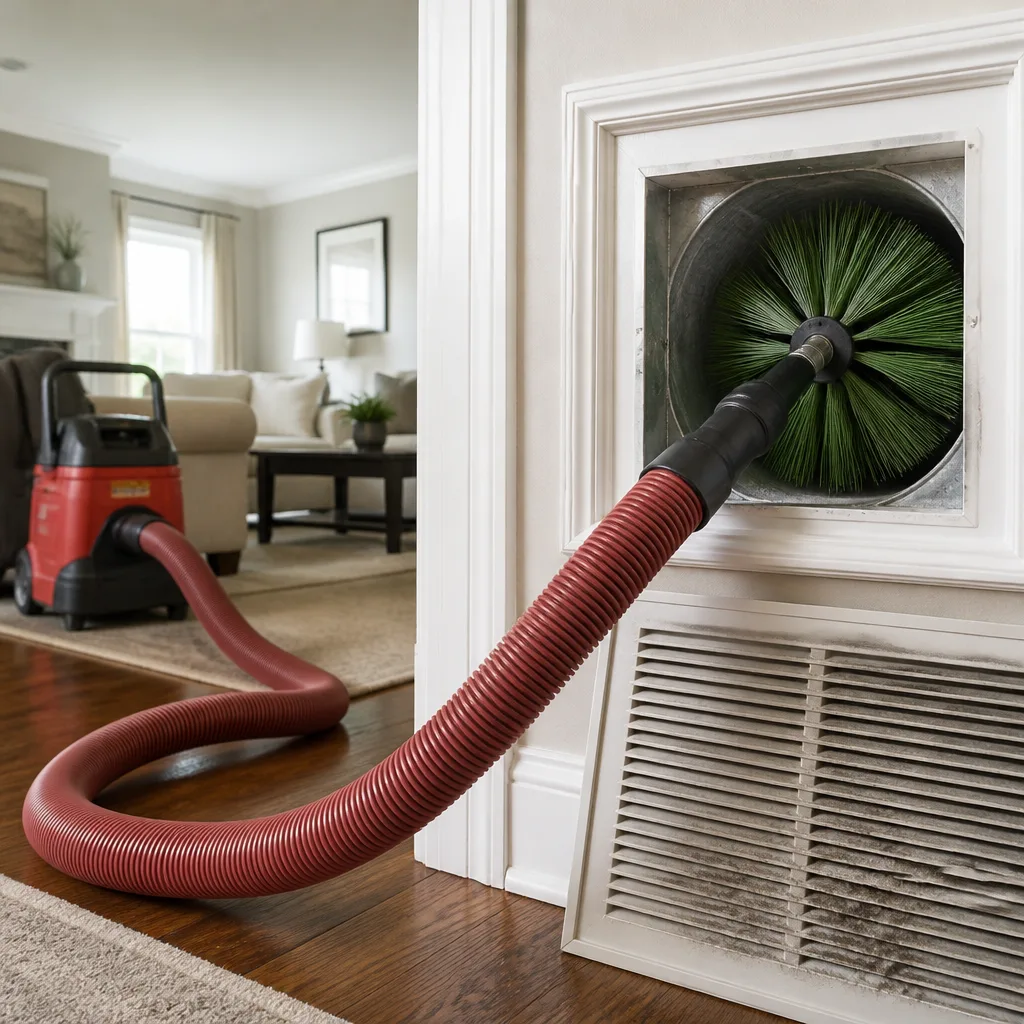 Whole-home duct cleaning
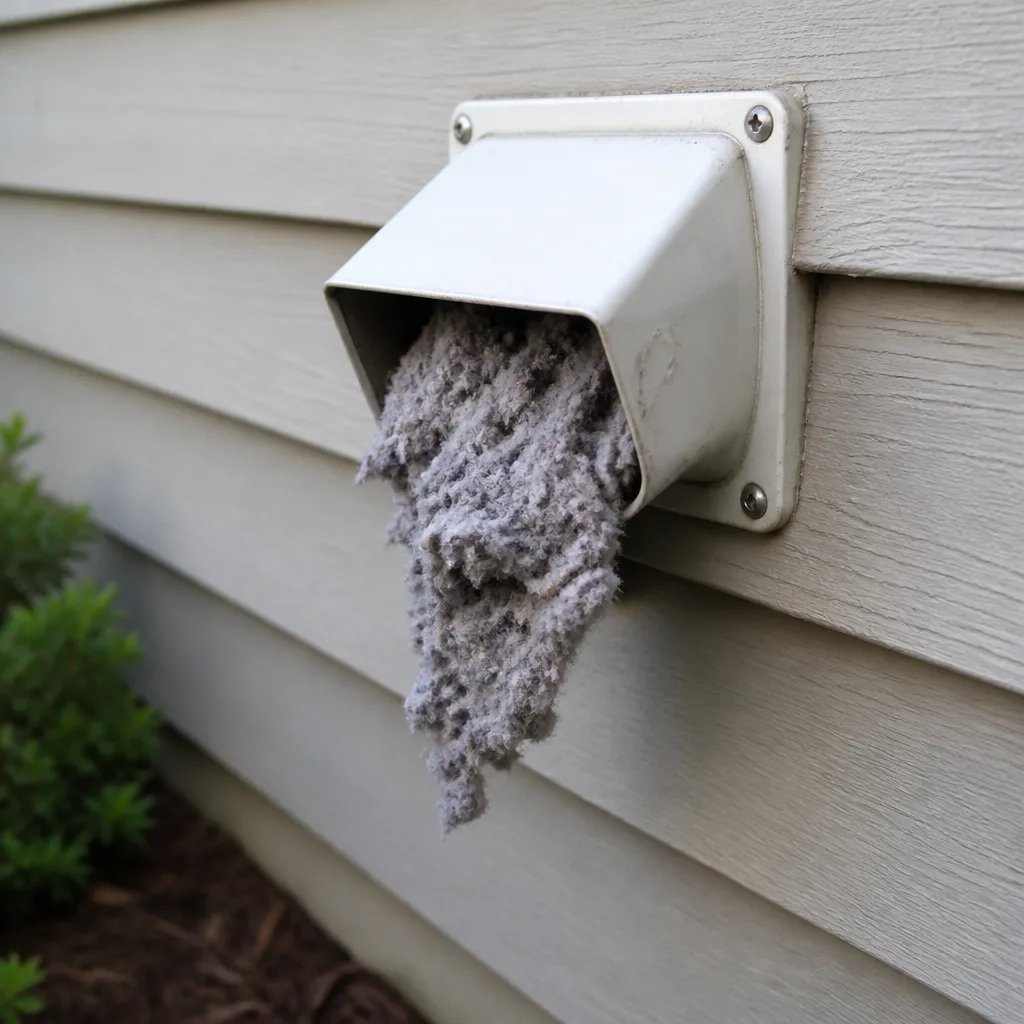 Dryer vent cleaning
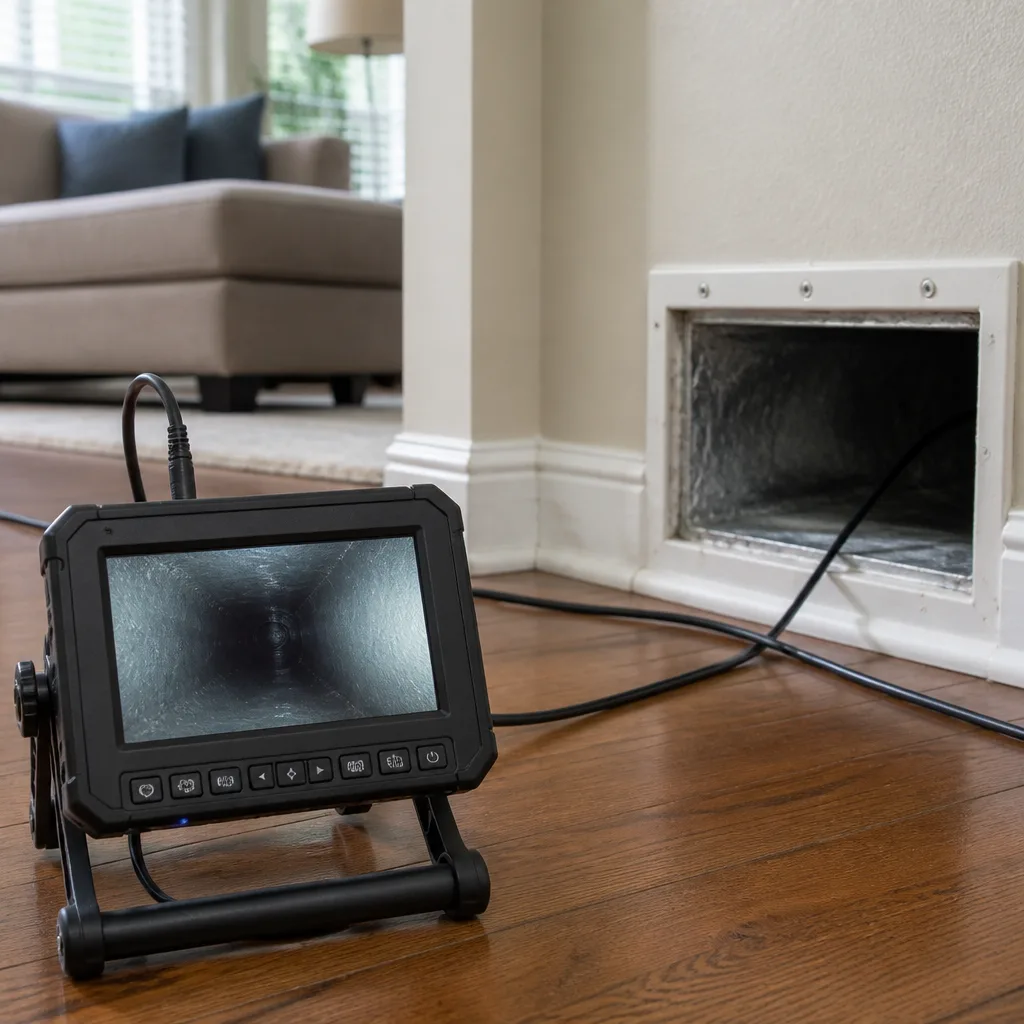 Camera inspection
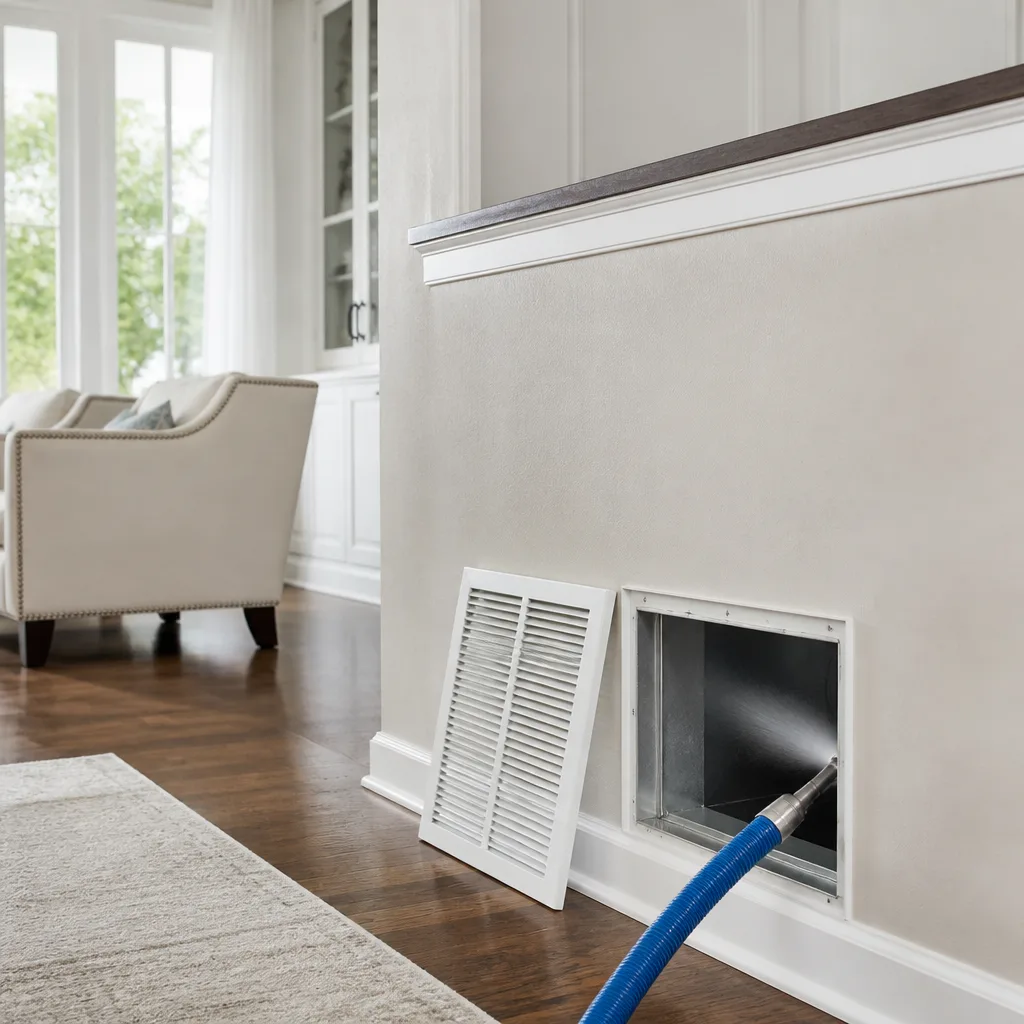 Sanitizing & deodorizing
Whole-system duct and dryer vent check with before-and-after photos - you see exactly what came out of your vents
That "$99 whole-house special" is a bait ad - the real number appears once they are in your hallway, or the "clean" is a shop-vac at the register. We photograph the inside of your ducts before and after instead.
Air Duct Cleaning Troubleshooting in Thornton: Common Problems and How to Fix Them
Two homes on the same Thornton street can have the exact same complaint – weak airflow from the registers – and need completely different fixes. One has a return grille packed with dust and pet hair. The other has a flex duct in the crawlspace that’s been crushed or disconnected since the last remodel. One costs nothing to fix. The other needs a technician with a camera scope and a plan. The trouble is that homeowners usually can’t tell which situation they’re in, so they call the first number they see on a coupon and end up getting sold a full system cleaning when a filter change would’ve done it – or the reverse, a quick brush-down that ignores a duct that’s actively leaking into the attic.
This guide maps each common symptom to its real, likely causes. You’ll learn what you can inspect yourself, what needs a professional, and – crucially – how to describe what you’re seeing so a technician quotes you accurately. We’re writing from Thornton, where the altitude and the housing stock both shape how duct problems show up, and what actually fixes them.
Quick Answer
Most duct “problems” in Thornton come down to one of four things: a blocked or dirty return, a disconnected or crushed flexible duct section, a leak at the joints or plenum, or contamination that’s fouling the air itself. Cleaning fixes the contamination. Sealing and repair fix the airflow and energy loss. You can rule out the simplest causes yourself by checking filters and grilles; anything involving ductwork in a crawlspace, attic, or wall cavity needs a technician with professional equipment and a camera scope to diagnose correctly.
Styles & brands we work with
- Whole-home duct cleaning
- Dryer vent cleaning
- Camera inspection
- Sanitizing & deodorizing
Table of Contents
- The Symptom-to-Cause Matrix: What Your Home Is Telling You
- What You Can Check Yourself Before Calling Anyone
- Why Thornton’s Altitude Makes Duct Problems Worse
- How to Describe a Symptom So You Get an Accurate Quote
- Clean, Repair, or Replace: The Decision Checkpoints
- Musty Odor That Won’t Go Away
- Uneven Room Temperatures and Weak Airflow
- What a Professional Actually Does on a Call
The Symptom-to-Cause Matrix: What Your Home Is Telling You
Before you call anyone, it helps to translate what you’re noticing into a technical symptom. Most homeowner complaints fall into five categories, and each one points to a handful of likely causes. When you know which category you’re in, a technician can prepare the right equipment before they arrive – which means a faster, more accurate diagnosis.
Here’s how the symptoms usually map in the homes we see around Thornton:
- Musty or stale odor from the registers. Possible causes: microbial growth on the inside of the duct liner from condensation, a wet evaporator coil or drain pan, or debris that has settled in the return and stayed damp during the summer cooling season.
- Weak airflow from one or more registers. Possible causes: a clogged return grille, a crushed or disconnected flex duct run, a closed or blocked balancing damper, or a filter that’s gone flat with dust.
- Rattling or booming noise in the walls or ceiling. Possible causes: loose duct hangers, a flex duct run that’s ballooning and slapping against framing due to poor support, or a gap at a boot or plenum pulling air and making it whistle.
- Uneven room temperatures. Possible causes: a supply duct terminating in the wrong place, an undersized return for that zone, a long flex run choking the delivered air volume, or a duct that’s leaking cooled or heated air into an unconditioned crawlspace.
- Visible dust on furniture or around grilles. Possible causes: a loose duct joint near the register, poor filtration at the air handler, or a general accumulation of debris in the supply runs that has never been cleaned.
Notice that only a few of these point to cleaning as the fix. The rest are mechanical problems – loose joints, crushed runs, bad supports – that cleaning alone won’t solve. That’s why we treat duct repair and sealing as a core service alongside cleaning, not an upsell tacked on at the end. If the airflow problem was caused by a disconnected duct, brushing the inside of it doesn’t help. You have to reconnect it and seal it, or you’ll be back at square one within a season.
What You Can Check Yourself Before Calling Anyone
A surprising number of airflow complaints resolve with about fifteen minutes and a flashlight. The trick is knowing which checks are safe and useful, and which checks are best left to a professional. Here’s the split.
Safe for you to check
- Your return grilles. Look at the grille that pulls air back into the system. If it’s matted with dust, pet hair, or lint, that’s a real restriction. Vacuuming it off is safe and takes two minutes.
- Your filter. Pull the filter at the air handler, hold it up to a light, and see whether light passes through. If it’s opaque, you’ve found a likely airflow culprit. Replace it with the same size and pleat rating the equipment specifies.
- Visible flex duct in an accessible crawlspace or basement. If a section is visibly crushed, kinked at a sharp elbow, or hanging loose with a gap at a boot or junction, that’s mechanical damage. Don’t crawl into a tight, dark space alone – note what you can see from a safe vantage point and tell the technician.
- Register dampers. Some registers have a small lever you can flip to open or close the airflow. Check whether the rooms with weak airflow are simply closed off.
- Breaker and thermostat. An electric furnace or fan that isn’t running will look exactly like weak airflow. Confirm the air handler is actually running before concluding the ducts are the problem.
What requires a professional
Anything behind drywall, deep in a crawlspace, or high in the attic framing needs equipment to assess properly. A camera scope lets a technician see inside a run without cutting it open. A pressure test or static pressure reading tells them whether the system is starving for return air or pushing against too much restriction. Both are things you can’t fake with a shop-vac and a flashlight, and both are what separates a real diagnosis from a guess.
The distinction matters because we’ve seen plenty of homes where the homeowner tried to clean the ducts themselves with a shop-vac – and ended up dislodging debris that then settled in a joint and caused a bigger restriction than what they started with. Professional equipment exists for a reason. Our technicians use Rotobrush and Nikro systems because they’re designed specifically for this job, with controlled containment and agitation that actually lifts the contamination rather than just stirring it up.
Why Thornton’s Altitude Makes Duct Problems Worse
Thornton sits at roughly 5,350 feet. That number matters more for your ductwork than most homeowners realize. At this altitude, the air is thinner – lower barometric pressure, lower air density. Your HVAC system has to move more air volume to deliver the same amount of heating or cooling to a room. When the ducts are clean and sealed, that’s just how the system runs and everything is fine. When there’s a restriction or a leak, the problem gets magnified.
Practically, here’s what that means in a Thornton home:
- Return-air restrictions hit harder. A slightly dirty return grille that would be a mild nuisance at sea level becomes a more noticeable static pressure problem up here. The blower works harder, the airflow drops more, and rooms at the end of the trunk line feel it first.
- Leaks waste more of a finite resource. If a supply duct is leaking into an attic, you’re losing conditioned air that already cost more energy to produce. Add altitude-related blower strain and you feel the difference on the energy bill faster.
- Uneven heating shows up sooner. A long flex run that’s badly supported and choking airflow will perform noticeably worse in Thornton than in a home down at lower elevation, simply because the system has less margin to absorb the inefficiency.
- Filter performance matters more. A filter that’s slightly overdue is less forgiving up here. Change it on schedule rather than waiting for a visible problem.
We don’t say this to alarm anyone. Thinner air is a normal fact of living in Thornton, not a defect. The point is that the small stuff – a kinked flex duct, a slightly clogged grille, a filter that’s overdue – has a bigger effect on your comfort here than it would somewhere else. Which means the fixes are also worth more to you. A sealed, clean duct system is a real comfort upgrade in this climate, not a cosmetic one.
How to Describe a Symptom So You Get an Accurate Quote
The single biggest reason homeowners get an inflated or mismatched quote on duct work is a vague description over the phone. “My airflow is weak” can mean a dozen different things, and a technician who can’t narrow it down has to pad the quote to cover the worst case. Give a specific description and you get a specific quote. Here’s a repeatable way to describe what’s going on.
- Name the rooms affected and the rooms that are fine. “The two bedrooms at the back of the house are weak, but the living room and front bedroom blow strong” immediately narrows the culprit to a zone or run, not the whole system.
- Say when it started and whether it’s constant or intermittent. “It’s been weak for a couple of months” versus “it started after the AC went out last summer and never came back” tells a very different story. Intermittent symptoms often point to a damper, blower, or blower motor issue.
- Describe what you can see and smell. “The registers have a musty smell when the heat first comes on” is much more useful than “there’s a smell.” Mention visible dust, visible moisture, and whether the smell is stronger at any specific time of day.
- Mention any recent renovations, moves, or equipment changes. New furniture, a new HVAC system, a remodel that disturbed old drywall – these context clues save a technician guesswork.
- Say what you’ve already checked. “I replaced the filter and cleaned the return grille, and it’s still weak” keeps the diagnosis from starting at square one and also stops an upsell attempt cold.
If you can answer those five things, you’ve given a technician enough to quote you accurately on a written estimate before anyone shows up at your door. That’s the standard we hold ourselves to: one flat price per system, agreed before work starts. No surprises at the end. The written estimate sets the final price, and it’s the number we stand behind.
Clean, Repair, or Replace: The Decision Checkpoints
One of the most useful questions you can ask before hiring anyone is: is this actually a cleaning problem, or is it a repair problem? The answer changes what service you need, and it changes what a fair quote looks like. Use these checkpoints to figure out where you stand.
- Is there visible debris or contamination inside the ducts? If yes, cleaning is warranted. If the ducts look clean but airflow is still weak, cleaning alone won’t fix it – investigate a mechanical cause.
- Are any joints, boots, or plenum connections visibly loose or gapped? If yes, repair and sealing are the fix. A leak at a boot will keep throwing conditioned air into the wrong space, no matter how clean the ducts are.
- Is any flex duct crushed, kinked, or disconnected? If yes, replace or reroute that section. Cleaning a crushed duct is wasted money – the air still can’t get through it.
- Is there a musty smell that keeps coming back after cleaning? That points to a persistent moisture source – often a wet coil, a drain pan, or condensation on a cold duct surface. Cleaning treats the symptom; finding and fixing the moisture source treats the cause.
- Is the home older with original ductwork in poor condition? Original ductwork that has leaked for years and been crushed in a couple of places sometimes makes replacement the honest recommendation. A technician who recommends replacement should be able to show you the problem on a camera scope or with visible evidence. Ask them to.
In our experience, most Thornton homes fall into the “clean, then seal the obvious leaks” category rather than “replace everything.” A duct system that has been neglected for years usually still has plenty of life in it – the runs are fine, the joints just need attention. The honest recommendation is nearly always the smaller one, and it’s the recommendation we make.
That’s why we offer duct repair and sealing as a standalone service alongside air duct cleaning. Cleaning gets the inside of the ducts to a clean baseline. Sealing makes sure the air that goes into the ducts actually reaches the rooms it’s supposed to heat and cool. Clean ducts are step one. Sealed, repaired ducts are the finish line.
Musty Odor That Won’t Go Away
A musty smell coming from ductwork is one of the most common complaints we hear in Thornton homes, and also one of the most frequently misdiagnosed. The smell almost always points to moisture, and moisture in a duct system has a handful of specific sources. Cleaning the ducts without finding the moisture source is like mopping up water without turning off the tap – the smell comes back within a season.
The likely causes, in rough order of frequency:
- A damp evaporator coil or drain pan. During cooling season, the indoor coil produces condensation. If the drain pan traps water or the drain line clogs, water sits there and grows biological contamination. You’ll smell it most sharply when the system first kicks on.
- Condensation on a cold duct surface. In a humid summer, an uninsulated or under-insulated duct in a crawlspace can sweat. Moisture on the outside of the duct feeds the growth inside it.
- Debris that has stayed damp. Dust and debris that got wet during a humid stretch can develop an odor and hold it. This is where cleaning genuinely helps.
- A return that pulls from a damp space. If a return is drawing air from a crawlspace or a basement with moisture issues, the smell is coming from that space, not the ducts themselves.
The right fix depends on which of these you have. A full cleaning addresses accumulated debris. Air sanitizing with proper containment protocols addresses the contamination on duct surfaces. Long-term, an air purification solution from a manufacturer like Aprilaire or Honeywell can help manage the humidity and contaminants that keep causing the problem. Whichever path fits, we don’t treat the smell as a mystery. We test the moisture source, clean what’s contaminated, and address the cause. That’s the difference between a smell that goes away and one that keeps coming back.
Uneven Room Temperatures and Weak Airflow
If one room in your Thornton home is always uncomfortable while the rest are fine, the answer is usually one of three things: air is being delivered badly, air is being restricted somewhere in the run, or air is leaking out before it gets there. The three fixes are different, and the wrong one wastes money.
Start by considering the rooms that are affected. If it’s a single room at the end of a long trunk line, that points to a delivery or restriction issue. If it’s an entire floor or half the house, that points to a zone or return problem.
- Delivery issue: the supply register in the room may be undersized, positioned in the wrong spot (against a wall, aimed at a corner), or connected to a flex duct that terminates somewhere awkward. A technician can often fix this by repositioning the boot or rerouting the last few feet of the run.
- Restriction: the flex duct feeding that room may be crushed, kinked at an elbow, or have a closed balancing damper upstream. This is common in remodels, where ductwork gets shoved aside to make room for something else and never gets put back.
- Leak: the duct feeding that room may be leaking into an unconditioned space before it arrives. A leak at a joint can bleed off a noticeable amount of the air that should be reaching the room.
Altitude makes all three more pronounced in Thornton, because there’s less margin to absorb the inefficiency. A room that would be “a little cool” at sea level can feel genuinely uncomfortable up here. What this means for you: the fix is worth tracking down properly, and it’s often smaller than homeowners fear. A dampened balancing damper, a reconnected flex run, or a sealed joint can turn a hard-to-heat room into a comfortable one without replacing anything.
What a Professional Actually Does on a Call
Knowing what a real professional-grade call looks like helps you separate a competent technician from one who just brushes down the visible runs and hands you an invoice. Here’s what the process should involve when you call on a Thornton home.
First, a technician walks the home and listens to your symptom description. They should be asking the questions we listed above, and they should be noting which rooms are affected and which aren’t. This is where a technician who’s familiar with the local housing stock has an edge – they know which floor plans tend to have the same vulnerabilities.
Second, they inspect the air handler, the coil, the drain pan, and the filter. Half of musty-smell and weak-airflow complaints resolve at this stage. If the coil is dirty or the drain pan is holding water, that’s addressed before anyone touches the ducts.
Third, they scope the ducts. A camera scope inside a run shows whether there’s contamination, crush damage, or a disconnected section. This is the step that tells them whether cleaning, repair, or replacement is the right call. It’s also the step that should give you – the homeowner – visible evidence of the problem, not just a verbal recommendation.
Fourth, cleaning itself. Professional equipment matters here. Rotobrush and Nikro systems use controlled agitation and negative-air containment to lift contamination off the duct walls and pull it out of the system, rather than blowing it around. For heavier contamination, Abatement Technologies equipment maintains negative pressure in the work area so nothing escapes into the rest of the house.
Fifth, sealing and repair, if needed. Any joints or boots that were found leaking during the inspection get sealed at this stage. A complete job for HVAC cleaning should address the coil and air handler as well as the ducts themselves – those are part of the same air pathway.
Finally, before-and-after photos so you can see exactly what was found and what was cleaned. If you can’t see the evidence, ask for it. That’s not an unreasonable request, and it’s the standard we work to.
Common Mistakes to Avoid
- Buying cleaning as the answer to every problem. Cleaning fixes contamination. It doesn’t fix a disconnected duct, a crushed flex run, or a leaking joint. If your symptom is weak airflow in one room, cleaning alone is very likely to disappoint you. Ask whether the problem is mechanical before agreeing to a cleaning.
- Hiring on price alone. A low teaser price often turns into a much larger invoice once the technician is on-site – that’s the classic bait-and-switch in this trade. Insist on a written estimate for a full system before anyone shows up, and be wary of anyone who can’t tell you a number over the phone.
- Ignoring the return side of the system. Homeowners see dust at their supply registers and assume the supply is the problem. In a Thornton home with restricted airflow, the return grille and the filter are usually the first place to look. The system can’t deliver air it can’t pull in.
- Not running the fan at all. A filter, coil cleaning, and duct cleaning do little for comfort if the air handler isn’t actually running. If the blower has a problem, treating the ducts is treating the wrong part of the system.
- Letting annual filter changes slide up here. At Thornton’s altitude, the system operates with less margin. A filter that’s overdue by a couple of weeks hits harder here than it would somewhere else. Change it on schedule and don’t wait for a visible complaint.
- Skipping the camera scope when a technician recommends replacement. If someone suggests replacing ductwork, ask to see it inside the ducts on a scope or a visible photograph. A good technician will show you the problem. A bad one will just hand you a number.
- Cleaning without addressing the source of moisture. A musty smell that comes back after cleaning is a sign that the moisture source – a wet coil, a drain pan, an uninsulated duct in a humid crawlspace – was never found. Insist on that diagnosis before signing off on the job.
See the difference
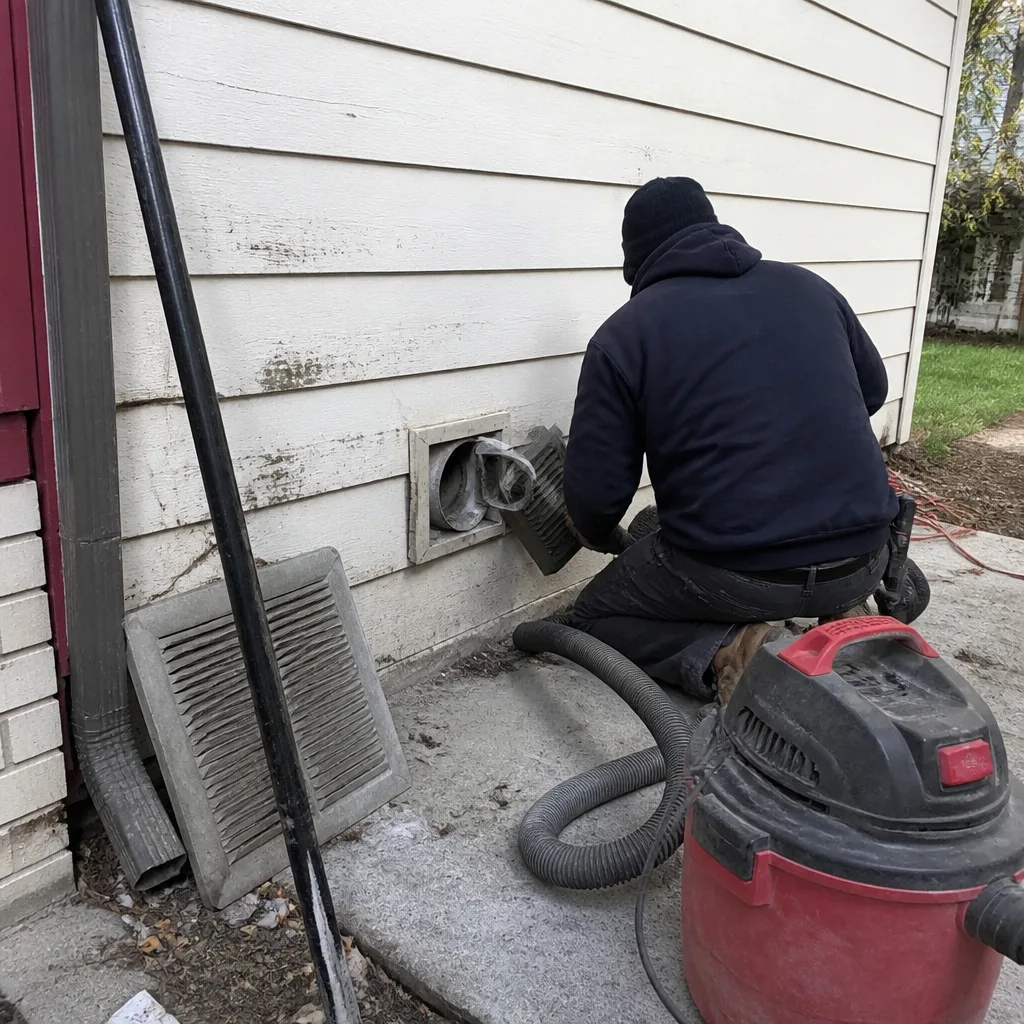 Before
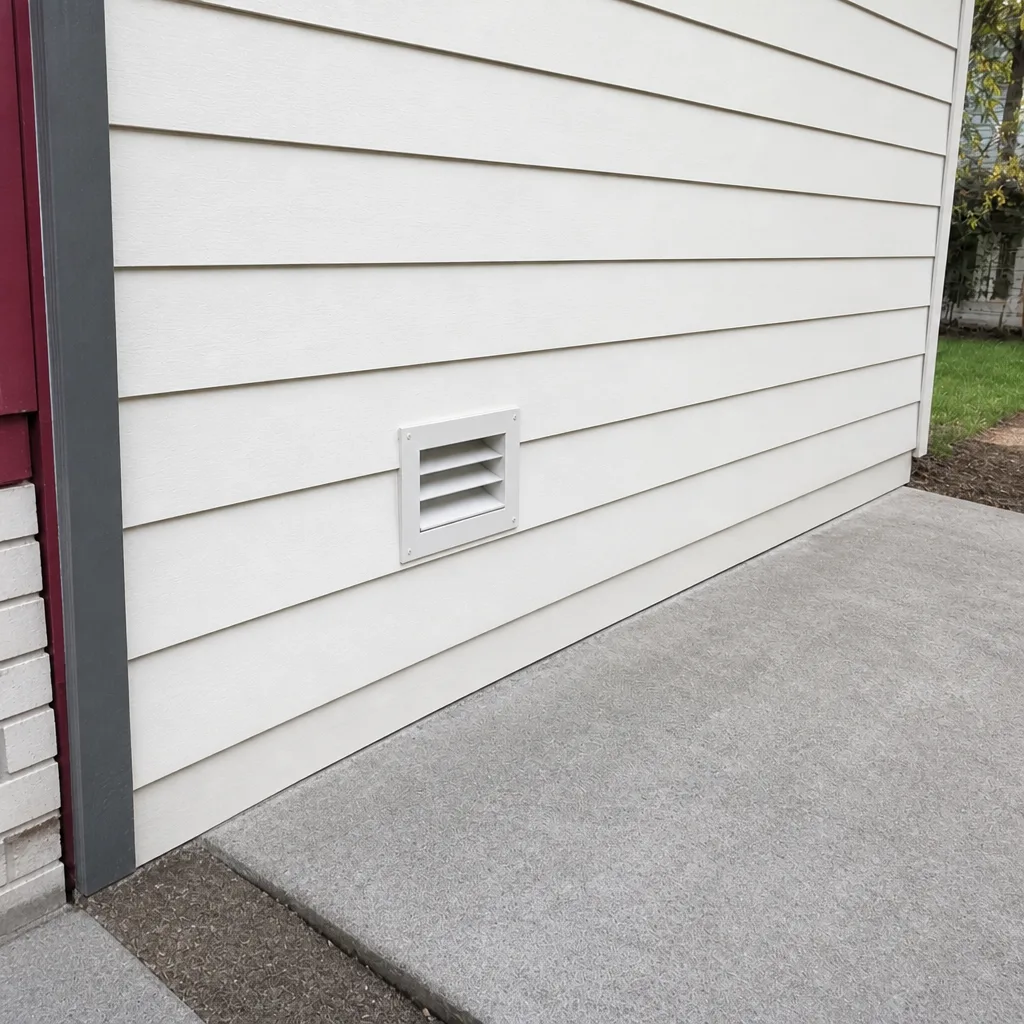 After
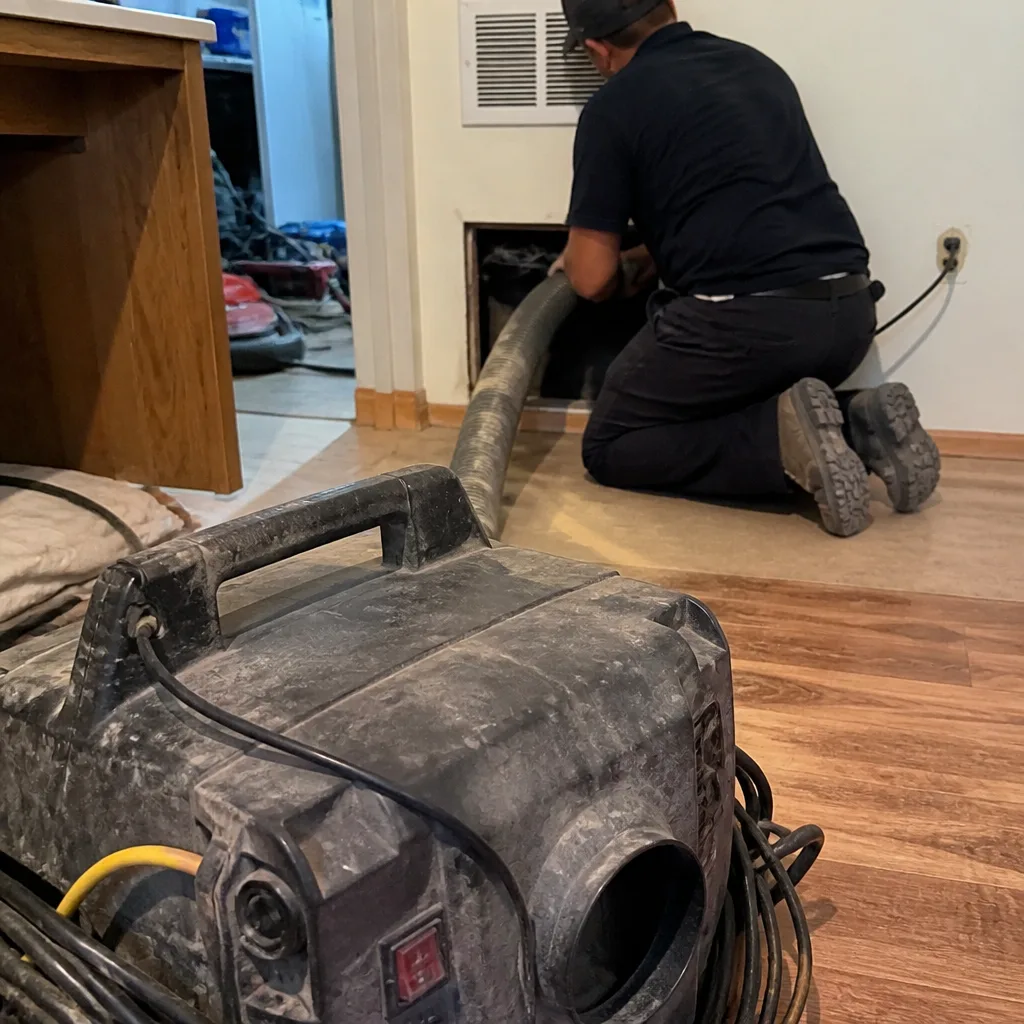 Before
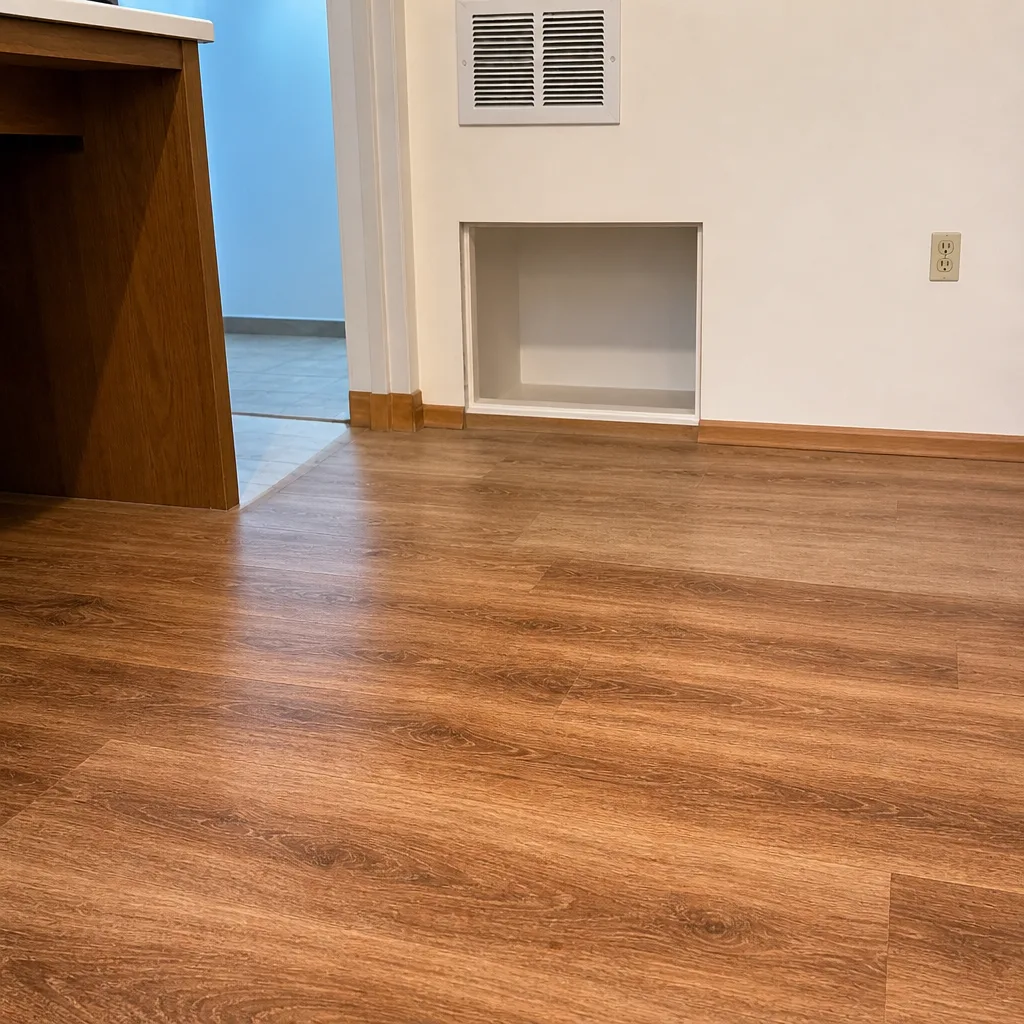 After
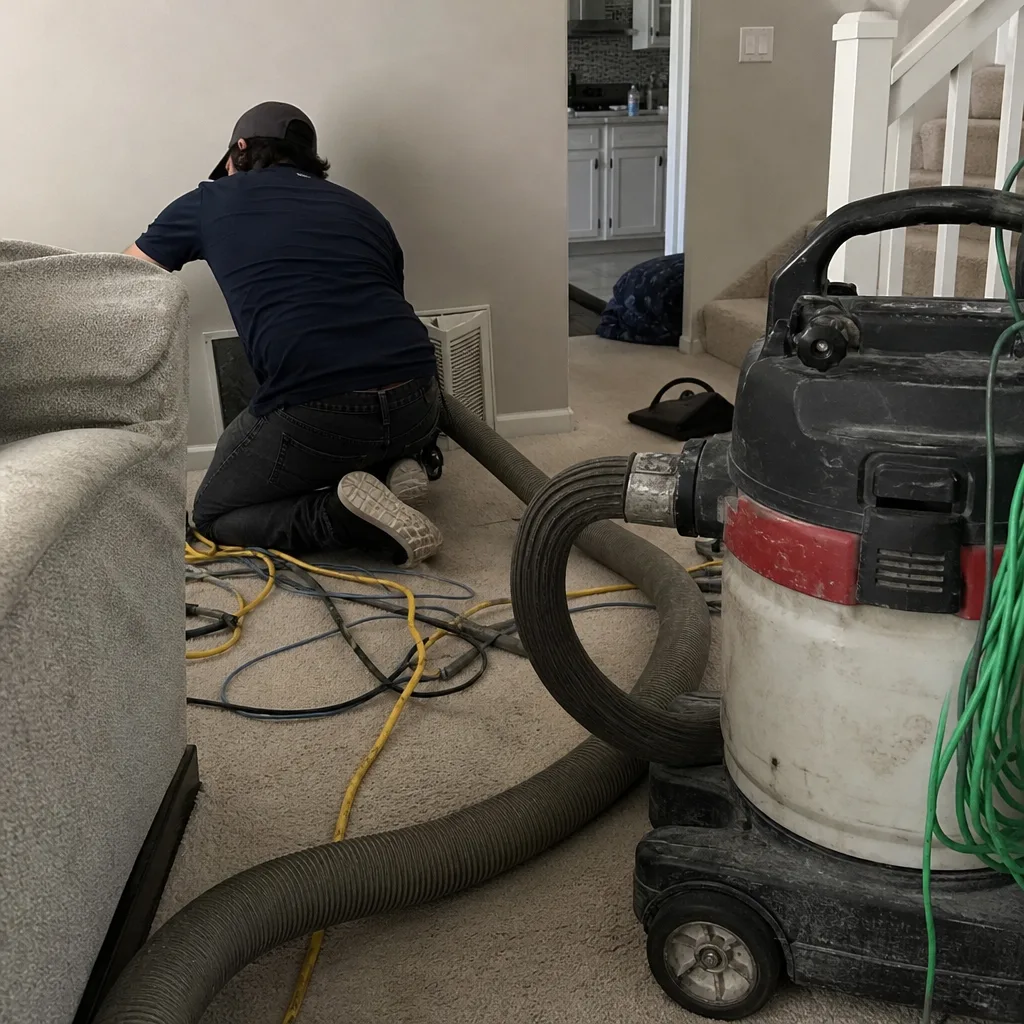 Before
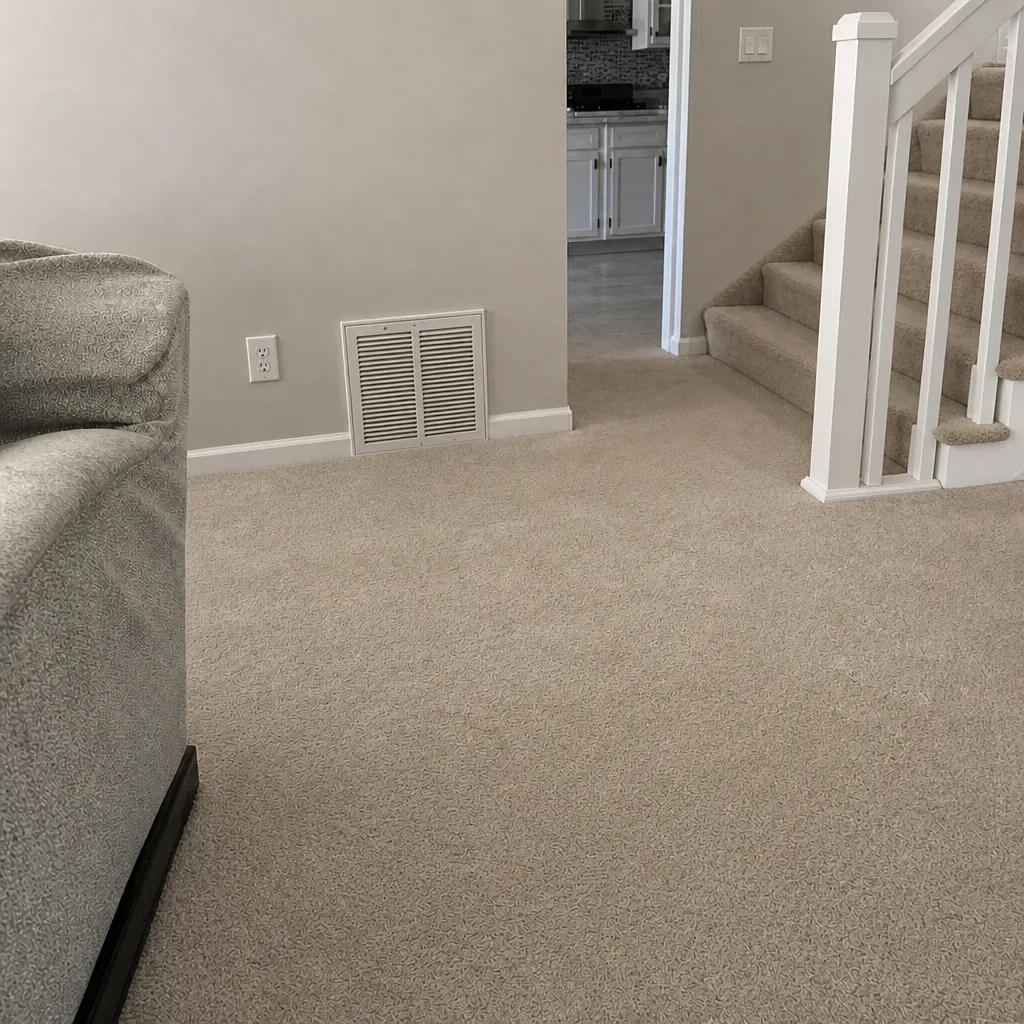 After
When to Call a Professional
Most of this guide is about what you can figure out yourself, but there are clear cases where waiting or guessing costs more than calling. If you’ve checked your filter and your return grilles, and the airflow is still weak, that’s a professional call. If you can see or smell musty odor coming from a register when the system first kicks on, that’s a professional call. If a room in your Thornton home has never been comfortable since you moved in, that’s worth a diagnosis even if it’s been that way for years. If a home inspection flagged your ductwork, or you’re finishing a renovation that filled the vents with drywall dust, that’s a professional call – cleaning after construction is a specific job, not something a shop-vac handles well.
On the other end of the scale, if the only issue is that a filter needs replacing, replace it. We’d rather tell you that than send a technician out for a filter change. The line between the two is why we offer free estimates: you describe the symptom, we tell you honestly whether it needs a professional, and the written estimate puts the price in writing before anyone shows up.
When you do call, call Thornton Air Duct Cleaning at (866) 947-8149. We answer 24/7. Fast dispatch from 7am to 7pm, Sunday through Friday. A call outside dispatch hours is booked into the next opening, Sunday through Friday, 7am to 7pm. We’re closed Saturday. Estimates are free, one flat price per system, agreed before work starts.
Frequently Asked Questions
A whole-system cleaning in Thornton typically runs in the range you’d expect for a professional-grade job with proper containment and before-and-after documentation – call us for a free written estimate and we’ll give you a real number for your specific system rather than a teaser price. The final price is set per job by the written estimate. Call (866) 947-8149 for an exact quote – estimates are free.
Cheap quotes are usually cheap for a reason: they use consumer-grade tools, skip the coil and air handler, and don’t include before-and-after documentation. Some are outright bait-and-switch – a low coupon price that becomes a far larger invoice once the technician is on-site and finds “problems.” We don’t quote per-vent prices and we don’t use teaser numbers. One flat price per system, written down, before work starts. Call (866) 947-8149 for an exact quote – estimates are free.
Ask for before-and-after photos of your own ducts, not stock photos. We photograph the runs that were cleaned, including any problem areas the technician found during the scope. You should be able to see exactly what changed. If a company can’t provide that, that’s a warning sign. Call (866) 947-8149 for an exact quote – estimates are free.
There’s no single rule that fits every home. A home with pets, allergy concerns, or recent renovations typically needs cleaning more often than a low-occupancy home with good filtration. A practical approach is to inspect every couple of years and clean if there’s visible contamination, a musty smell, or a recent disturbance like a renovation. Not sure which side of that line you’re on? Call (866) 947-8149 for an exact quote – estimates are free.
Yes, in a practical sense. At roughly 5,350 feet, the thinner air means your HVAC system has to move a higher volume of air to deliver the same comfort. That makes any restriction or leak in the ducts more noticeable in a Thornton home than it would be at lower elevation. It doesn’t change how the ductwork is built – it changes how much the small problems matter to your comfort and energy bill.
Probably not on its own. Weak airflow in a single room is usually a mechanical problem – a crushed flex run, a closed balancing damper, or a disconnected boot – not a cleanliness problem. Cleaning is worth doing if the ducts are also dirty, but the fix for that room is repair. A technician with a camera scope can tell you which cause you have. Call (866) 947-8149 for an exact quote – estimates are free.
Yes. Alongside dryer vent cleaning, our scope covers HVAC cleaning, duct repair and sealing, and air quality and sanitizing, so one specialist handles the whole system rather than two or three separate vendors. A whole-home solution with a Honeywell or Aprilaire filtration component is often the right long-term answer once the ducts are clean and sealed.
The Bottom Line
Most duct complaints in Thornton fall into a handful of predictable patterns, and the fix for each is different. Cleaning solves contamination. Sealing and repair solve airflow and energy loss. Replacing a crushed flex run solves weak delivery to a room. Replacement is the right answer far less often than a technician who recommends it would like you to believe. The most useful thing you can do is describe your symptom precisely – which rooms, when it started, what you’ve already checked – and insist on a written estimate and a before-and-after record. That approach protects you from the bait-and-switch reputation this trade has earned, and it gets you a system that actually delivers what you’re paying for. If you want an honest diagnosis first, that’s exactly what we do. Call (866) 947-8149 for a free estimate. We answer 24/7. Fast dispatch from 7am to 7pm, Sunday through Friday.
Written by the team at Thornton Air Duct Cleaning.