
Last updated November 23, 2026
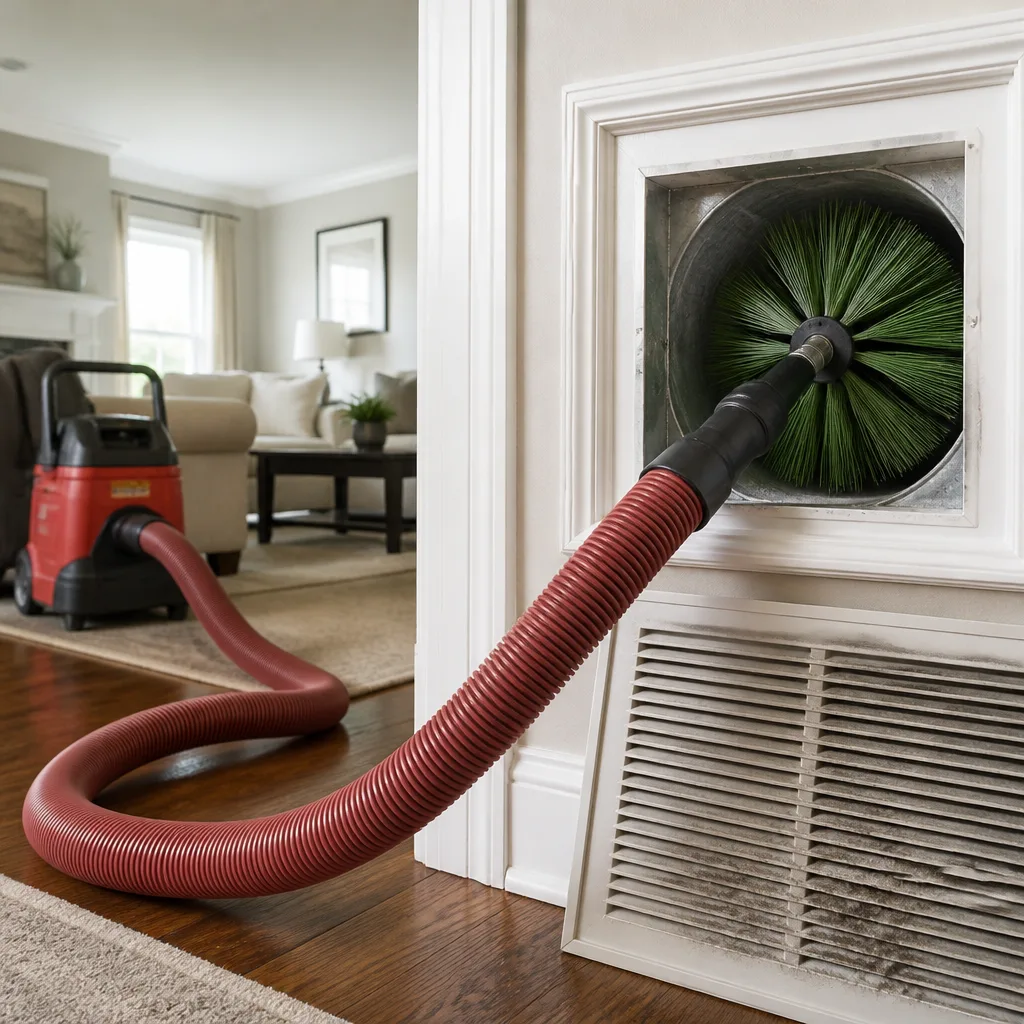 Whole-home duct cleaning
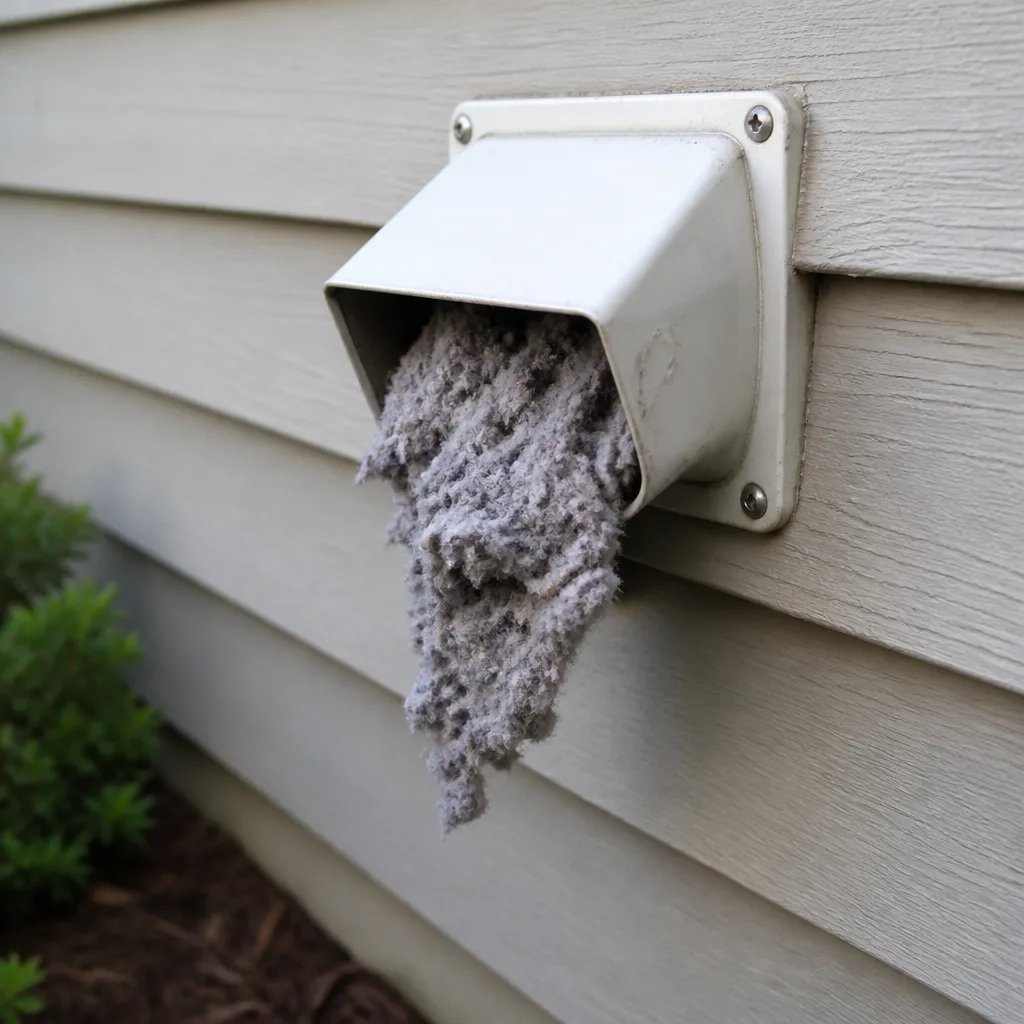 Dryer vent cleaning
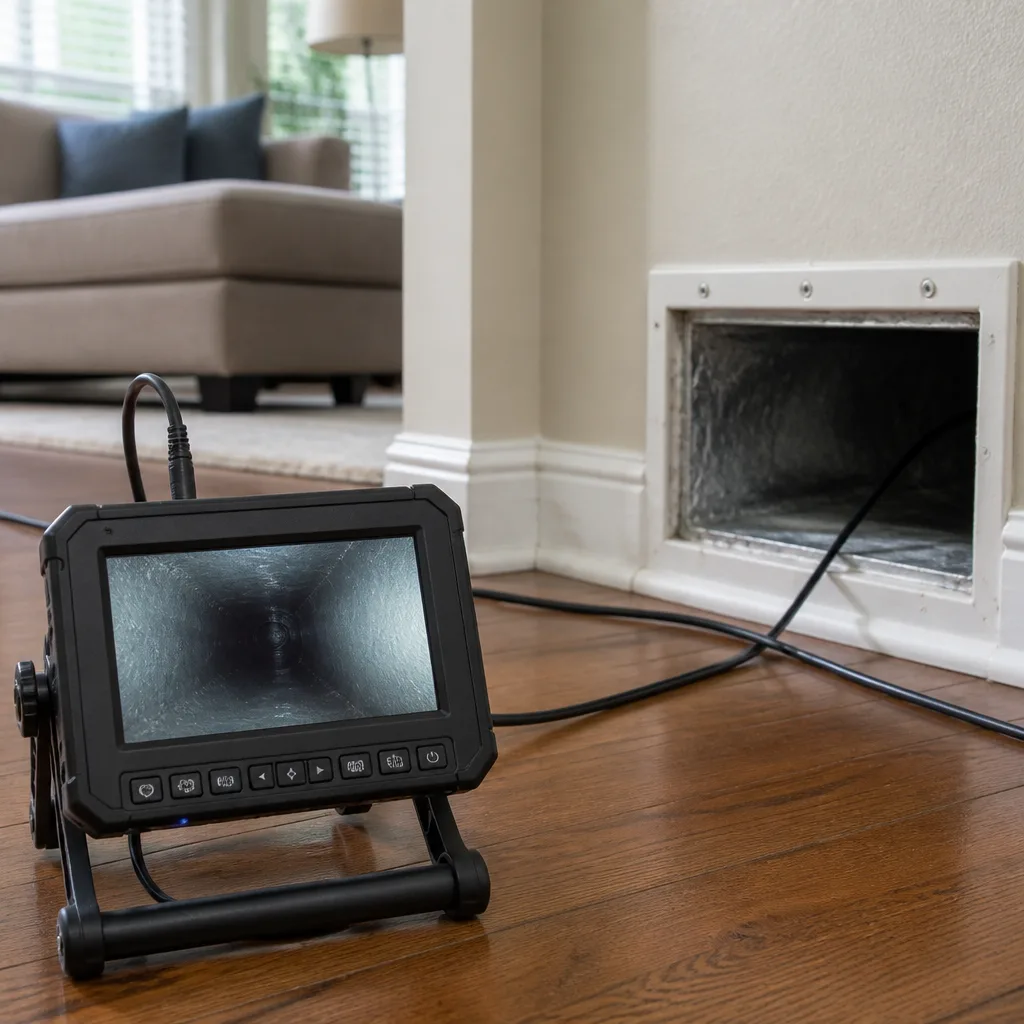 Camera inspection
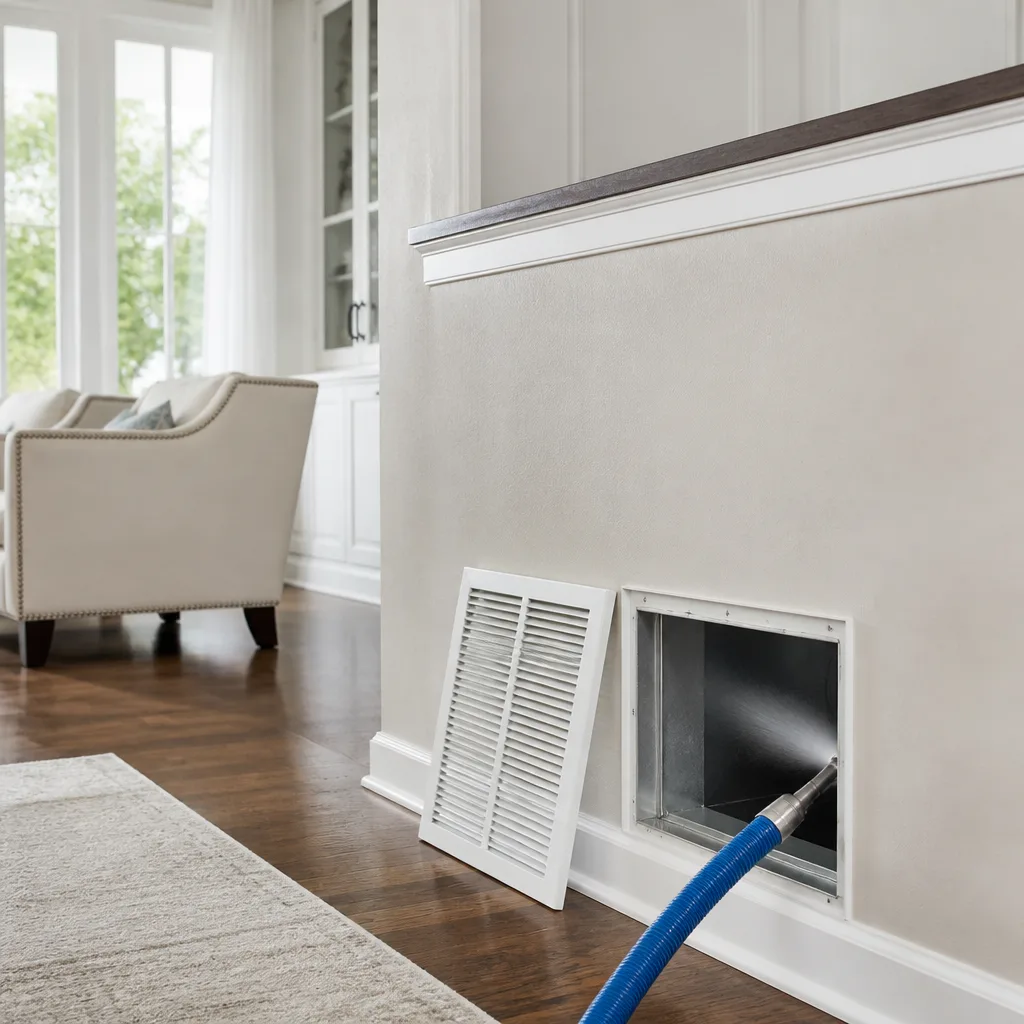 Sanitizing & deodorizing
Whole-system duct and dryer vent check with before-and-after photos - you see exactly what came out of your vents
That "$99 whole-house special" is a bait ad - the real number appears once they are in your hallway, or the "clean" is a shop-vac at the register. We photograph the inside of your ducts before and after instead.
Choosing the Right Air Duct Cleaning Brand: A Buyer’s Guide for Thornton
Most homeowners pick a duct cleaning company the way they pick a fast-food chain: the sign looks familiar, so it must be fine. That logic falls apart the moment the work begins. National franchise duct cleaning brands often license the name but not the equipment standards, which means the truck that pulls up to a Thornton home may be an independent operator with a recognizable logo and a consumer-grade setup. A logo tells you nothing about whether the ducts actually get clean. This guide shows you what to look at instead: the equipment, the credentials, the service scope, and the paperwork that separates a real specialist from a coupon with a vacuum attached.
Quick Answer
The right air duct cleaning company in Thornton is the one you can evaluate on specifics rather than branding: professional-grade negative-pressure equipment like Rotobrush or Nikro, documented technician credentials, a service menu that goes beyond surface cleaning into repair and air quality, and a written report with before-and-after photos at the end. Brand recognition and review counts don’t tell you any of that. Equipment capability, certification, and scope do.
Styles & brands we work with
- Whole-home duct cleaning
- Dryer vent cleaning
- Camera inspection
- Sanitizing & deodorizing
Table of Contents
- Why Brand Recognition Fails as a Quality Signal
- How to Evaluate Duct Cleaning Equipment
- Technician Credentials: What to Verify
- Service Scope: Cleaning vs. Full Indoor Air Quality
- Local Independent Operators vs. National Brands in Thornton
- The Post-Service Documentation Standard
- Questions to Ask Before You Book
- What Fair Pricing Looks Like in Thornton
Why Brand Recognition Fails as a Quality Signal
A franchise name on the side of a van tells you one thing: someone paid for the right to use that name. It doesn’t tell you what equipment sits inside the van, who’s operating it, or whether the technician has ever been trained on duct systems at all. In this industry, franchise arrangements vary enormously. Some franchisees invest heavily in truck-mounted equipment and certified staff. Others run a single portable unit and a shop vacuum, operating under a name that appears on billboards across the Front Range.
Thornton homeowners are especially exposed to this gap because the metro market is dense with competing operators. When you search for duct cleaning in a city of roughly 145,000 people north of Denver, you get pages of near-identical ads, many of them franchise-affiliated. The name on the ad and the capability of the crew that arrives are two separate questions.
Here’s the practical consequence. A company with strong brand recognition but weak equipment may still charge premium prices, because the brand carries the perceived value. A local independent with the right tools may charge less and do better work. The only way to tell them apart is to stop evaluating the logo and start evaluating the operation behind it.
This is why we tell people to ask about equipment before they ask about price. Price on a duct cleaning job is downstream of capability. If the company can’t describe its negative-pressure system, the rest of the conversation is guesswork. That’s the core of how we approach air duct cleaning in Thornton, and it’s the standard worth holding any company to.
How to Evaluate Duct Cleaning Equipment
Equipment is the single most reliable predictor of cleaning quality, and it’s the thing most homeowners never ask about. The two broad categories are truck-mounted negative-pressure systems and portable units. They are not equivalent, and on a two-story Thornton home the difference becomes obvious.
Truck-Mounted vs. Portable Negative-Pressure Systems
A truck-mounted system pulls a powerful vacuum through a hose connected to the ductwork, creating sustained negative pressure that keeps loosened debris moving toward the collection unit instead of back into your living space. Portable negative-pressure units do the same job at lower capacity. For a single-story home with a modest duct run, a capable portable system can do good work. For a two-story Thornton home with long trunk lines, multiple returns, and a finished basement, the volume of air and debris is larger, and the vacuum has to hold pressure across a bigger system.
That’s the practical distinction: it’s not portability versus truck mount as a status symbol. It’s whether the system can maintain negative pressure throughout a house of your size while the technician works the runs. Ask directly. A company that knows its equipment will answer in specifics. A company that doesn’t will change the subject.
What Professional-Grade Equipment Looks Like
The brands that certified HVAC and indoor air quality contractors specify are a useful benchmark. Rotobrush systems use rotating brush heads and whip lines to agitate debris inside the duct while vacuum pulls it out, which is far more effective than suction alone. Nikro equipment covers the vacuum and containment side of the job. Together they represent the professional standard, not improvised or consumer-grade tools.
When you’re evaluating any company, you can use these names as a filter. Ask what equipment they run. If the answer is a recognizable professional brand, that’s a good sign. If the answer is vague, or if the “equipment” turns out to be a shop vacuum and a length of hose, you’ve learned what you needed to know.
We run Rotobrush and Nikro systems, the same equipment specified by certified IAQ contractors, and we mention it because it’s verifiable. You can ask any company what they use. The ones that do quality work will tell you without hesitating.
Technician Credentials: What to Verify
Equipment is half the equation. The other half is the person operating it. Duct cleaning has no universal licensing requirement in Colorado, which means credentials are voluntary and vary widely. That makes them a useful sorting tool: companies that invest in certification are signaling that they take the work seriously.
The Certification Hierarchy
- NADCA Air Systems Cleaning Specialist (ASCS). The National Air Duct Cleaners Association’s ASCS certification is the recognized credential for individual technicians in this trade. It requires training and testing on duct system assessment, cleaning methods, and contamination control. If a company can tell you its technicians hold ASCS certification, that’s a meaningful indicator.
- Manufacturer training. Some technicians are trained specifically on the equipment they operate, such as Rotobrush or Nikro systems. This is narrower than ASCS but still demonstrates a real investment in competence, and it often means the technician knows the equipment’s limits as well as its strengths.
- No documented credentials. If a company can’t tell you what training or certification its technicians hold, you’re evaluating on faith. For a job that involves opening up the system that delivers air to every room in your house, faith isn’t a great foundation.
How to Ask
The question itself is simple: “What certifications or training do your technicians have, and can you tell me about them?” A capable company answers without deflecting. Our technicians have up to 14 years of experience, and we can speak to how they were trained on the equipment they run. That’s the kind of answer you’re looking for from anyone you consider.
One caveat worth noting: certification alone doesn’t guarantee a good job. A certified technician working without proper equipment will still underperform. Evaluate credentials and equipment together.
Service Scope: Cleaning vs. Full Indoor Air Quality
This is where the biggest gap opens between companies, and it’s the one most homeowners don’t think to compare. A mechanical duct cleaner cleans ducts. A full-scope indoor air quality specialist handles the whole system: cleaning, repair and sealing, sanitizing, and the air quality products that keep the system working after the crew leaves.
What Mechanical-Only Cleaning Misses
Cleaning removes accumulated debris. It doesn’t fix the leaks and gaps that let debris in and conditioned air out. A duct system with disconnected joints, torn flex runs, or poorly sealed boots will re-contaminate after cleaning, and it will also waste energy year round. In Thornton’s dry climate, where the furnace runs hard through cold winters and the AC works through hot summers, duct leakage costs show up on utility bills.
That’s why duct repair and sealing belongs in the same conversation as cleaning. Clean ducts are step one. Sealed, repaired ducts are the finish line. A company that only cleans has done half the work, and left the root cause untouched.
The Full IAQ Service Menu
A specialist’s scope typically includes:
- Air duct cleaning with negative-pressure containment and mechanical agitation
- Dryer vent cleaning, which is a fire-safety service as much as a maintenance one
- HVAC cleaning, covering the furnace, coils, and air handler components that circulate air through the ducts
- Duct repair and sealing, addressing leaks, disconnections, and energy loss
- Air quality and sanitizing, treating the air itself with proper containment protocols and contaminant removal
We handle all five under one roof, which means one accountable specialist for the whole system instead of three vendors pointing at each other. When a customer calls us for HVAC cleaning and we find compromised duct joints during the job, we can fix them rather than handing over a problem.
Scope also extends to products. Carrying and installing Honeywell and Aprilaire air quality equipment means a company can recommend whole-home solutions like filtration or humidity control, not just clean what’s already installed. If you’re evaluating any company, ask whether they can install what they recommend. The ones that can will tell you.
Local Independent Operators vs. National Brands in Thornton
There’s a persistent assumption that national brands are safer because they’re bigger. In this trade, the opposite is often true. A capable local independent can outperform a national franchise in Thornton for a straightforward reason: the quality of the work depends on the crew that shows up, not the name on the paperwork, and a local company’s reputation lives or dies on the streets it serves.
Why Locals Sometimes Win
A national franchise’s brand equity is centralized; individual franchisees vary in capability. A local independent’s entire business is the work it does in a defined area, which creates real accountability. If a Thornton homeowner has a bad experience with a local operator, that information spreads through the neighborhood fast. The incentive structure rewards doing the job right.
Telling a Capable Local from a One-Truck Operation
The distinction that matters isn’t local versus national. It’s infrastructure versus improvisation. Here’s how to tell the difference:
- Equipment investment. A capable local company owns professional-grade systems (Rotobrush, Nikro, or equivalent) and can describe them. A one-truck operation with improvised tools can’t.
- Containment protocol. Proper contamination removal requires negative-air containment. Ask what system they use. We use Abatement Technologies equipment, which is the standard for this kind of work. A company that doesn’t know what containment means is a red flag.
- Service breadth. A capable operator covers cleaning, repair, sealing, sanitizing, and air quality products. A one-truck operation does one thing.
- Documentation. A capable company provides written reports and photos. A one-truck operation hands you a receipt.
- Product knowledge. Ask which sanitizing products they use and why. A capable company can speak to the Guardsman-grade products used in the sanitizing process. A one-truck operation may not know.
The point isn’t to favor local over national as a category. It’s to evaluate the operation, not the label. A well-equipped local independent and a well-equipped franchise both do good work. The guide above helps you tell which one you’re talking to.
The Post-Service Documentation Standard
The job isn’t finished when the equipment gets packed up. It’s finished when you have documentation proving what was done. This is the area where the industry’s bait-and-switch reputation gets earned, and it’s the simplest thing to demand as a customer.
What a Proper Report Includes
- Before-and-after photos of your own ducts. Not stock images, not a generic gallery. Shots of the actual duct runs in your house, taken before cleaning and after. This is the single best proof that the work happened.
- An inspection report. A written summary of the system’s condition, noting any issues found: disconnections, damaged flex, excess debris in specific runs, or areas that need repair.
- Product disclosure. If any chemical treatment, sanitizer, or sealant was applied, you should receive the product name and a description of what it does. We use Guardsman-grade cleaning and protection products in the sanitizing process, and we disclose them because you have a right to know what’s in your air.
- A clear scope statement. What was cleaned, what was repaired, what was recommended but not done. If the report doesn’t say, ask.
Before-and-after photos matter most. They’re the difference between a company that can prove what it did and one that asks you to take its word. If a company can’t provide photos of your ducts, ask why before you pay.
Questions to Ask Before You Book
You can evaluate almost any duct cleaning company in a five-minute phone call if you ask the right questions. Here’s a practical list to work from:
- “What negative-pressure equipment do you use?” Look for a brand name or a specific system description. Vague answers are a warning.
- “What certifications do your technicians hold?” NADCA ASCS is the benchmark. Manufacturer training is a secondary signal.
- “What’s included in the price, and what costs extra?” The answer should be clear before anyone arrives. One flat price per system, agreed in advance, is the standard worth holding.
- “Will I get before-and-after photos?” The answer should be an immediate yes.
- “Do you offer repair and sealing, or just cleaning?” A company that only cleans won’t address the root cause of duct problems.
- “What products do you use for sanitizing, and will you disclose them?” You have a right to know what’s being applied to your system.
- “Can you service both the ducts and the HVAC equipment on the same visit?” Full-scope companies can. Mechanical-only companies can’t.
None of these questions are adversarial. They’re the questions a qualified company expects and answers easily. We field them daily in Thornton, and we’d rather a customer ask them than book on price alone and be disappointed.
What Fair Pricing Looks Like in Thornton
Pricing in this trade is a minefield because the industry has a bait-and-switch problem. A low advertised price gets the technician in the door, and the final invoice is far larger. The defense against this is simple: demand one flat price per system, agreed before work starts, with no per-vent pricing and no add-ons discovered on site.
How to Read a Quote
- Whole-system pricing, not per-vent pricing. A per-vent price lets a company quote low and expand the count. Whole-system pricing is honest about the scope.
- A written estimate before the job. The written estimate sets the final price. Verbal quotes don’t count.
- Clear separation of cleaning vs. repair. Repair and sealing are separate work with separate costs. The quote should say so.
- No teaser pricing. If an advertised price seems too low to cover the equipment and labor, it probably doesn’t. The final invoice will reflect the real cost.
We don’t quote per-vent prices, and we don’t run teaser figures. We give a written estimate per system, and the estimate is free. That’s the standard, and any company worth hiring should meet it. If you want to know what your job costs, call for an estimate. It’s the only way to get a real number.
Common Mistakes to Avoid
- Booking on brand recognition alone. A familiar franchise name doesn’t guarantee professional equipment or trained technicians. Evaluate the operation, not the logo.
- Not asking about equipment. The negative-pressure system is the single biggest quality factor, and it’s the thing most homeowners never ask about. Ask before booking.
- Accepting a per-vent price. Per-vent pricing is how bait-and-switch quotes expand on site. Whole-system pricing, agreed in advance, is what you want.
- Skipping the before-and-after photos. Photos are the only real proof that the work happened. Demand them.
- Assuming cleaning alone is enough. A duct system with leaks and disconnected joints will re-contaminate after cleaning. Repair and sealing address the root cause.
- Ignoring what gets applied to the system. Any sanitizing product should be disclosed. You have a right to know what’s in your air.
- Booking a duct cleaning without thinking about the dryer vent. In Thornton’s dry climate, a clogged dryer vent is a fire risk and a maintenance headache. Combine the work if you can, and see dryer vent cleaning for the specifics.
See the difference
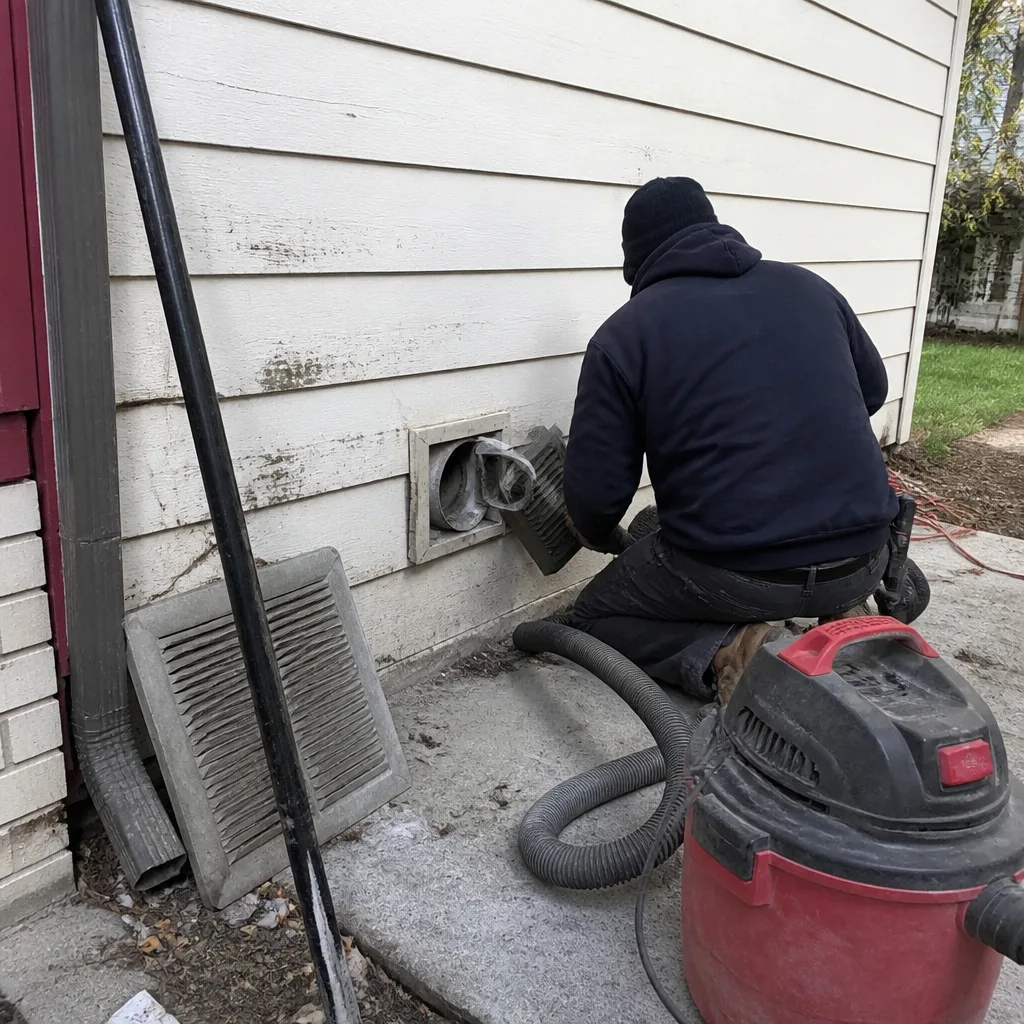 Before
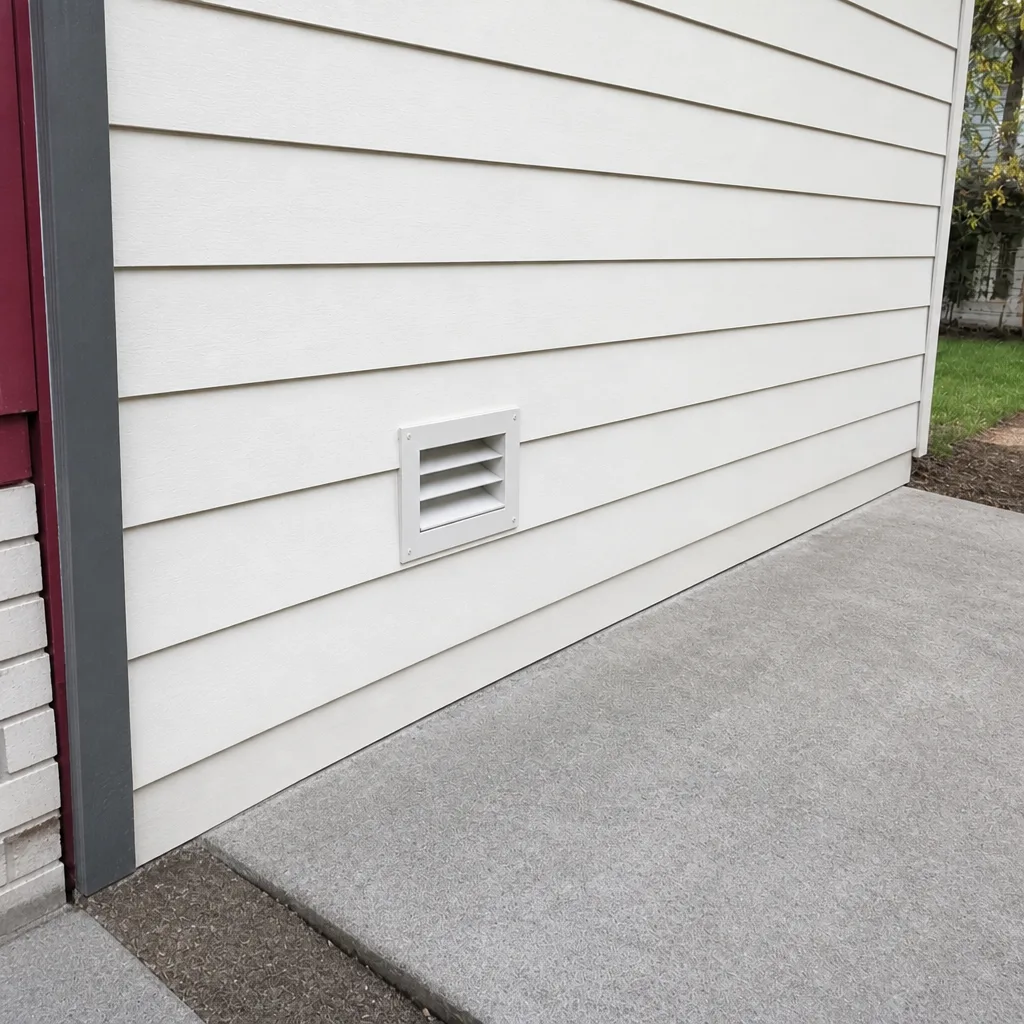 After
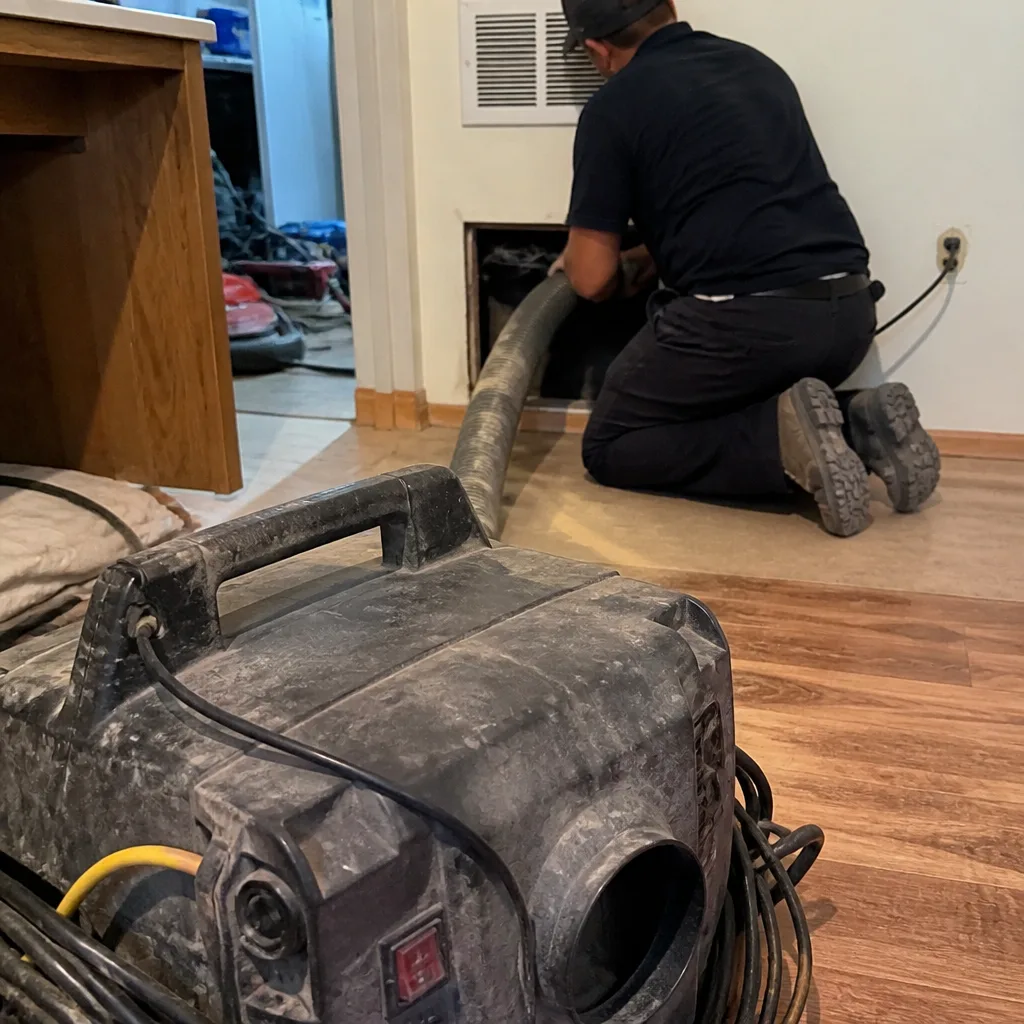 Before
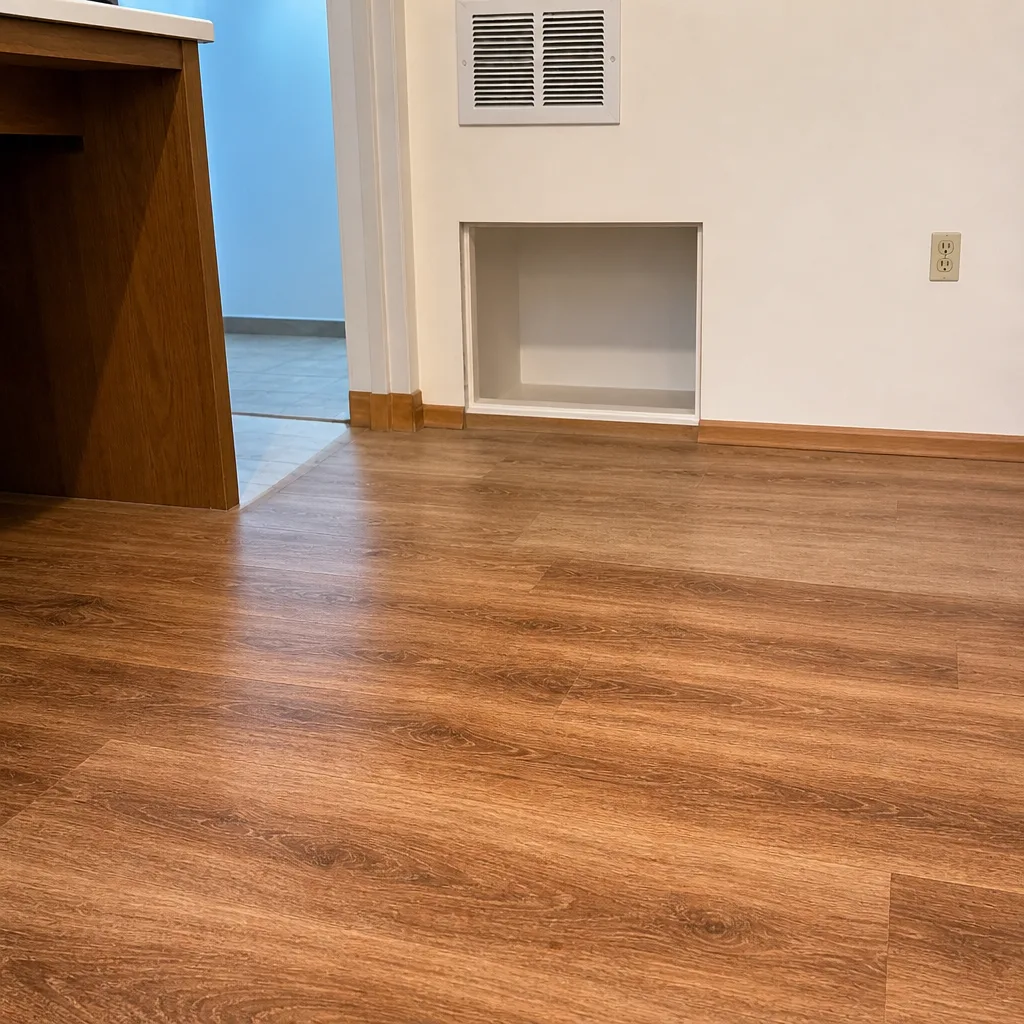 After
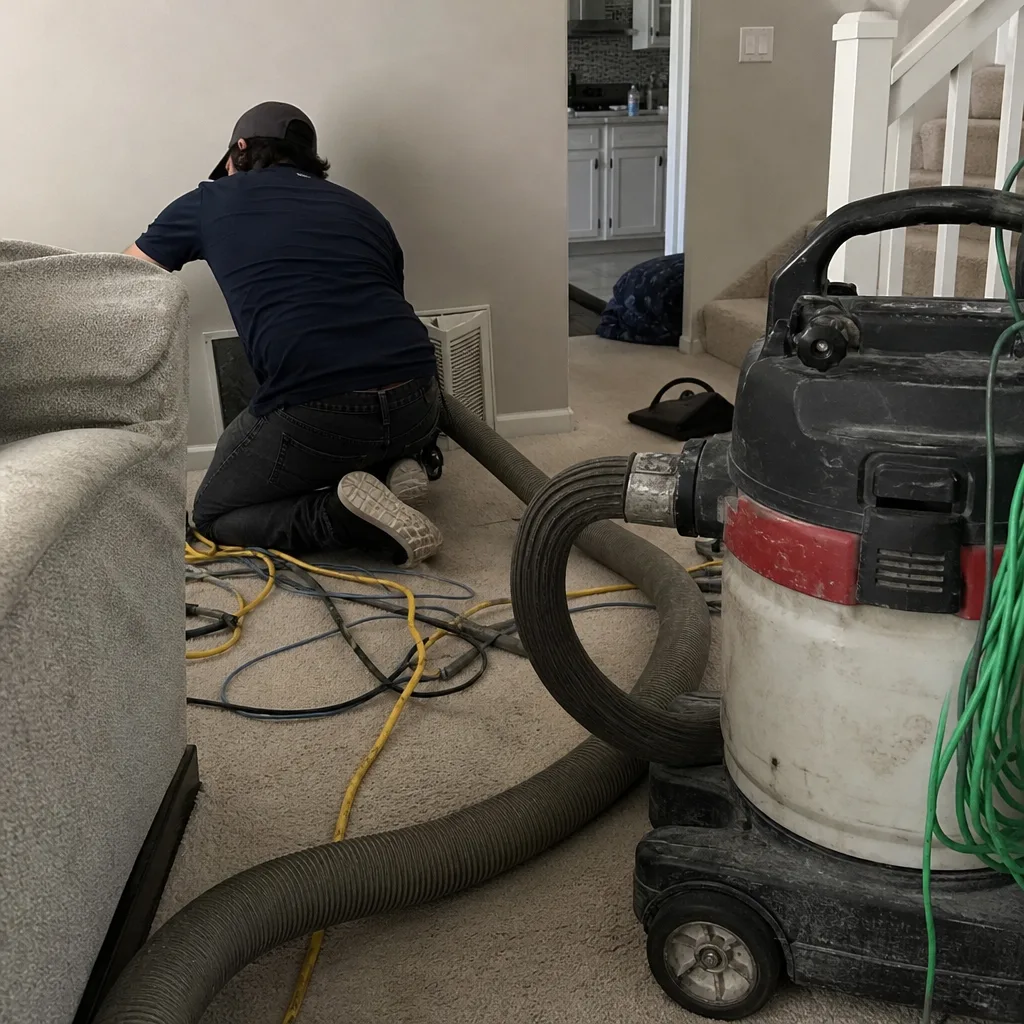 Before
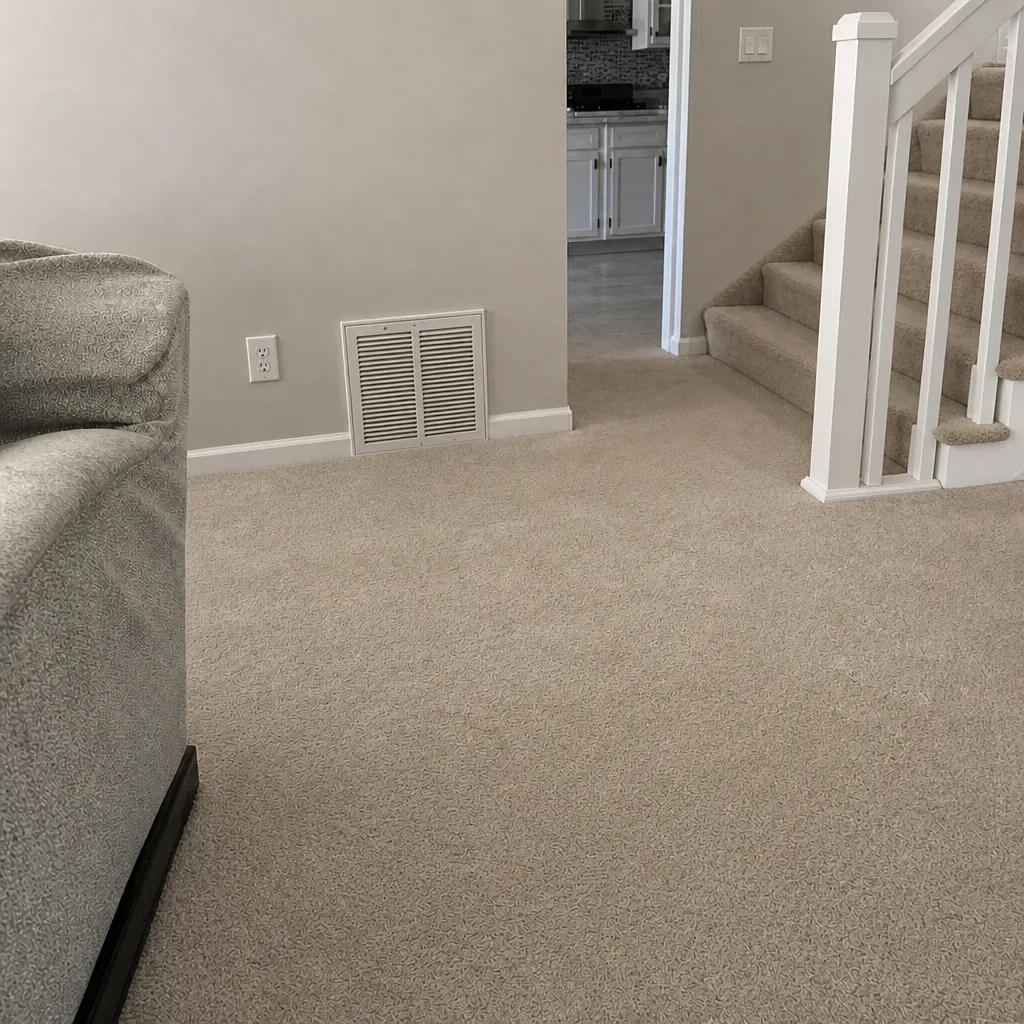 After
When to Call a Professional
Some duct issues are worth a phone call. If you’ve recently finished a renovation and the air still smells like drywall dust, if a musty odor shows up every time the furnace starts, if anyone in the house has allergies that get worse indoors, or if a home inspection flagged the ductwork, those are all signs it’s time to bring in a specialist. High energy bills with no obvious explanation can also point to duct leakage. A visual check for disconnected runs or torn flex is a reasonable first step for a homeowner, but anything involving the air handler, the furnace, or sealed duct connections is a job for a trained technician.
If you’re not sure whether your system needs professional attention, Thornton Air Duct Cleaning offers free estimates in Thornton. We’ll look at the system and tell you honestly what it needs. Call (866) 947-8149. We answer 24/7. Fast dispatch from 7am to 7pm, Sunday through Friday.
Frequently Asked Questions
Evaluate equipment, credentials, service scope, and documentation, not brand recognition. Ask what negative-pressure system they use, what certifications their technicians hold, whether they offer repair and sealing alongside cleaning, and whether you’ll get before-and-after photos. A company that answers all four clearly is worth considering.
Not necessarily. Franchise names license branding, but individual franchisees vary widely in equipment and training. A capable local independent in Thornton often outperforms a national brand because the work depends on the crew that shows up and the tools they bring. Evaluate the operation, not the label.
Professional-grade negative-pressure systems, typically from brands like Rotobrush or Nikro, which are specified by certified HVAC and IAQ contractors. For a two-story Thornton home with long duct runs, a truck-mounted or high-capacity portable system maintains proper negative pressure through the whole job. Consumer-grade or improvised tools don’t.
Duct cleaning has no universal licensing requirement, so credentials are voluntary and a useful sorting tool. NADCA’s Air Systems Cleaning Specialist (ASCS) certification is the recognized benchmark for individual technicians. Manufacturer training on specific equipment is a secondary indicator. Companies without documented credentials should be evaluated more carefully.
Before-and-after photos of your own ducts, an inspection report, and product disclosure for any chemical treatments applied. If a company can’t provide photos of your specific duct runs, ask why. Photos are the difference between proof and a promise.
Cheap quotes often use per-vent pricing that expands on site, consumer-grade equipment, or skip repair and containment work entirely. A low advertised price can become a far larger invoice once the technician arrives. Whole-system pricing, agreed in writing before work starts, is the defense. Call (866) 947-8149 for an exact quote. Estimates are free.
The Bottom Line
The best air duct cleaning company in Thornton isn’t the one with the biggest logo or the most reviews. It’s the one you can evaluate on specifics: professional-grade equipment like Rotobrush or Nikro, technicians with real credentials, a service scope that covers repair, sealing, and air quality alongside cleaning, and a report with before-and-after photos at the end. Brand recognition is a marketing signal, not a quality one. Equipment capability, certification, and scope are the factors that actually determine whether your ducts get clean. Hold any company you consider to that standard, and you’ll get the work you’re paying for.
For a full-scope indoor air quality specialist in Thornton, start with Thornton Air Duct Cleaning. We handle cleaning, repair and sealing, HVAC cleaning, dryer vent work, and air quality solutions under one roof. Call (866) 947-8149 for a free estimate. We answer 24/7. Fast dispatch from 7am to 7pm, Sunday through Friday.
Written by the team at Thornton Air Duct Cleaning.