
Last updated November 23, 2026
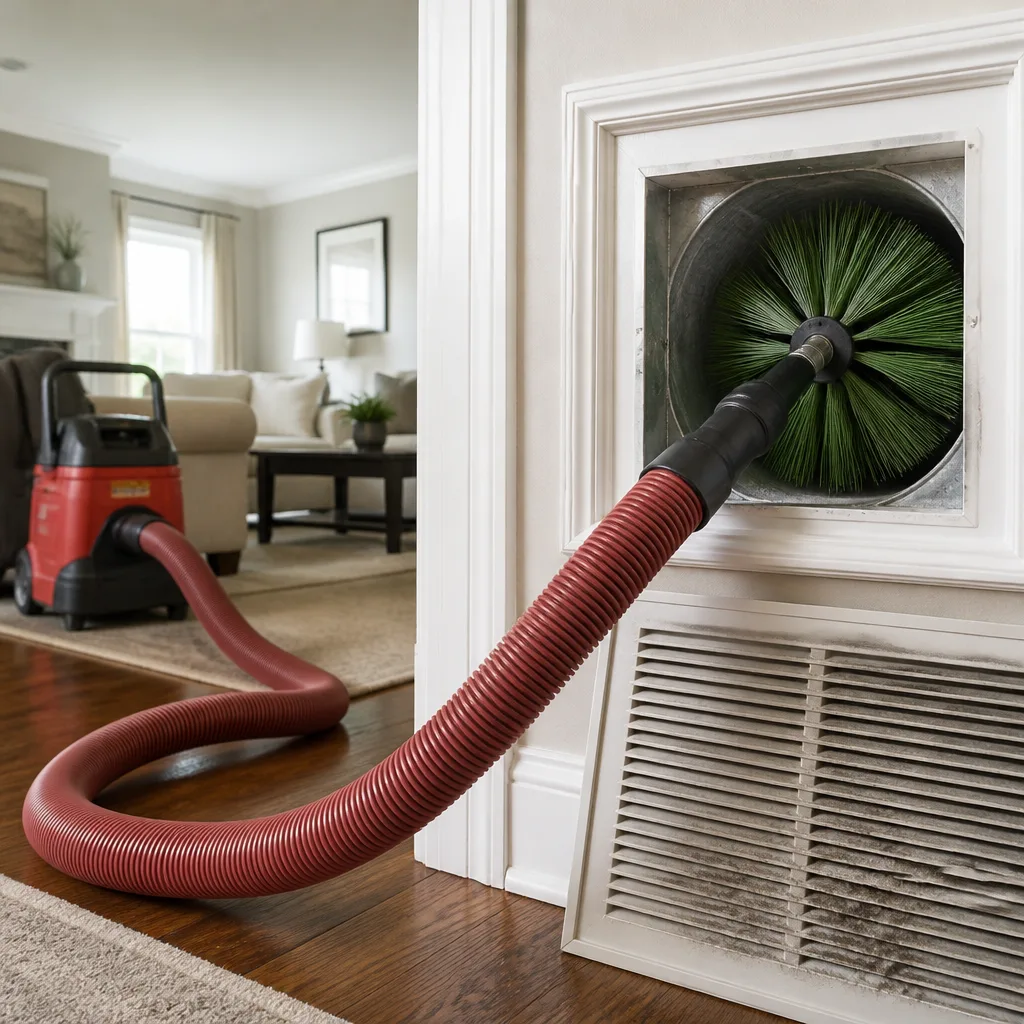 Whole-home duct cleaning
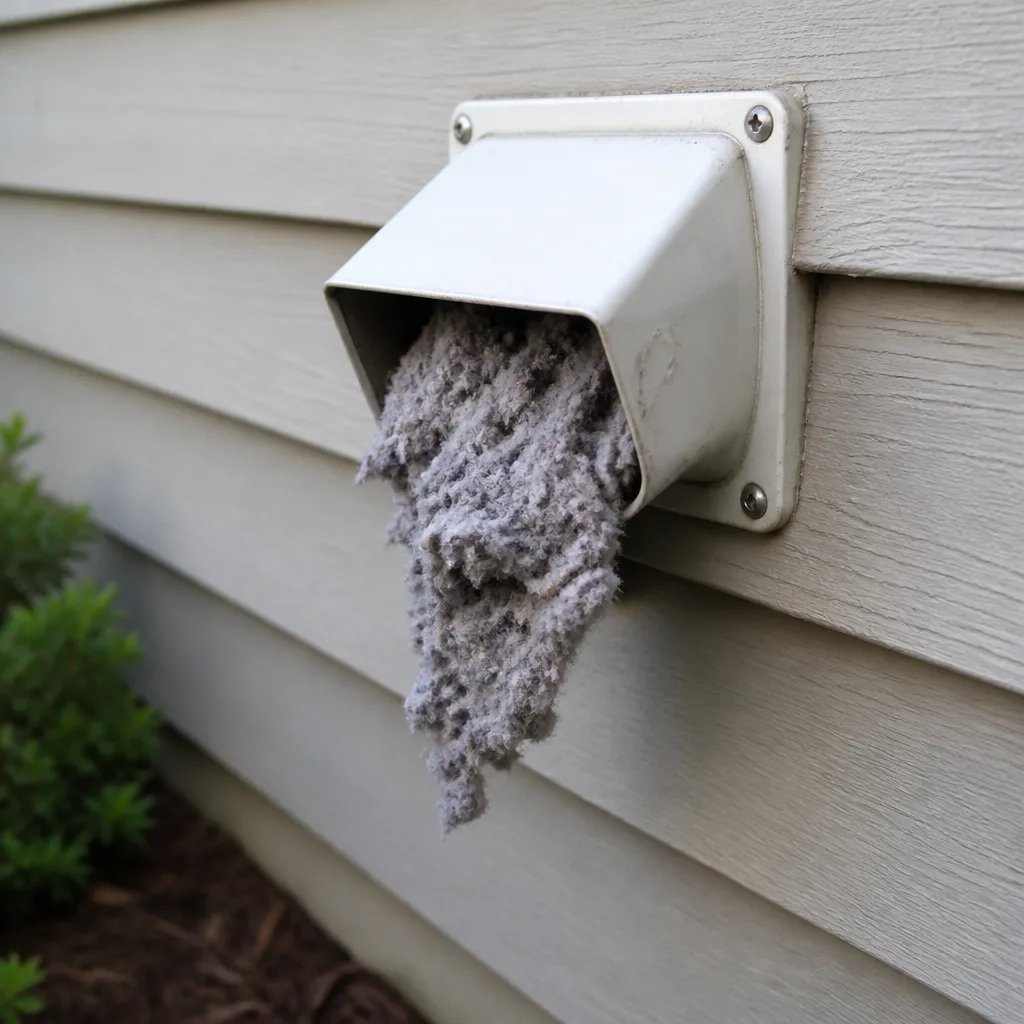 Dryer vent cleaning
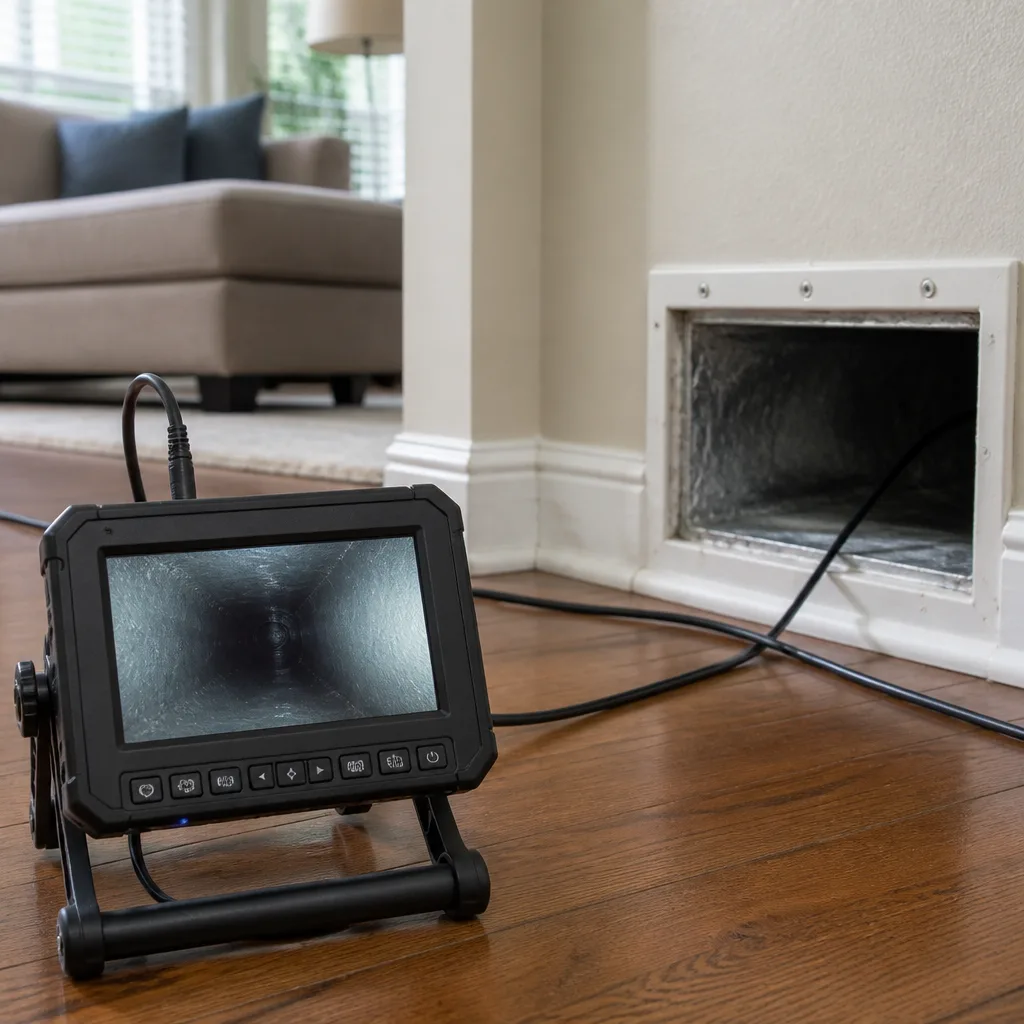 Camera inspection
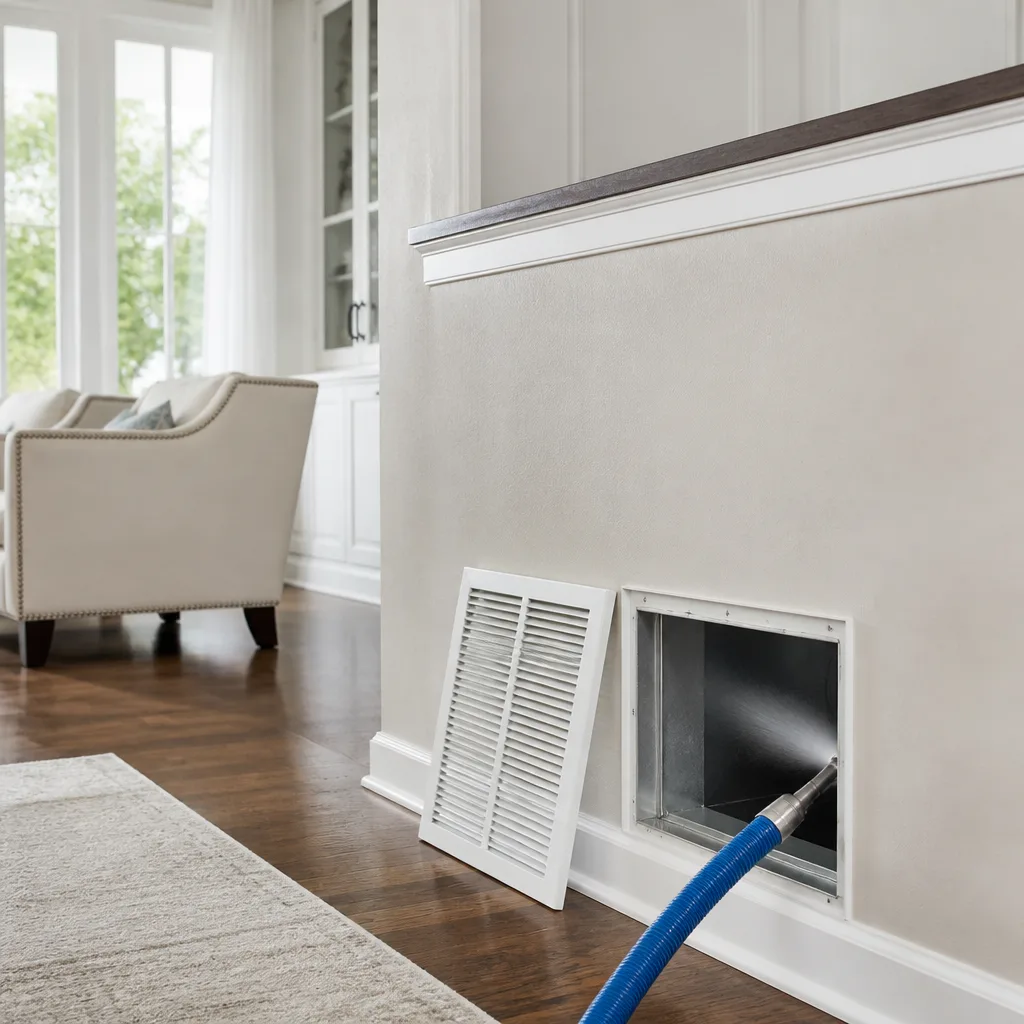 Sanitizing & deodorizing
Whole-system duct and dryer vent check with before-and-after photos - you see exactly what came out of your vents
That "$99 whole-house special" is a bait ad - the real number appears once they are in your hallway, or the "clean" is a shop-vac at the register. We photograph the inside of your ducts before and after instead.
Air Duct Cleaning Warning Signs: A Thornton Homeowner’s Reference Guide
Most homeowners look for duct problems in the wrong place. Visible dust on a supply register feels like the obvious signal, but by the time it shows up, the system has usually been shedding particulate into living spaces for weeks. The earlier warnings are quieter: a bedroom that never warms up, a musty smell that appears only when the furnace kicks on, a morning cough that clears by lunchtime. In Thornton, where winter air is dry and windy spring days push fine dust through every gap in a house, these signals get misread constantly. This guide walks through what duct contamination actually looks like, how to tell it apart from unrelated HVAC problems, and what you can check yourself before you call a technician.
Quick Answer
The main warning signs that air ducts need cleaning are persistent dust on registers and nearby surfaces, musty or stale odors that appear when the HVAC system runs, uneven room temperatures and weak airflow in specific rooms, and a cluster of allergy-type symptoms (morning congestion, eye irritation, dust-triggered coughing) that improve when you leave the house. If two or more of these show up together, the duct system is the likely source and worth inspecting. Visible dust buildup on the register face alone is a late-stage sign, not an early one.
Styles & brands we work with
- Whole-home duct cleaning
- Dryer vent cleaning
- Camera inspection
- Sanitizing & deodorizing
Table of Contents
- Visible Dust on Registers: Why It’s a Late Sign
- Dirty Register Face vs. Contamination Inside the Trunk
- What the Smell Tells You: Ducts, Furnace, or Crawlspace
- Uneven Temperatures and Weak Airflow That Aren’t the Thermostat
- Symptom Clusters That Point to Particulate Load
- What You Can Check With a Flashlight and Your Phone
- What a Professional Duct Inspection Actually Involves
- Why Cleaning Alone Sometimes Isn’t the Full Fix
Visible Dust on Registers: Why It’s a Late Sign
Dust sitting on a supply register is almost never the first indicator of a duct problem. It’s the confirmation. A duct system carries a continuous flow of air across the supply trunk and branch runs, and that air picks up whatever has settled on interior duct walls during the heating and cooling season. Fine particulate lifts gradually, enters the airstream, and coats the register louver closest to the outlet. By the time that louver is heavily dusted and the wall within a few inches of the vent has a gray film, the interior of the duct has typically been shedding for weeks. In a Thornton home, the dry climate accelerates this: static charge builds up on dust particles during winter, and the accumulation on plastic and metal surfaces is heavier than in more humid regions.
The dust on the register face itself may also be a mix of things that have nothing to do with duct contamination. Here’s what to consider before assuming the worst:
- Finish dust from a recent renovation or sanding project, which settles everywhere in a house and has nothing to do with the duct interior.
- Lint from a nearby carpet or fabric upholstery that’s shaken loose by foot traffic and pulled toward return grilles.
- Pet dander that clings to wall surfaces and registers in homes with indoor animals.
- Pollution from nearby construction activity, which is common in parts of Thornton where new builds and road work are ongoing.
The distinguishing test is simple: if you clean a register thoroughly and it re-soils within two to three weeks, the source is likely inside the duct. If it stays clean for a couple of months, you’re looking at ambient surface dust. That’s why our technicians always ask about cleaning history before assuming the ducts are the problem.
Dirty Register Face vs. Contamination Inside the Trunk
This is the most misunderstood distinction in duct cleaning and the one a homeowner can learn fastest. The register face is the visible grille at the end of a branch run. The trunk is the main duct channel that carries conditioned air from the air handler through the house. Contamination in the trunk is what actually affects air quality. Surface dust on the register face rarely does. The trunk’s interior is where particulate, debris, insect activity, and moisture accumulation collect because the velocity of air inside the trunk is lower than at the branches and because the trunk is harder to see.
Here’s how to tell the two apart in plain terms:
- Look at the grille and the wall around it. Dust on the grille face and in the immediate surround usually points to surface-level settling, which can be clean-up, not a duct interior issue.
- Remove the grille and look up into the branch run with a flashlight. If the metal ducting inside shows a continuous film of dust along the interior walls, that’s buildup entering the living space through the vent.
- Check the air handler compartment and filter slot. If the filter is intact but dust has bypassed it and coated the blower housing or evaporator coil, the contamination is upstream and the duct interior is likely similar.
- Inspect the return trunk near the furnace. Return ducts pull unfiltered household air toward the air handler, and this section is where debris and lint accumulate fastest.
What we find repeatedly in Thornton homes is that the register faces look fine but the trunk interior has visible accumulation on the first inspection. The register is the visible symptom; the trunk is the source. The professional-grade Rotobrush and Nikro systems we use are designed specifically to reach and remove buildup inside the trunk and branch runs, which is the part a shop-vac can’t touch.
What the Smell Tells You: Ducts, Furnace, or Crawlspace
Odor patterns are one of the most useful diagnostic signals a homeowner can describe over the phone, but only if you know how to isolate which system is producing it. Three distinct sources produce musty or stale smells in a Thornton home, and each one shows up under different conditions.
Duct-related odor appears when the HVAC system runs and disappears shortly after the blower stops. It usually smells musty or like old dust, and it’s strongest at the supply registers in rooms that get the most use. This points to biological growth or settled decomposition inside the duct interior, often in the return trunk where humidity from cooking and showers collects.
Furnace-related odor appears when the heat cycles on and can smell slightly metallic or like a hot electrical component. A faint burning-dust smell on the first heat cycle of the season is normal for a furnace coming back after summer. A persistent smell every cycle is not, and it deserves a technician visit for HVAC cleaning and inspection.
Crawlspace or basement odor enters the home through the return air path or through gaps in the duct connections, and it often smells of earth or moisture. In Thornton homes with a below-grade component, this pattern shows up more often on humid days or after rain.
- Odor only when the furnace runs, gone when it stops: duct issue most likely.
- Odor when the heat is on and only in heating mode: furnace or heat exchanger side.
- Odor strongest near low-return grilles: crawlspace or basement source.
- Odor that appears after a shower or cooking: moisture-laden air cycling back through the return, with possible biological growth in the duct.
If you smell gas, stop diagnosing and call your gas utility immediately. Duct cleaning is not a gas investigation.
Uneven Temperatures and Weak Airflow That Aren’t the Thermostat
When one bedroom is five degrees colder than the living room in January, most homeowners swap out the thermostat. That rarely fixes it. Thermostats measure average temperature in the room where they’re mounted; they don’t cause the imbalance. Uneven rooms in Thornton homes almost always trace back to the duct system: a branch run that’s undersized for the room, a damper stuck partly closed, a disconnected joint, or a buildup of debris that’s cut the effective flow, and a leak at a duct seam.
A simple test before calling anyone:
- Hold a tissue or strip of thin paper a few inches from each supply register while the system is running. All registers should hold it out at a similar angle.
- Note any register where the tissue dares limply or barely moves. That room has a flow problem.
- Listen for a whistling sound at a register. Whistling usually means restricted flow downstream of it.
- Check that the room’s return path is open. A closed bedroom door with no return gap can starve a room of return air and cause the supply to feel weak even when the duct is fine.
If several rooms feel weak while one or two work fine, you’re looking at a distribution problem that cleaning alone may not solve. That’s where our air duct cleaning work pairs with duct repair and sealing, because a duct that leaks at a joint wastes conditioned air before it ever reaches the room. In a windy Thornton spring, those leaks also pull fine exterior dust into the duct system, which accelerates the buildup.
Symptom Clusters That Point to Particulate Load
The health signal that most reliably points to duct contamination isn’t a single symptom. It’s a cluster, and it has a pattern. The three most common patterns we hear from Thornton homeowners are morning congestion that clears once the person leaves the house, eye irritation that appears after the heat or AC comes on, and dust-triggered coughing that worsens in rooms that get heavy system airflow. These patterns don’t prove duct contamination, and we never claim that duct cleaning cures anything. What they do is suggest that airborne particulate is elevated in that home, and the air handler and duct system are the likeliest place that particulate is coming from. A home with a recent renovation, an aging furnace, or a filter that was repeatedly left in past its useful life is the classic candidate.
Two cautions before anyone climbs a ladder:
- Asthma, allergy, and respiratory symptoms should always be evaluated by a doctor. Duct cleaning is a home improvement consideration, not a medical treatment.
- If someone in the household has significant respiratory conditions, that’s a stronger reason to fix a duct contamination problem, not a reason to defer it.
Our air quality and sanitizing service exists for exactly this scenario: after cleaning, we use Guardsman-grade cleaning and protection products and Abatement Technologies equipment for proper negative-air containment and contaminant removal, so the particle load in the home’s air is addressed rather than just the surface of the duct. For homes that also need whole-home filtration, we supply and install Honeywell and Aprilaire air quality products.
What You Can Check With a Flashlight and Your Phone
You don’t need any special tools to get a preliminary read. A flashlight and the camera on your phone will tell you more than most people realize. We recommend this sequence before you call a technician, because it gives you specifics to describe and rules out problems that aren’t duct-related at all.
- Filter check. Pull the filter and hold it up to a light. If you can’t see light through it, replace it. Write down the date so you know how long it’s been in service.
- Register check. Clean one supply register face with a damp cloth. Note the date. If it looks dusty again within three weeks, that’s a signal worth mentioning.
- Flashlight inspection inside a branch run. Remove a register and shine a light into the duct. Photograph what you see. Continuous film on the interior walls, visible debris, or signs of moisture are worth flagging.
- Return grille check. The large return grille usually accessible in a hallway or wall is often the dirtiest part of the system. Photograph the interior behind it.
- Air handler and filter slot. With the system off, look at the filter slot and the metal around it. If dust is bypassing a properly-seated filter, that photo matters.
- Odor log. Write down when you smell something odd and whether the system was running. A one-week log is a strong diagnostic aid.
Two safety notes: turn the system off before you remove or replace anything, and don’t push tools or fingers into a duct beyond the register. Sharp edges and the possibility of a blower still running make anything beyond a visual check a professional job. If what you find is significant, call us and describe it. Photos sent ahead help us plan the inspection.
What a Professional Duct Inspection Actually Involves
The inspection always starts before any equipment comes out. A technician will want to know the home’s history: when the filter was last changed, whether the house has been renovated, whether pets live indoors, and whether any room has been noticeably uneven. From there, the inspection covers the entire system, not just the registers you can see.
- Air handler and blower. Dust buildup, filter placement, and any sign of bypass.
- Supply and return trunks. Every section that can be accessed, with photographs of the interior.
- Branch runs from every register. Each one checked for debris, disconnected fittings, and moisture.
- Register and return grille faces. Noted as the visible symptom but not the diagnosis.
- Duct connections and seams. Leaks, gaps, and detached sections that undermine both air quality and energy efficiency.
What the inspection determines is whether the problem is contamination, structural, or both. We approach every home this way because cleaning a duct system whose joints are failing just sends the same air back through the same leaks. Our HVAC cleaning work addresses the air handler while the duct work is underway, and duct repair and sealing finishes the job. That’s the full scope we handle under one company name, and it’s why we tell homeowners to hold off on a cleaning-only call until the inspection tells us what the system actually needs.
Why Cleaning Alone Sometimes Isn’t the Full Fix
Cleaning removes what’s already inside the duct. Repair and sealing prevent new contamination from entering and stop conditioned air from leaking out. In a Thornton home that has had the same ductwork for a long time and has gone through years of seasonal cycling between very dry winter air and the humidity of a wet spring, both parts of the job matter. Seams open up. Tape that sealed a joint in 1995 has dried and lifted. A supply connection vibrates loose from the air handler. And once a joint leaks, the pressure plan for the whole system goes off: rooms that were balanced start running hot or cold, and the system pulls exterior air in from wherever the leak sits. In a house built on the east side of Thornton or up near the newer subdivisions, that exterior air carries fine construction dust right through the sheet metal. The professional fix is cleaning followed by sealing, with the system checked room by room so the result is actually balanced. Dryer vent ducting is subject to its own buildup pattern, since lint accumulates differently than household dust, and it’s a separate job from the HVAC ducts. That’s the reason we treat dryer vent cleaning as its own service.
Common Mistakes to Avoid
These are the misread signals and wrong responses we see most often in Thornton homes.
- Judging the ducts by the register face alone. A clean grille doesn’t mean a clean trunk. A dusted grille doesn’t mean a duct emergency. The interior of the trunk is the diagnosis.
- Assuming the thermostat is the problem when one room is cold. A five-degree split between rooms in January is almost always a duct issue, not a thermostat issue. Thermostats average; ducts distribute.
- Cleaning a system that clearly has leaky joints. Cleaning a duct system with failing seams just repollutes the same air. Ask about repair and sealing as part of the scope, or plan for a second visit.
- Choosing a quote based only on price. A duct cleaning price that seems too low to cover the labor of a whole-system job rarely includes the return trunk, the branch runs, or any inspection. Ask what’s actually being cleaned.
- Waiting for a health symptom to clear. A morning cough that clears by lunchtime is a pattern, not a coincidence. If it improves away from home, that’s data, and it’s worth a look at the system.
- Missing the return trunk. Return ducts carry unfiltered air back to the air handler and collect debris fastest. Any scope that only lists the supply registers is incomplete.
- Blaming the ducts for an outside source. Recent renovation dust, construction activity, or a worn furnace gasket are separate issues. If the dust is on the register but the duct interior is clean, fix the source, not the duct.
See the difference
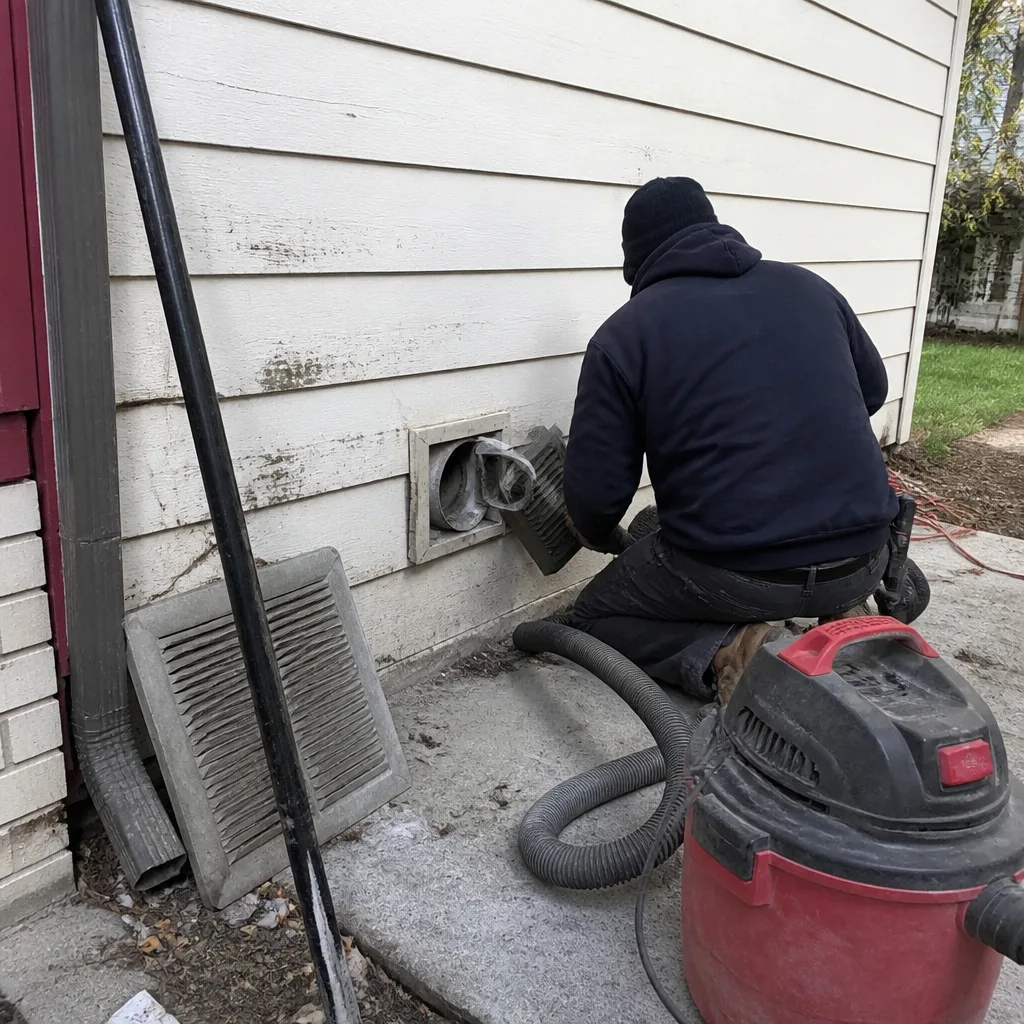 Before
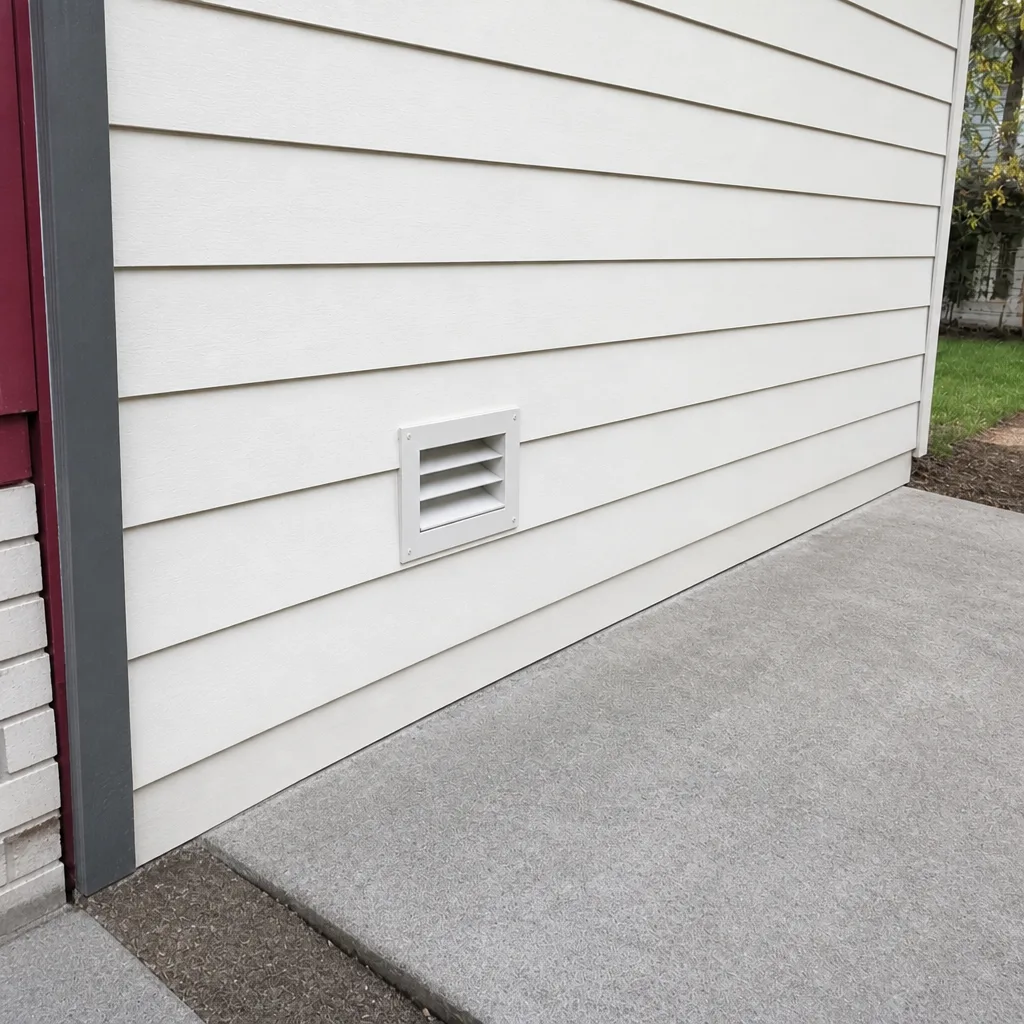 After
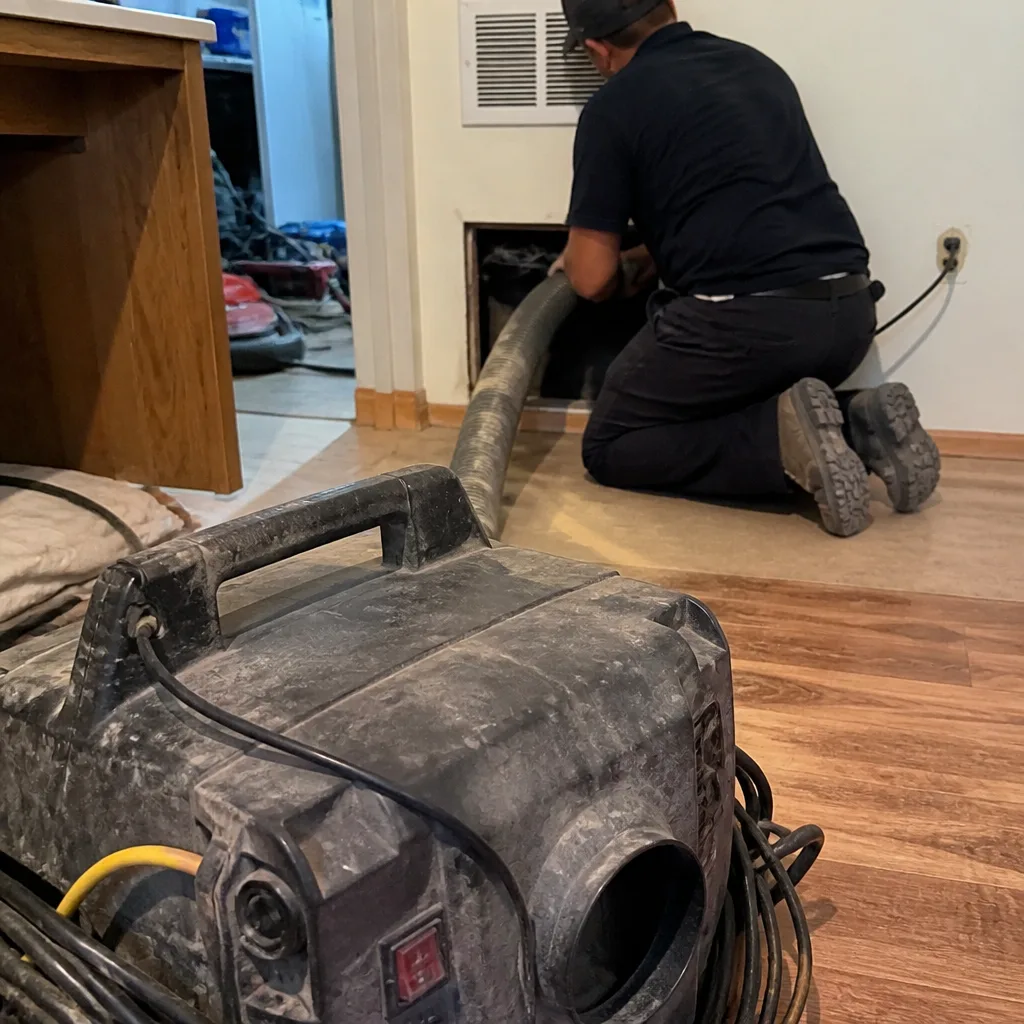 Before
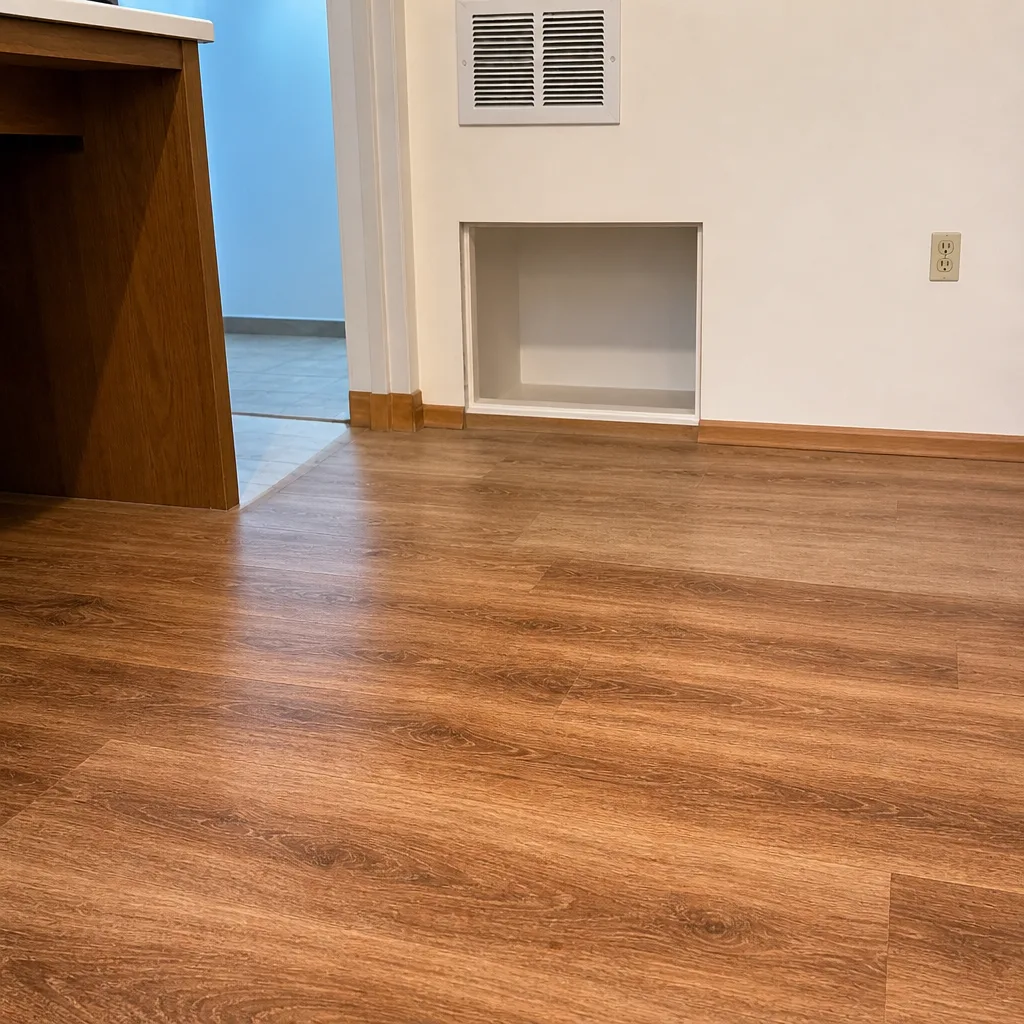 After
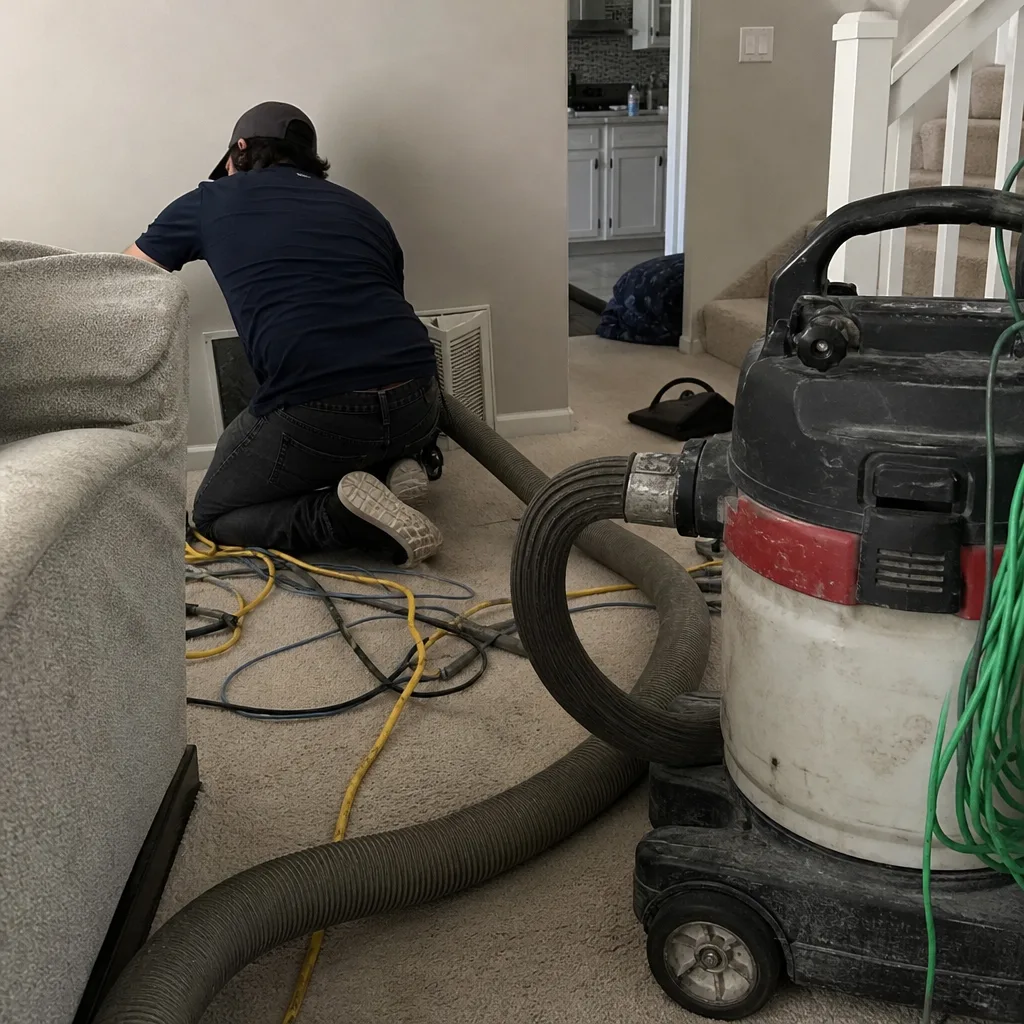 Before
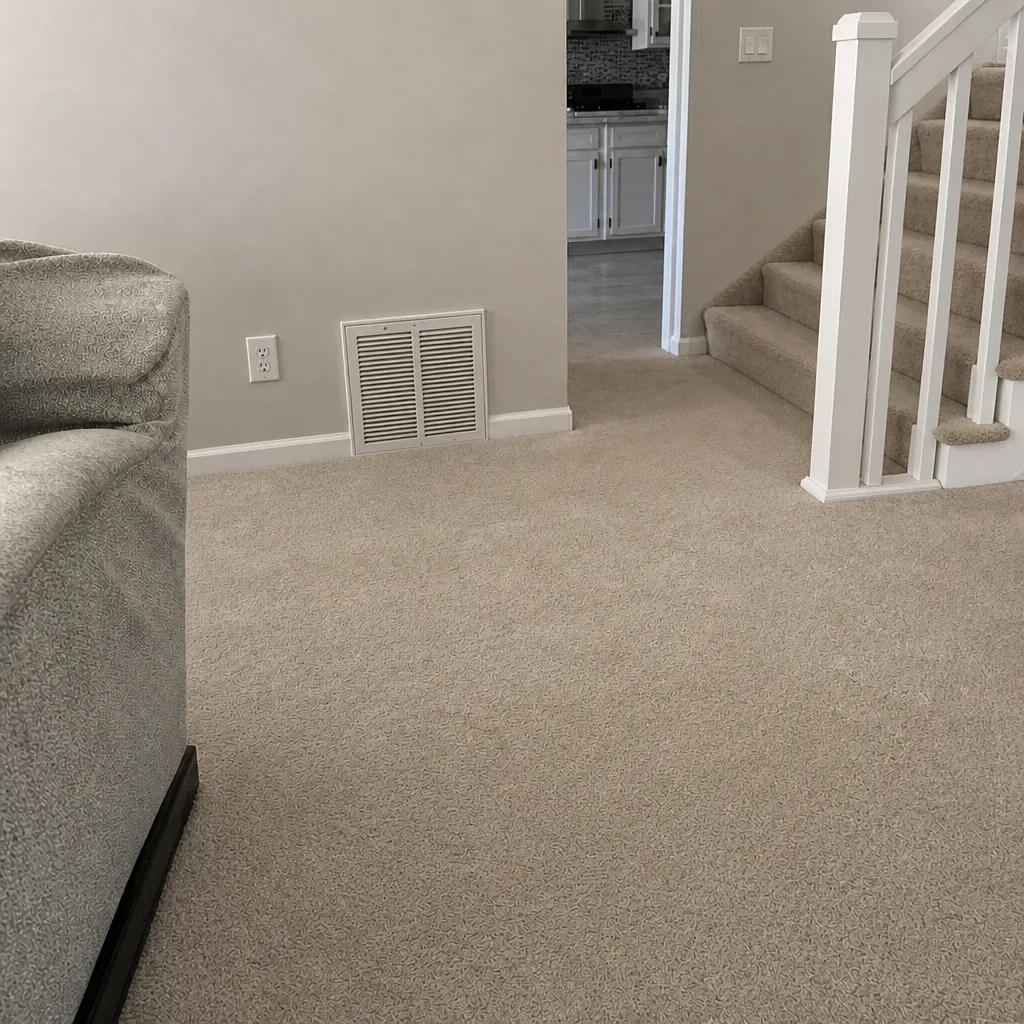 After
When to Call a Professional
If two or more of the signals above show up together, it’s worth a professional inspection. That’s especially true when the system is running harder than it used to, when a room has been running cold for two seasons or more, when a smell shows up every time the heat cycles, or when you’re preparing for a home inspection or a renovation. If you have asthma, allergies, or anyone in the house dealing with persistent respiratory symptoms, a duct inspection belongs on the conversation list. And if you have any suspicion that gas could be involved with an odor, skip us and call your gas utility first. Thornton Air Duct Cleaning offers free estimates in Thornton, and we can be reached at (866) 947-8149. We answer 24/7. Fast dispatch from 7am to 7pm, Sunday through Friday.
Frequently Asked Questions
The earliest signs are usually not visible dust on registers. They’re odor that appears only when the system runs, uneven room temperatures, weak airflow in specific rooms, and a morning congestion pattern that improves away from home. Visible dust on a register is a later-stage signal that the interior has been shedding into living spaces for a while. If several of these show up together, that’s the time to call for an inspection.
Clean one register face with a damp cloth and note the date. If it looks dusty again within three weeks, the contamination is likely inside the duct system, since a clean surface with a clean interior stays clean much longer. If it stays clean for months, you’re looking at surface dust, which is a housekeeping issue. A flashlight shot up into a branch run will usually confirm which side you’re on.
Duct cleaning can reduce the amount of particulate cycling through a home’s air, and that matters if someone in the household has respiratory symptoms. We don’t claim it treats or cures allergies. If you’ve ruled out other sources and the symptoms have a clear pattern tied to the HVAC system running, it’s worth an inspection. Talk to your doctor about any respiratory concerns.
That’s a distribution problem, not a thermostat problem. The thermostat averages the temperature near its sensor and has no way to force a specific room’s branch run to deliver more air. A cold room usually points to a leak at a joint, a damper that’s stuck, a branch that’s restricted, or a return path that’s blocked. An inspection that covers the whole duct system will usually locate the cause.
There’s no universal schedule, and anyone who quotes one has not looked at your house. Homes with pets, recent renovations, or someone with allergies tend to need cleaning more often than an average home with no pets and no recent work. The better habit is inspecting the system after a renovation, after noticing the warning signs, and whenever a home inspection flags it. Duct cleaning is not a subscription.
We handle both as separate services, because they’re separate systems. Dryer vent cleaning deals with lint accumulation in the exhaust path, which behaves differently from household dust in HVAC ducts. They’re often combined into one visit because the same team and equipment are already on site.
The Bottom Line
The warning signs that matter most are the ones that aren’t loud: a bedroom that never warms up, a smell that appears only when the heat does, a morning cough that clears when you leave the house, a register that re-soils two weeks after you clean it. Visible dust is the late-stage confirmation, not the opening signal. In Thornton, the dry winter air, spring dust events, and ongoing construction in parts of town make the duct internals a predictable spot for buildup. If more than one sign has shown up, it’s worth a flashlight and a phone photo, and it’s worth a call. Then it’s worth a professional look at the whole system, from air handler to branch runs, rather than a cleaning-only job that ignores the seals.
We’re the first call for duct cleaning across Thornton, and our technicians have up to 14 years of experience. We use professional Rotobrush and Nikro equipment, the same systems specified by certified HVAC and IAQ contractors, and we handle cleaning, repair, sealing, and air quality work as one connected scope rather than four separate visits. If you’re ready to learn what your duct system actually looks like, call us at (866) 947-8149 for a free estimate. We answer 24/7. Fast dispatch from 7am to 7pm, Sunday through Friday.
Written by the team at Thornton Air Duct Cleaning.