
Air Duct Cleaning: Repair or Replace? How Thornton Homeowners Decide
Here’s the mistake we see most often: a Thornton homeowner calls for a cleaning quote, and the whole conversation centers on how old the ducts are. Age is the wrong variable to start with. A 20-year-old duct system in sound physical condition can move air better than a 10-year-old one with a few badly placed leaks, because the older system was designed for the house as it actually runs today. The real question is whether your existing ductwork can deliver enough airflow to the rooms that need it. That’s a performance calculation, and most homeowners have never been handed the tools to make it.
This piece walks you through that calculation.
Key Takeaways
- Duct age alone tells you almost nothing about whether the system is performing.
- Three specific conditions make cleaning pointless until the ductwork itself is repaired or replaced.
- A duct leakage reading is the single most useful number a technician can give you.
- Partial repair, not full replacement, is often the right answer.
- An indoor air quality specialist can assess the whole system, not just the duct runs.
What actually makes a duct system fail in Thornton?
Three conditions override everything else. When any of them is present, cleaning the ducts is like wiping down a cracked windshield: the surface looks better, but the problem hasn’t moved.
- Flex duct that has collapsed or kinked past about 30 degrees. Flex duct is forgiving in short, gentle bends. Push a bend tighter than roughly 30 degrees and the inner liner pinches, cutting airflow to whatever room sits at the end of that run. No amount of cleaning reopens it.
- Fiberboard duct with a saturated or delaminating liner. Fiberboard ductboard is common in Thornton homes built in the 1990s and 2000s. When the interior liner gets wet or starts peeling, fibers can enter the airstream and cleaning cannot restore the surface. That’s a replacement job.
- Trunk lines undersized for the current air handler. A newer high-efficiency air handler moves a specific volume of air. If the trunk line it feeds was sized for an older, lower-capacity unit, the system will run high static pressure no matter how clean it is. The ducts are the bottleneck, not the blower.
If none of those three apply, cleaning is usually the sensible first move. If any one of them does, we walk homeowners through repair or replacement before cleaning, because otherwise they’re paying for a cosmetic fix.
How does Thornton’s climate change the repair-versus-replace math?
Thornton is heating-dominant. The furnace or heat pump runs a long, heavy season, and every cubic foot of conditioned air that leaks out of the ductwork is paid for twice: once to heat it, once to heat the replacement air pulled in behind it. In a mild climate, small leaks can linger for years without showing up on the bill. Here, they show up fast.
That’s why we treat duct leakage as a performance number, not just a maintenance checkbox. A technician can measure duct leakage with a duct blaster and hand you a percentage of system airflow that’s escaping before it reaches the rooms. If you want a simple reading, ask for the leakage figure as a percentage of total airflow and how it compares to a sealed system. Anything meaningfully above a tight system tells you the ducts are costing you heat. In a Thornton winter, that leak is not a hypothetical: it’s a number you’ll see on the utility bill.
It also changes the repair-versus-replace decision. A leaky but structurally sound system is a candidate for air duct cleaning followed by sealing. A structurally compromised system is a candidate for selective replacement. The leakage number tells you which side of that line you’re on.
Can you repair part of the system instead of replacing all of it?
Yes, and in our experience it’s often the right middle path. Full replacement is expensive and disruptive. Selective repair, combined with a thorough cleaning, gets you most of the performance gain at a fraction of the cost.
A partial repair typically looks like this:
- Replace the specific flex runs that are kinked or collapsed, not every run in the house.
- Rebuild or replace a single saturated section of fiberboard trunk.
- Seal the joints, boots, and plenum connections that are leaking.
- Then clean the whole system so the repaired runs and the untouched runs start from the same baseline.
What that costs relative to full replacement depends on how many runs and how much trunk line are involved. Full replacement of every run in a typical Thornton home is a substantial project; a partial repair scoped to two or three problem runs is a much smaller job. The only honest way to know which one fits your house is a written estimate after someone has actually looked at the system, which is why we give one before work starts rather than quoting a per-run price over the phone.
This is also where HVAC cleaning belongs in the same conversation. Cleaning the air handler and coil while the ducts are open is cheaper and easier than coming back for it later.
Why does an older duct system underperform with a newer HVAC unit?
Duct systems are sized for the equipment they were designed around. A system that worked fine with an older single-stage unit can struggle with a newer variable-speed air handler, because those systems move air differently and often need more static pressure headroom than the original duct design provides. The blower can push the air, but the trunk line is the delivery bottleneck.
If you’ve recently replaced your furnace or AC and the new unit feels like it’s working hard without obviously heating or cooling better, don’t assume the equipment is at fault. Ask for a static pressure reading. A technician can measure total external static pressure at the air handler and tell you whether the ducts are choking the system. If they are, no equipment upgrade will fix it. Repairing or upsizing the trunk line will.
This is the part most homeowners have never been told, and it’s the reason we frame the repair-versus-replace decision around airflow performance rather than age.
What can a full indoor air quality specialist assess that a duct cleaner cannot?
A duct-cleaning-only company cleans duct runs. A full indoor air quality specialist looks at the whole system, and three of those checks change the repair-or-replace decision more than anything else:
- Air handler condition. A failing blower or dirty wheel can mimic the symptoms of bad ductwork.
- Coil cleanliness. A fouled coil restricts airflow and drives up static pressure, which can make ducts look undersized when they aren’t.
- Return air sizing. Undersized return ducts starve the system of air, which is a duct-design problem, not a cleaning problem.
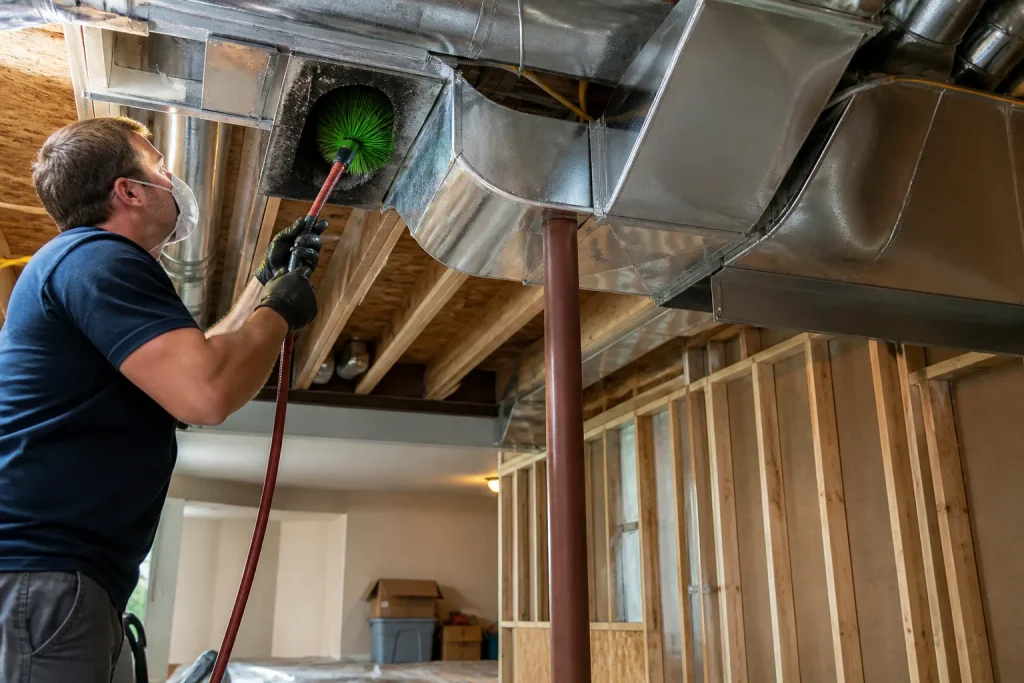
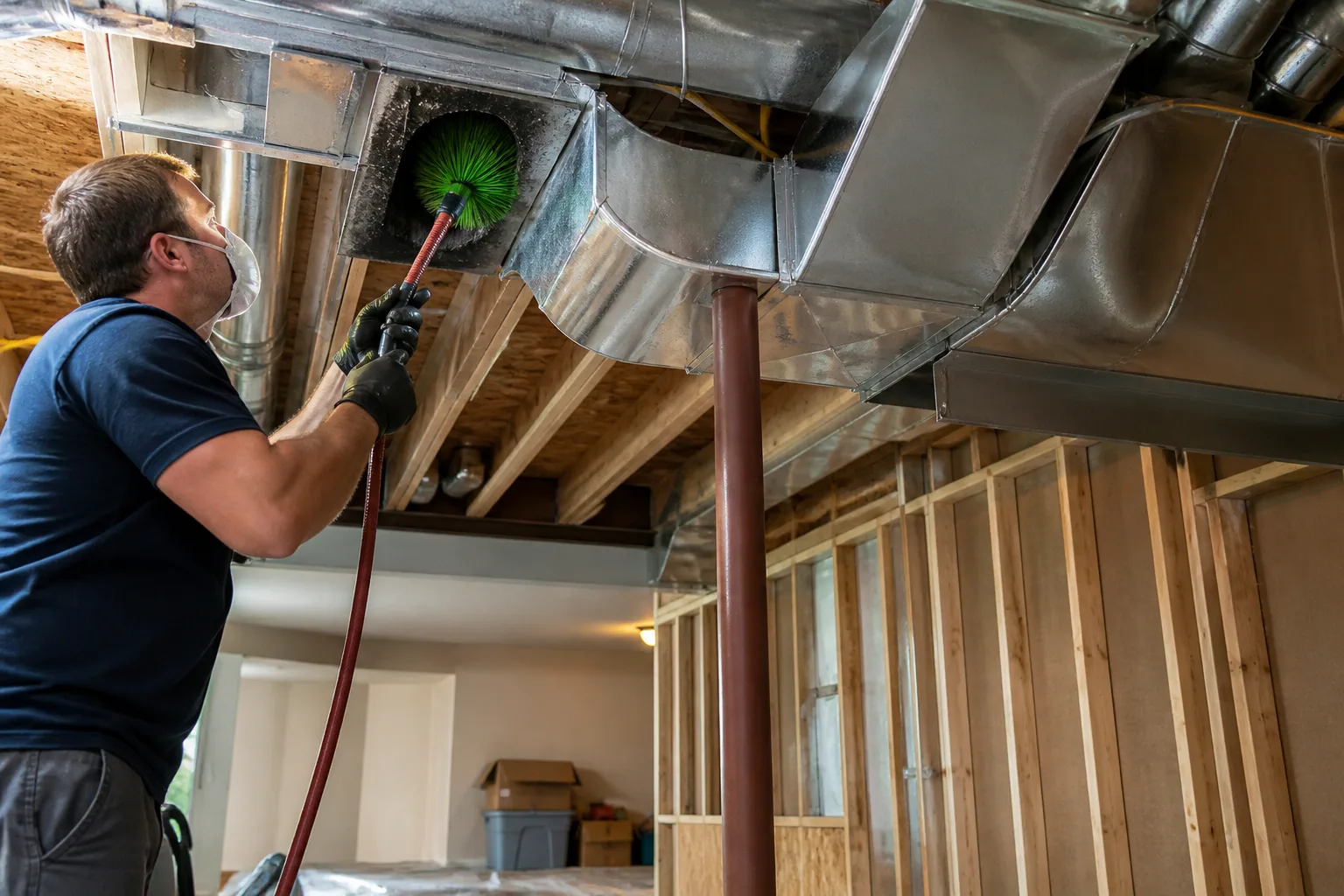
We use professional-grade Rotobrush and Nikro equipment for the cleaning itself, and Abatement Technologies equipment when the work involves contamination removal with proper containment. But the equipment is only useful if the assessment comes first. If a return duct is undersized, cleaning it brilliantly doesn’t move more air.
When the assessment points to a system-level fix, we carry and install Aprilaire and Honeywell air quality products, so the recommendation can include a whole-home solution rather than just a clean on top of a problem. That’s the difference between cleaning ducts and fixing an air system.
When to call a pro
Some of this work is genuinely yours to check: filter changes, clear returns, obvious kinked flex in an accessible attic run. The rest is not a DIY job. Static pressure readings, duct leakage testing, and any repair inside a fiberboard trunk or near the air handler need trained hands, and so does anything involving gas equipment or electrical connections at the furnace. If you’re unsure whether your ducts are the bottleneck, a single visit with the right instruments answers the question.
Related services in Thornton: we handle Thornton Air Duct Cleaning, along with dryer vent cleaning and HVAC cleaning, so one specialist can look at the whole system instead of one slice of it. Our technicians have up to 14 years of experience. One flat price per system, agreed before work starts, and before-and-after photos of your own ducts.
The Bottom Line
Repair or replace isn’t really a question about age. It’s a question about airflow. If your ducts are structurally sound and only leaking at joints, cleaning plus sealing is usually the right call. If a flex run is kinked past 30 degrees, a fiberboard trunk is saturated, or the trunk line can’t feed your newer air handler, cleaning first is money thrown at the wrong problem. Partial repair is often the smart middle ground: fix the two or three runs that are actually choking your system, clean the rest, and seal the joints while everything’s open.
If you’re in Thornton and need help, Thornton Air Duct Cleaning offers free estimates. Call (866) 947-8149. We answer 24/7. Fast dispatch from 7am to 7pm, Sunday through Friday.
Frequently Asked Questions
Clean first if the ductwork is structurally sound and only leaking at joints. Repair or replace first if flex duct is kinked past about 30 degrees, a fiberboard liner is saturated or delaminating, or the trunk line is undersized for your current air handler. Cleaning a structurally compromised system doesn’t fix the underlying problem. Call (866) 947-8149 for an assessment.
Ask your technician for a duct leakage reading, expressed as a percentage of total system airflow. That number tells you how much conditioned air is escaping before it reaches your rooms, and in Thornton’s long heating season that leak costs you real money on the utility bill. Anything meaningfully above a tight system is worth sealing. Call (866) 947-8149 to schedule a reading.
Yes. Selective repair combined with a full cleaning is often the right middle path. Replacing two or three problem flex runs and sealing the joints costs far less than rebuilding every run, and gets most of the performance gain. A written estimate after an on-site look is the only honest way to know which path fits your home. Call (866) 947-8149 for a free estimate.
Possibly, and it depends on one measurement. A newer variable-speed air handler often needs more static pressure headroom than the original duct design provides. Ask for a total external static pressure reading at the air handler. If the ducts are choking the system, repair or upsizing the trunk line will help more than any equipment upgrade. Call (866) 947-8149 to find out.
Written by the team at Thornton Air Duct Cleaning.
Need Air Duct Cleaning Help?
Call Thornton Air Duct Cleaning - the local pro we connect you with is licensed and insured, with free written estimates in Thornton.
(866) 947-8149