
Emergency Air Duct Cleaning Near Me: What Thornton Homeowners Should Do First
If you’ve just found a dead rodent in a supply register, or sewage has backed up near the air handler, the worst move is to let the system keep running – even on a 95-degree Thornton afternoon. Contaminants travel fast through a running system. Here’s the calm, ordered response for the first 30 minutes.
Why turning the HVAC off is step one in every Thornton duct emergency
The single most important action in any genuine duct emergency is to stop air movement. A running system pushes contaminated air from the affected section into every room it serves, and in a Thornton home with a single central return, that happens quickly. Once the blower is off, contamination stays roughly where it started, which gives everyone – you, your family, and the technician who arrives later – a cleaner working environment.
How to shut it down correctly:
- Set the thermostat to “Off,” not just a low temperature. “Fan On” still runs the blower and defeats the purpose.
- If the thermostat is unreachable or unresponsive, switch the HVAC breaker off at the electrical panel. Label which breaker controls the air handler before you flip anything back on.
- Close supply registers in the affected rooms to slow any residual drift.
- If you smell sewage or smoke, ventilate with open windows and a fan pulling air out, not pushing air in.
Electrical panels and contaminated ductwork are not a DIY zone. If the breaker panel is hot, buzzing, or you can’t identify the right circuit, leave it alone and let a trained professional handle it. The few minutes you save are not worth a shock or a fire risk. We’ve seen homeowners make this harder by restarting the system “just to check” – don’t. Leave it off until a technician confirms it’s safe.
The four situations that count as a real duct emergency in Thornton
Not every smelly vent is an emergency. Most duct complaints are ordinary buildup that can wait for a scheduled cleaning. Four situations are genuinely urgent, and each one needs a different first move before anyone arrives.
- Sewage backup or floodwater in the ductwork. Category 3 water carries pathogens. Shut the system off, keep everyone out of affected rooms, and don’t run anything that moves air. This needs biohazard-level containment, not a standard cleaning.
- Rodent intrusion. Droppings, nesting material, and urine-soaked insulation in ducts require removal with negative-air containment and proper PPE. Seal entry points after cleaning or the problem returns.
- Post-fire smoke and soot. Soot in the air handler and ducts keeps circulating long after the fire is out. Shut the system down and document the odor and residue before anything is touched.
- Visible mold discovery. If you can see growth inside a register or on the air handler, stop the system and get an assessment. Mold needs moisture control, not just a wipe-down.
Each of these is a different job. A company that treats all four the same way is a company to pass on.
What to document before the technician arrives
Documentation is the step most Thornton homeowners skip, and it’s the one that protects you when an insurance claim enters the picture. Photos taken in the first hour are worth far more than a description offered a week later.
Capture:
- Wide shots of each affected room, then close-ups of any visible contamination, droppings, soot, or water lines.
- The exact locations of odors – which rooms, which registers, and whether it’s stronger near the air handler.
- Readings or dates from any moisture you can see or smell, and whether the event (backup, fire, rodent finding) has a clear date.
- A short written note of what you turned off and when.
Keep receipts for any emergency mitigation, and save the photos somewhere you won’t lose them. If your insurer asks for a scope of damage, a professional assessment paired with your photos gives the claim a solid foundation. We always recommend documentation before cleaning begins, because once ducts are cleaned, the evidence is gone. That’s a conversation worth having with your insurer early rather than late.
How to tell a real emergency-response company from a coupon cleaner
Many companies advertise emergency service; far fewer have the equipment for biohazard-level duct work. The difference shows up in what they bring and how they talk about containment. A standard cleaning visit is dust removal. An emergency response is contamination control, and the two are not interchangeable.
Ask these questions before you book:
- Do you use negative-air containment? Proper removal of sewage, rodent, or soot contamination happens inside a sealed negative-pressure zone. Abatement Technologies equipment is the standard for this, and a company that can’t describe its containment setup probably doesn’t have one.
- What personal protective equipment does the crew use? Respirators, suits, and gloves are baseline for contaminated ductwork.
- How do you verify the air afterward? A legitimate job ends with post-cleaning verification, not just a visual “looks good.”
- Do you also handle repair and sealing? Rodents and moisture get in through gaps. Cleaning without sealing the source is a temporary fix.
Professional-grade tools matter here. Rotobrush and Nikro systems reach contamination that consumer equipment can’t, and they’re the same tools specified by certified IAQ contractors. If a quote is shockingly low, ask what’s excluded – containment and verification are usually the first things to go.
What a legitimate emergency duct call in Thornton should include
A true emergency response differs from a standard cleaning in scope, setup, and the finish. Before work starts, you should get one flat price per system based on the written estimate, not a per-vent number that grows once the technician is on site. That single, agreed price is your protection against the bait-and-switch reputation this industry has earned.
A proper emergency visit in Thornton includes:
- A written scope and flat price agreed before any equipment is set up.
- HEPA containment and negative air so contamination doesn’t spread through the house during removal.
- Full PPE protocol for the crew, plus clear instructions for keeping family and pets clear of the work zone.
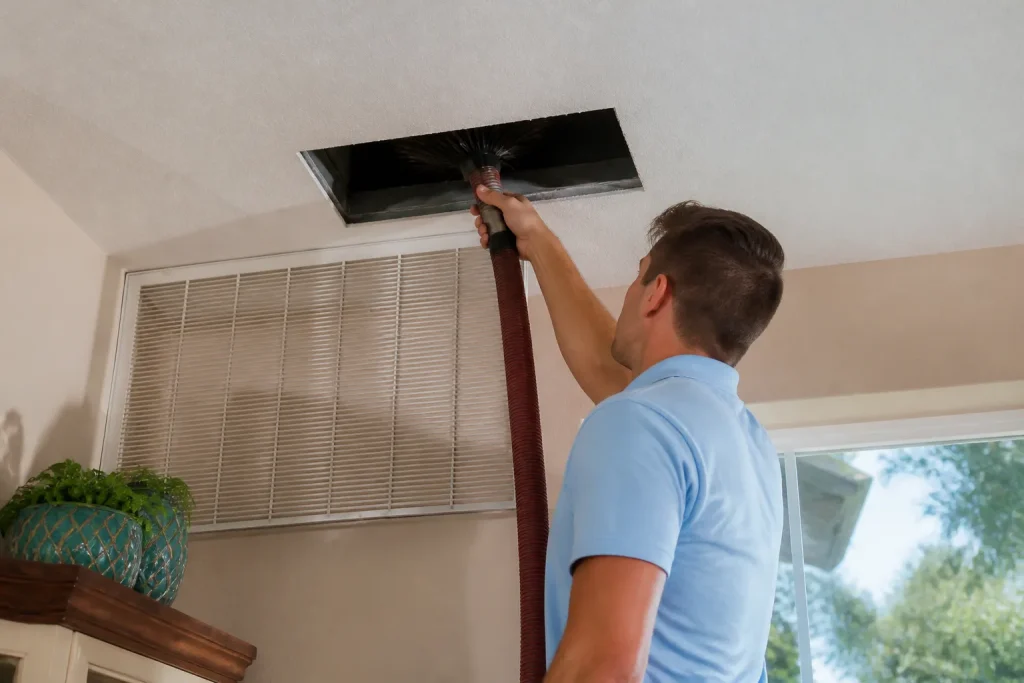
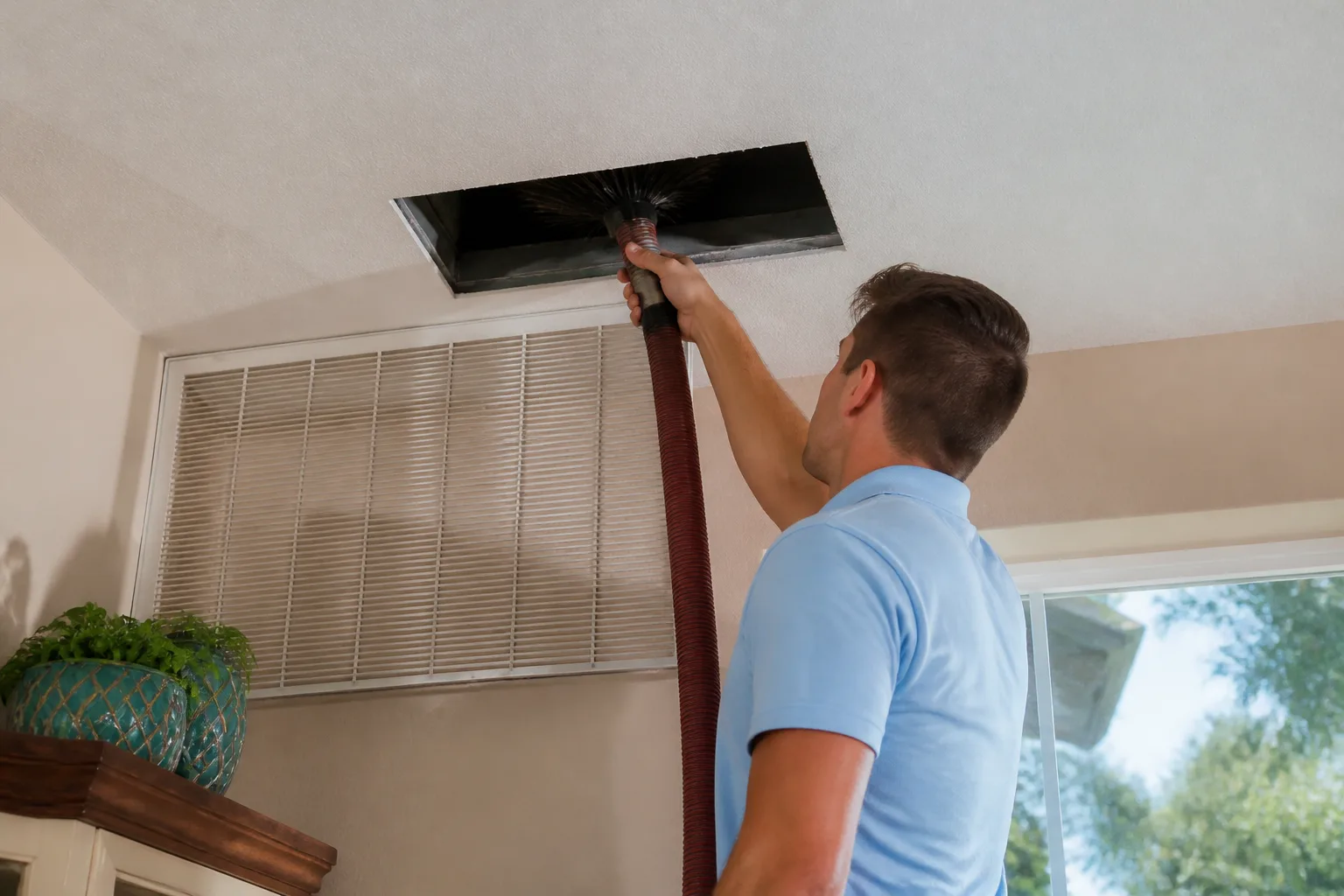
- Cleaning with professional equipment – Rotobrush and Nikro systems reach surfaces consumer tools miss.
- Post-job air quality verification and before-and-after photos of your own ducts, so you know the work was actually done.
- A repair and sealing recommendation if gaps, rodent entry points, or moisture problems caused the emergency in the first place.
Cleaning gets the contamination out; sealing and repair keep it from coming back. For routine upkeep once the emergency is resolved, our air duct cleaning service covers standard whole-home cleaning. If the emergency involved fire or smoke, HVAC cleaning addresses the air handler and coil where soot and odor settle. And if rodents or moisture got in through your dryer vent line, dryer vent cleaning should be part of the follow-up. All of it falls under one specialist for the whole system, which means one accountable call instead of three vendors.
When to call a pro
Call a professional immediately if you have sewage, floodwater, rodent droppings, fire soot, or visible mold in the duct system or air handler. These aren’t jobs where a shop vac and a weekend help – the wrong first move can spread contamination through the entire house. For everything else, a scheduled cleaning is the right call. Our technicians have up to 14 years of experience with these situations, and we use the tools the pros trust so the response actually matches the problem. You can reach the team behind Thornton Air Duct Cleaning for a free estimate.
The Bottom Line
In a genuine duct emergency in Thornton, the order is simple: shut the HVAC off, document everything with photos, keep people out of affected rooms, and call a company that can describe its containment and verification process. Cheap quotes usually cut exactly those steps. Cleaning is step one; repair, sealing, and air quality treatment are what make it last.
If you’re in Thornton and need help, Thornton Air Duct Cleaning offers free estimates – call (866) 947-8149. We answer 24/7. Fast dispatch from 7am to 7pm, Sunday through Friday.
Frequently Asked Questions
Emergency duct work is priced per job based on the written estimate, and the range depends on the contamination type, the number of affected sections, and whether containment and verification are included. You get one flat price per system agreed before work starts, with no per-vent pricing and no surprise add-ons. Call (866) 947-8149 for an exact quote – estimates are free.
No. Running the system after a sewage, rodent, soot, or mold event pushes contaminants through every duct it serves. Keep the thermostat set to “Off” – and make sure the fan isn’t set to “On” – until a technician confirms it’s safe to restart. Call (866) 947-8149 if you’re unsure what to do next.
Ask for before-and-after photos of your own ducts and a post-job air quality verification. A legitimate company documents the work it did; a company that can’t show you photos of your own system is a company to question. Call (866) 947-8149 and we’ll walk you through exactly what’s included.
Sometimes. Coverage usually depends on the cause – a sudden sewage backup or fire often looks different to an insurer than long-term neglect – so document everything with photos and keep receipts. We can work with your insurer, and a written assessment helps the claim. Call (866) 947-8149 to talk through your situation – estimates are free.
Written by the team at Thornton Air Duct Cleaning.
Need Air Duct Cleaning Help?
Call Thornton Air Duct Cleaning - the local pro we connect you with is licensed and insured, with free written estimates in Thornton.
(866) 947-8149